Big Think
@bigthink·8.8M subscribers·10.1K videos
Reasoning About God | Big Think
Posted
April 24, 2012
Views
7,775
Likes
207
Comments
14
Engagement
2.84%
April 24, 2012
7,775
207
14
2.84%
Every word spoken in this episode is indexed. Type any phrase to jump straight to the moment it was said.
Type any word or phrase that may have been spoken. Click a result to seek the player to that exact moment.
Try a name, a topic, or a quoted line
Episode Timeline
Every episode in order around the one you’re watching — click any card and the page flips straight to it.
 8:59Now Playing
Reasoning About God
New videos DAILY
Join Big Think Edge for exclusive videos
----------------------------------------------------------------------------------
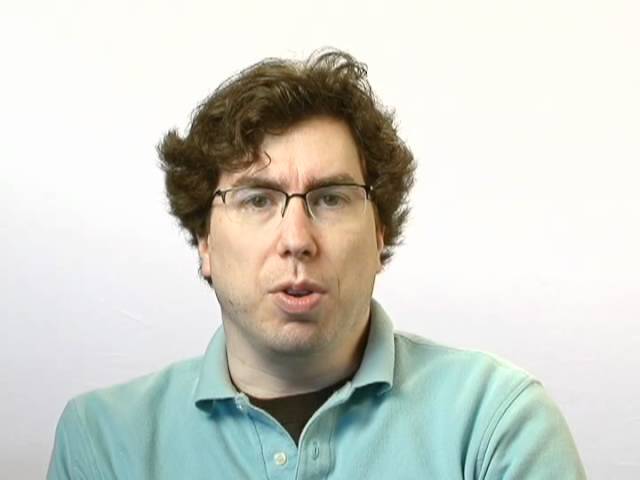
Are those content to simply have faith in God “incomplete” compared to those who try to reason about his existence? Dominican Friar Fr. Thomas Joseph White talks to Big Think about the spiritual importance of reason, and the doubts that a rational approach to spirituality may or may not lead to.
----------------------------------------------------------------------------------
Father Thomas Joseph White:
Father Thomas Joseph White, O.P. is one of the youngest professors at the Pontifical Academy of the Immaculate Conception at the Dominican House of Studies in Washington, D.C., the seminary for the Dominican Province of St. Joseph and a center of Thomistic learning for both priests and laity. Fr. White is an expert in Thomistic metaphysics, Christology and Roman Catholic-Reformed ecumenical dialogue. Fr. White converted to Catholicism at age 22, while studying at Brown University.
Fr. White is the author of the upcoming Wisdom in the Face of Modernity: A Study in Modern Thomistic Natural Theology (Sapientia Press).
----------------------------------------------------------------------------------
TRANSCRIPT:
Question: What is Aquinas’ proof of the existence of God?
Thomas Joseph White: Aquinas has a number of writings on the rational demonstration of the existence of God, and he wants to avoid two extremes: one extreme is what you would consider a certain kind of Christian triumphalism or overoptimism which would say that God’s existence is self evident to the human mind: rationally self evident, not by faith but by reason. Another extreme is the extreme which you would term a kind of Fideism which would say that we simply have to believe that God exists and there is no rational demonstration, philosophically, or lack of demonstration: it’s simply a question the human mind cannot cope with by its own natural lights. He offers maybe in his whole corpus as many as 20 or 25 different kinds of arguments for the existence of God, but famously he has a centerpiece, a synthesis of this, briefly [in] the Summa Theologiae, where he offers five ways to convince [someone] of God. And those are not arguments from cosmology of his age or strictly speaking, not from the scriptures or the Bible: they’re arguments based on what we might call the metaphysical structures of reality.
So he looks at contingency, change, and movement of things, examined philosophically. He looks at efficient causality: that things are both causes of other things and in themselves caused and dependent. He looks at radical contingency, the capacity of a thing to "be" or "not to be" which, of course, characterizes everything around us, including ourselves. Grades of perfection in things. Degrees of beauty and truth and goodness in persons, in reality. And then he looks, lastly, at purpose or ordered teleology in realities that tend toward final ends.
What he’s trying to do is highlight, in each of these five ways, how there’s a certain kind of interdependency in the realities we experience, including in ourselves, that shines forth - that pushes you to ask the question of what exists or perdures over the horizon of contingency and interdependency. And he’s showing that there’s what he calls an a posteriori demonstration, from effects to causes, that there must exist some transcendent cause of this web of interdependent realities of which we make - a part [of] which is the fabric of existence around us.
So he thinks there are indirect demonstrations of the existence of God. Not immediate intuition, not a mere question of faith but a kind of fragile but real reasoning towards God as a term of human thought.
Question: Is having faith in God is more important than rationalizing his existence?
Thomas Joseph White: Well there’s always been, in the Christian tradition, a certain more marginal strand of thought that is a radicalization of Augustine’s thought. Augustine himself held that there are arguments for the existence of God by reason alone, but this strand of thought would argue that, in fact, human reason is so frail, so diminished by compromises, the complacency of the human will have so diminished reason’s capacity to vibrantly reason lucidly for itself, that really trying to reason about God or argue philosophically for the demonstration of the existence of God is a waste of time and in fact probably a pretension. And this is actually, I think, rather forcefully argued in Luther’s thought and it has become a commonplace theme in some Protestant thinkers like Carl Bart.
Read the full transcript at
Sentinel Indexing in Progress
Metadata and chapters are available. Claim extraction for this episode is pending.
All video content is delivered via YouTube embedded players in accordance with the YouTube Terms of Service. Sentinel provides research tools that promote discovery and accountability across political media.