Big Think
@bigthink·8.8M subscribers·10.1K videos
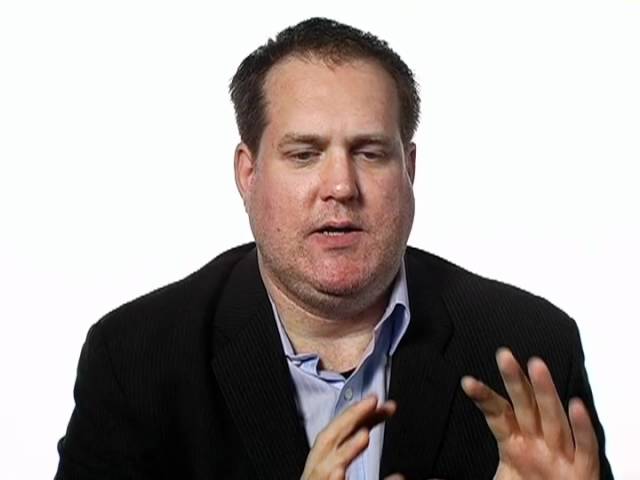
Big Think Interview with Jay Smooth | Big Think
Posted
April 24, 2012
Views
1,425
Likes
30
Comments
2
Engagement
2.25%
April 24, 2012
1,425
30
2
2.25%
Every word spoken in this episode is indexed. Type any phrase to jump straight to the moment it was said.
Type any word or phrase that may have been spoken. Click a result to seek the player to that exact moment.
Try a name, a topic, or a quoted line
Episode Timeline
Every episode in order around the one you’re watching — click any card and the page flips straight to it.
 29:58Now Playing
Big Think Interview with Jay Smooth
New videos DAILY
Join Big Think Edge for exclusive videos
----------------------------------------------------------------------------------
Big Think interview with Jay Smooth
----------------------------------------------------------------------------------
Jay Smooth:
Jay Smooth is the creator of the Hip-Hop Music Blog, and video blogging site IllDoctrine. In 1991, he founded what has become New York's longest running hip-hop radio show, WBAI's Underground Railroad.
----------------------------------------------------------------------------------
TRANSCRIPT:
Jay Smooth: My name, for the public sphere, is Jay Smooth; J-A-Y S-M-O-O-T-H.
Jay Smooth: I am the composer, arranger, and conductor of New York’s longest running hip-hop radio show, The Underground Railroad, also a blogger at HipHopMusic.com and a video blogger at IllDoctrine.com.
Question: What is the added value of the video format?
Jay Smooth: I was drawn to radio because there was a sense of intimacy there—just sitting at home listening to someone's voice—that I felt was unique compared to television and any other stuff that was out there. I think what we have now with blogging, and especially video blogging, it sort of recreates that intimacy in a different way. Having my face inside the box there at home it sort of adds a bit of mystique of television, but it's a more intimate, personal thing. I feel like radio…I don't think radio is going to go extinct, but certainly the role that radio plays in our lives has diminished somewhat, with all the resources we have online.
I saw pretty early on –I've been working in the non-profit media world, so that false sense of security that mainstream people had, I never had that. I always had a sense of… this opportunity that I have to propagate my voice, it could disappear at any moment—because when you're at a small non-profit station you're always going through lots of turbulence and barely surviving. So, I saw pretty early on that the Internet was a place where I could plant my own flag and have sort of an autonomous voice–-have an outlet for my voice that I owned and controlled and would always be there.
I think that we've seen people who work in mainstream media sort of shift over to seeing the Internet that way—the way that I did in the late Nineties. I think we’ve see more and more people recognize that, as the music industry as a whole, and various forms of old media, start falling apart and becoming a lot less viable, people are seeing the Internet as a place where, on a smaller scale, you can plant your own flag and make sure your voice is out there and build a more direct connection with your audience than you could before. So, I've been drawn to the Internet for a long time because of that. I think web video is the place where you can do that most effectively now.
Card 2: How has the audience-interaction changed as media evolves?
Jay Smooth: Internet media is much more of a two-way experience. I mean on the radio you can take phone calls and get a little bit of feedback. When you do print media—I use to also work the Source and various magazines like that—you would write your review and it would go out there in the either and you'd never really get a sense of what the response was. But anything you do online you have this precise measurement of exactly how many people viewed it, you see dozens or hundreds of responses, if you're lucky enough to get viewed that much. You get a very detailed view of what the public's response to it is, and you're able to converse with them and sort of build a conversation out of it. Once I put my initial piece of conversation out there and the public adds on to it—that to me is an integral part of the piece. I feel like I'm writing the first chapter of something and then the comments that come underneath it is a part of the work that we create collaboratively.
So, I feel like there is much more of a connection with your audiences than you were ever able to have certainly in radio or in print media. I think of a lot of old media people are very intimidated by that, and you see when old school journalist start blogs and things like that, they seem to be horrified by having these comments right underneath. Even just, where newspaper sites are set up so that readers are able to comment underneath, reporters are aghast at having this feedback right underneath and they have a lot of difficulty coping with that. Which I think is interesting because you hear a lot about how new media doesn't have the checks and balances through an editorial process that keeps . ...
Read the full transcript at
Sentinel Indexing in Progress
Metadata and chapters are available. Claim extraction for this episode is pending.
All video content is delivered via YouTube embedded players in accordance with the YouTube Terms of Service. Sentinel provides research tools that promote discovery and accountability across political media.