Big Think
@bigthink·8.8M subscribers·10.1K videos
Reprogramming Life: The Promise and Peril of Stem Cells | Big Think
Posted
April 24, 2012
Views
283
Likes
2
Comments
1
Engagement
1.06%
April 24, 2012
283
2
1
1.06%
Every word spoken in this episode is indexed. Type any phrase to jump straight to the moment it was said.
Type any word or phrase that may have been spoken. Click a result to seek the player to that exact moment.
Try a name, a topic, or a quoted line
See what was published immediately before and after this episode.
 5:38Now Playing
Reprogramming Life: The Promise and Peril of Stem Cells
New videos DAILY
Join Big Think Edge for exclusive videos
----------------------------------------------------------------------------------
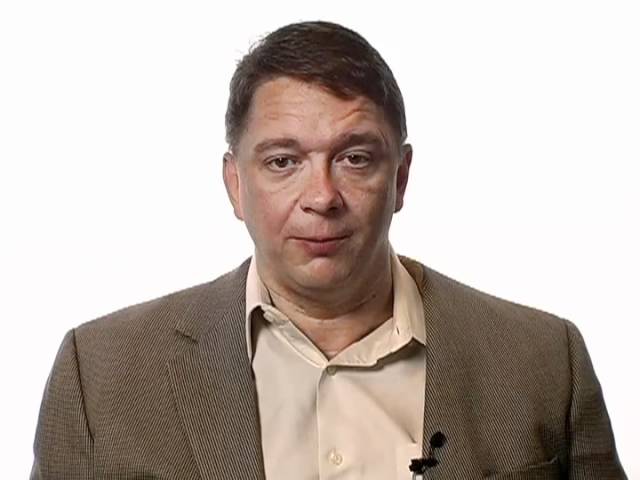
Harvard Professor David Scadden discusses the wonder of self-replenishing stems cells, and reveals scientific findings that might enable any stem cell to be reprogrammed as an embryonic stem cell.
----------------------------------------------------------------------------------
David T. Scadden:
David T. Scadden is Professor of Medicine at Harvard Medical School and Director of the Massachusetts General Hospital Center for Regenerative Medicine and Technology. He also is Co-Director of the Harvard Stem Cell Institute. Dr. Scadden’s research focuses on reconstituting immune function using the stem cells that form blood cells to fight cancer and AIDS. He an expert in the treatment of HIV-related Kaposi's sarcoma and B-cell lymphoma and has developed a number of new therapies for them.
Dr. Scadden received his training at the Brigham and Women’s Hospital and Dana-Farber Cancer Institute.
He has received numerous honors and awards, including the Alpha Omega Alpha; Edwin C. Garvin, MD Senior Prize; Doris Duke Innovation in Clinical Research Award; the Burroughs Welcome Fund Clinical Scientist Award in Translational Research; and the Brain Tumor Society's Alan Goldfine Leadership Chair of Research.
----------------------------------------------------------------------------------
TRANSCRIPT:
Question: What are stem cells?
David Scadden: Well, stem cell is a very unique concept; actually it’s a wonderful very creative notion of a single cell that has the capacity when it divides to give a reproduction of itself as well as one cell going off to become all the other cells that can make up of tissue or organ of the whole body. So, it has this really unusual characteristic of these two outcomes from a single division.
Most cell types, they’re either moving their way progressively towards something that is more defined, more specialized, more restricted in what it can do. And they also have the capacity to; they don’t have the capacity to sexually renew. And so they’re basically moving down the road toward self destruction. They end up generally having fairly short half life, and some cells live a long time. But then they’re not actually dividing things like a heart cell or brain cell. Those are generally fairly stable; they don’t divide very much if ever. And they can live for a while, but a cell that has a capacity to generate new cells and yet restore itself. So it’s a self-replenishing resource. It’s a very unusual entity. It’s really quite a wonderful concept actually.
Question: What kinds of stem cells are there?
David Scadden: There are different kinds of stem cells. What has generated the most controversy is this so called embryonic stem cell that comes from a very early stage in development; it is after the first week to ten days following fertilization in human. Those cells have unique capability to become virtually any cell type, so they’re called Pluripotent. Most cells after that time are much more restricted on what they can become. But stem cells of this more restricted nature stay with us throughout life. So we all have stem cells. These are cells that are capable of forming for example all the cells of the blood. So a blood stem cell is a very important part of active therapy today. We have those in the skin, we have those in the skeleton, we have those in the intestine, we have many of those different adult stem cell types, but they are limited to what they can become. They can’t have the ability for let’s say, a blood stem cell to become a nerve cell where as these other pluripotent cells can. Now though that divide between the pluripotent stem cell or embryonic stem cell and the adult stem cell was something that was thought to be unbridgeable gap, but over the last three years, there’s been a revolution in that we now have the ability to take essentially any mature cell type and convert it back into one of these pluripotent cells. So there’s been a tremendous shift in thinking and capability in the stem cell arena. Because now it seems any cell can be made to become a stem cell. It’s a really phenomenal concept.
Topic: Stem cells and the healthcare industry.
David Scadden: This idea that you could regenerate tissue is one that could really potentially reverse some of the calculus of how any new medical intervention means, such an incremental additive cost. We’re hoping that if we really can accomplish even part of the promise of stem cells that we’ll be able to put back in place tissue that might otherwise have been damaged.
Read the full transcript at
Sentinel Indexing in Progress
Metadata and chapters are available. Claim extraction for this episode is pending.
All video content is delivered via YouTube embedded players in accordance with the YouTube Terms of Service. Sentinel provides research tools that promote discovery and accountability across political media.