Big Think
@bigthink·8.8M subscribers·10.1K videos
The Autistic Brain | Big Think
Posted
April 24, 2012
Views
8,216
Likes
93
Comments
12
Engagement
1.28%
April 24, 2012
8,216
93
12
1.28%
Every word spoken in this episode is indexed. Type any phrase to jump straight to the moment it was said.
Type any word or phrase that may have been spoken. Click a result to seek the player to that exact moment.
Try a name, a topic, or a quoted line
See what was published immediately before and after this episode.
 5:11Now Playing
The Autistic Brain
New videos DAILY
Join Big Think Edge for exclusive videos
----------------------------------------------------------------------------------
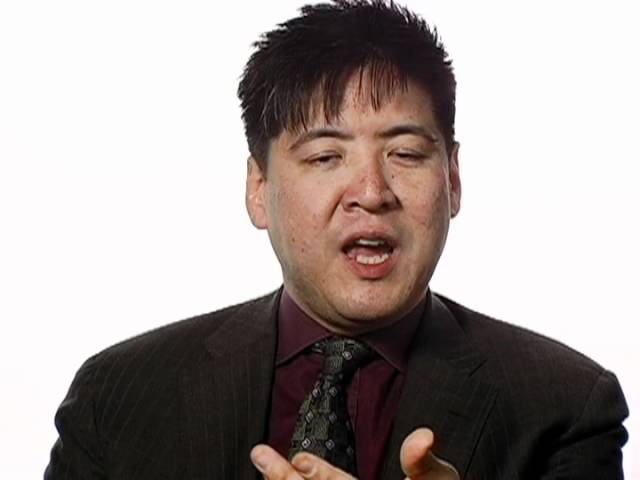
Sam Wang explores the state of autism prevention and therapy.
----------------------------------------------------------------------------------
Sam Wang:
Sam Wang is an associate professor, Department of Molecular Biology and the Princeton Neuroscience Institute.
Wang grew up in California and studied physics at the California Institute of Technology. Seeking his Ph.D. at Stanford University, he switched to neuroscience. He has worked at Duke University as a postdoctoral fellow and aided political leaders as a Congressional Science Fellow. After completing his postdoctoral studies, he spent two years at Bell Laboratories in Murray Hill, N.J., where he learned to use pulsed lasers to study brain signaling before coming to Princeton.
Wang, who has published more than 40 articles on the brain in leading scientific journals. His educational reach extends past the laboratory and classroom in his books, popular articles and efforts to convey neuroscience to interested nonscientists.
----------------------------------------------------------------------------------
TRANSCRIPT:
Question: When we science cure autism?
Sam Wang: Autism is been very much in the news lately and it’s pretty much everywhere you look. It’s been a really remarkable thing to watch, just as a phenomenon of watching people become very interested in it.
My younger sister is autistic. And when I was a child, the only thing I knew about autism was the fact that Karen was autistic. Now, it seems to be in the news everywhere. What’s known about autism… The number one thing that’s known about autism is that it seems to be largely genetically determined. If one identical twin is autistic, then the odds of the other twin having some kind of autism spectrum disorder is between 50% and 80%. And that’s just a tremendous probability. And that’s not the case for non-identical twins, for fraternal twins.
And so, that’s a major piece of evidence that autism is largely genetic. And one big story in the last 5 years has been the identification of genes that increase the risk of autism. And it’s not one gene, it seems to be some more complex polygenic disorder where you get dealt a bunch of genes from your mother and from your father.
And if you draw the wrong combination of genes, say, between 2 and 10 genes, then that increases the risk of being autistic. So that’s the main thing that’s known. As far as the later development of it, people are starting to look at structural differences between the brains of autistic people and what are called neurotypical people, and those are changes that take place in the neocortex, which is the largest part of our brain, and also the cerebellum, which people use to think of as being a sensory or a motor structure but seems to be, perhaps, important also for more advanced cognitive tasks. And so, the cerebellum has been [IB] in the last few years.
As far as treatments for autism, right now the one kind of treatment that seems to be somewhat helpful is behavioral therapy, especially when children are diagnosed and identified as needing the help young. And so, that is interesting because it’s the one way that seems to possibly help kids who have autism. And it maybe part of why diagnosis rates have gone up because it’s recognized that those therapies can help kids. And so, people are motivated to identify these problems in their kids when they’re young because that’s when it’s possible to maybe catch these things and help these kids and to the rest of society.
Question: Are there promising new treatments?
Sam Wang: Well, one characteristic of autism therapy in the last few years has been basically taking autistic kids and seeing what can be done to help them.
I wouldn’t call it palliative but it’s in the category of helping kids who are already diagnosed with autism, who’ve already been through a lot of the developmental stages that lead to autism. And it’s… And in some sense, the horse is out of the barn and it’s a question of what you can do to help these kids to bring to them the kind of social skills that would help them work much better in society. I think treatment is a ways away. It’s not in the next 5 years or even next 10 years but I think that understanding the mechanism and development that lead to autism could eventually lead to some kind of therapy that could perhaps nip autism in the bud when kids are, when their brains are making these developmental choices early in life.
So I think it’s a ways off but I think the research starts pointing towards better therapies.
Question: How do savants’ brains work?
Read the full transcript at
Sentinel Indexing in Progress
Metadata and chapters are available. Claim extraction for this episode is pending.
All video content is delivered via YouTube embedded players in accordance with the YouTube Terms of Service. Sentinel provides research tools that promote discovery and accountability across political media.