Big Think
@bigthink·8.8M subscribers·10.1K videos
Smart Ideas For Fixing Healthcare | Big Think
Posted
April 24, 2012
Views
20,904
Likes
267
Comments
10
Engagement
1.33%
April 24, 2012
20,904
267
10
1.33%
Every word spoken in this episode is indexed. Type any phrase to jump straight to the moment it was said.
Type any word or phrase that may have been spoken. Click a result to seek the player to that exact moment.
Try a name, a topic, or a quoted line
See what was published immediately before and after this episode.
 10:21Now Playing
Smart Ideas For Fixing Healthcare
New videos DAILY
Join Big Think Edge for exclusive videos
----------------------------------------------------------------------------------
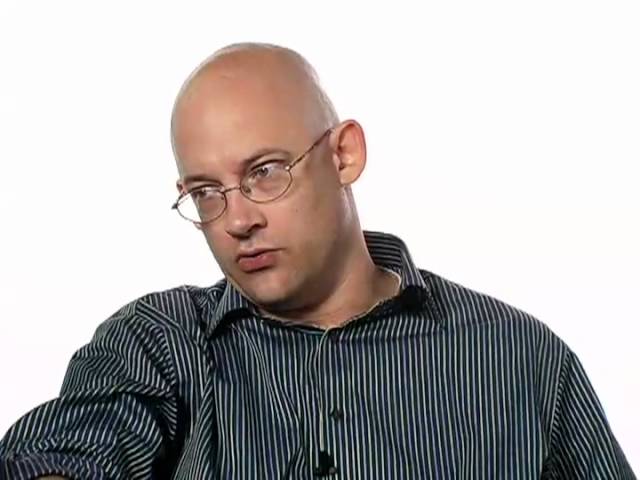
Clayton Christensen on how public-private partnerships can fix the healthcare system.
----------------------------------------------------------------------------------
Clayton M. Christensen:
Clayton M. Christensen is a professor of business administration at the Harvard Business School. He is the bestselling author of five books, including his seminal work, The Innovator's Dilemma, which received the Global Business Book Award for the best business book of the year, and most recently, The Innovator's Prescription, which examines how to fix our healthcare system. Christensen serves on several public and privately traded boards and is the founder of a successful consulting company and an investment management firm. He holds a B.A. with highest honors in economics from Brigham Young University and an M.Phil. in applied econometrics and the economics of less-developed countries from Oxford University, where he studied as a Rhodes Scholar; he received an MBA with high distinction from the Harvard Business School in 1979, graduating as a George F. Baker Scholar, and was awarded his DBA from the Harvard Business School in 1992.
----------------------------------------------------------------------------------
TRANSCRIPT:
Topic: Healthcare Solutions: Past, Present and Future.
Clayton Christensen: About half of the healthcare that is provided in America is really unnecessary.
I’m Clayton Christensen. The Robert and Jane Cizik, Professor of business administration at the Harvard Business School.
Question: Why are healthcare costs so out of control?
Clayton Christensen: It’s difficult to measure the extent to which the healthcare cost or out of control because in some markets the prices are controlled. In the United States, where they are not, prices are increasing at 10 to 12 % per year, roughly triple the rate of inflation.
In other countries where they have a nationalized healthcare systems, you have the same sort of inflationary pressures, but a cap on costs based on the government’s budgets. As a consequence they control costs by offering less and less healthcare. But that mismatch between what healthcare costs and what people think they can afford is a plague that affects everyone in the world.
Question: What drives the cost of healthcare in the United States?
Clayton Christensen: A major driver of the cost of healthcare in the United States is a compromise that was reached with the American Medical Association in the 1960s when Medicare was first established.
In order to buy off the doctors, the government agreed to compensate doctors on a fee-for-service basis, and what that means is the more services doctors provide, the more income they make. And the more complicated and expensive the services that they provide are, the more income they make.
The fee-for-service system essentially pours gasoline on the fire of healthcare cost inflation because when we guarantee that we will reimburse them for whatever they do and whatever it costs, they are just incentivized to offer more and more and more.
Question: What are the free-market solutions?
Clayton Christensen: There is a tremendous benefit in enabling lower cost venues of care, such as homes or retail clinics with devices that enable them to do more and more sophisticated things.
For example, the cost of end-stage renal care for patients with kidney failure is enormous. At the beginning, those patients had to go to a dialysis unit in a hospital and then free standing dialysis clinics have been created. But now the ability to dialyze your blood has been transferred to the home in the form of machines that are about the size of a bread maker. And every night, patients can plug themselves into this home dialysis equipment and scrub their blood clean so that they don’t have to go to the higher cost venues of care.
Retail clinics are able to care for about 36 disorders now at very low cost and minimal inconvenience; where a nurse practitioner is able to just follow the rules of when you have a precisely diagnosable disease, what the therapy needs to be. These are high quality interactions.
When you make something simple and rules-based, you take the judgment out of the care. Whereas you would think that a retail clinic’s staffed only by a nurse practitioner would be more subject to malpractice lawsuits; it’s not the case. No retail clinic has ever yet been sued for malpractice because everything they do is rules-based and as long as you follow the rules, there’s no basis for malpractice lawsuits.
Read the full transcript at
Sentinel Indexing in Progress
Metadata and chapters are available. Claim extraction for this episode is pending.
All video content is delivered via YouTube embedded players in accordance with the YouTube Terms of Service. Sentinel provides research tools that promote discovery and accountability across political media.