Big Think
@bigthink·8.8M subscribers·10.1K videos
Tom Stewart: How Do You Succeed In Business During a Recession? | Big Think
Posted
April 24, 2012
Views
7,473
Likes
73
Comments
1
Engagement
0.99%
April 24, 2012
7,473
73
1
0.99%
Every word spoken in this episode is indexed. Type any phrase to jump straight to the moment it was said.
Type any word or phrase that may have been spoken. Click a result to seek the player to that exact moment.
Try a name, a topic, or a quoted line
See what was published immediately before and after this episode.
 6:48Now Playing
Tom Stewart: How Do You Succeed In Business During a Recession?
New videos DAILY
Join Big Think Edge for exclusive videos
----------------------------------------------------------------------------------
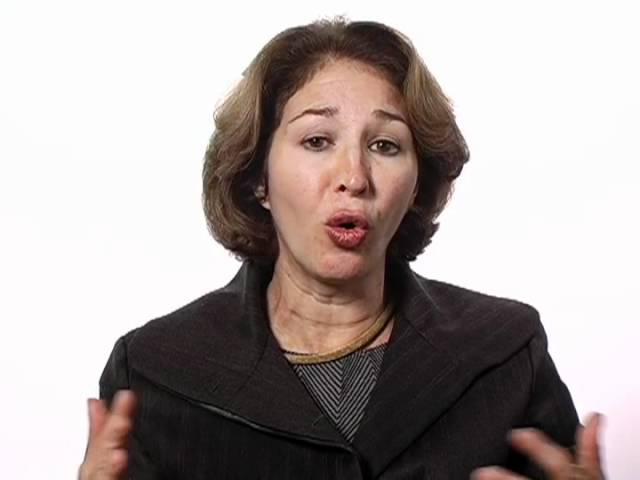
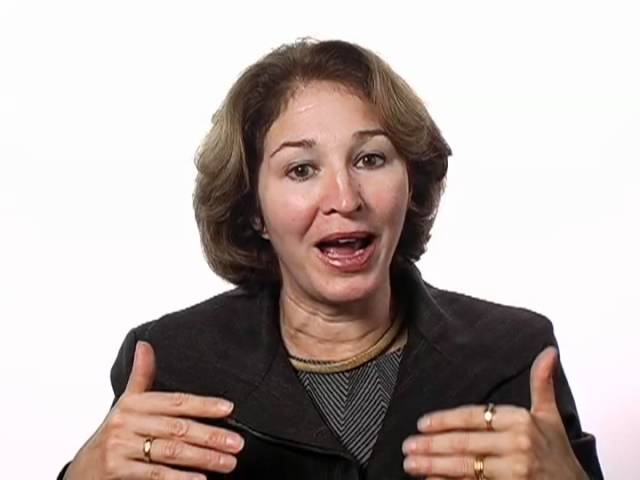
Tom Stewart advises business leaders on managing and thriving in an economic downturn.
----------------------------------------------------------------------------------
Thomas A. Stewart:
Thomas A. Stewart is the Chief Marketing and Knowledge Officer (CMKO) of the global management consulting firm Booz & Company. Stewart most recently served as editor and managing director of Harvard Business Review, and is a best-selling author, an authority on intellectual capital and knowledge management, and an influential thought leader on global management issues and ideas.
During Stewart’s six years with Harvard Business Review, the magazine was a two-time finalist for general excellence in the National Magazine Awards, and received an “Eddie” in 2007 from Folio Magazine.
Previously, Stewart served as the editorial director for Business 2.0 and as a member of Fortune’s Board of Editors. He is the author of two books, Intellectual Capital: The New Wealth of Organizations, and The Wealth of Knowledge: Intellectual Capital and the 21st Century Organization, published by Doubleday Business in 1998 and 2003, respectively.
Stewart is a fellow of the World Economic Forum. He is a summa cum laude graduate of Harvard College, and holds an honorary Doctor of Science degree from Cass School of Business at City University, London.
----------------------------------------------------------------------------------
TRANSCRIPT:
Tom Stewart: I’m Tomas A. Stewart. I’m the Chief Marketing and Knowledge officer of Booz and Company.
Question: How should companies respond to the recession?
Stewart: If I were a CEO right now, I would be concerned about three big issues.
Number 1 would be liquidity. Can I make it through the night, can I just get through the crisis? And I think the crisis itself is starting to ameliorate but there’s still, can I make it through the liquidity problem?
The second is fitness. Am I fit, am I lean, am I operationally fit for the long term?
And the third is taking advantage of the strategic opportunities that structural change are going to create.
If I were a CEO right now, I would find it very hard to look simultaneously through the microscope at every cost and through a telescope at the future and that’s where I think we’re seeing a lot of confusion in executive suites; of a lot of paralysis, this feeling like I don’t quite know what to do. I’ve got to look at every nickel of cost. But I realize at the same time my industry is going to be changing dramatically, I better have a point of view about the future, because if I don’t have a point of view about the future, somebody else will.
Tom Question: How can business leaders maintain a veneer of optimism?
Stewart: I think that the most important thing to recognize here is, first of all, that there’s not a lot who [became by line]. Your team and the people around you know how business is. You can’t fool them. And you are only fooling yourself if you think you can fool them.
At the same time, I think that you have to recognize that within the truth you still have plenty of opportunity to motivate people. And the more you share with them, the more you rely on them. The more you open up, the more they can help you.
Now, under stress people have this almost instinctive desire to be like turtles. You pull in; you go into your shell and you get defensive. And it’s when you’re in good times, we tend to get expansive and open up; but oh, put the feet on the desk and come on in and have a scotch you know, that’s the sort of a natural reaction and it’s almost the wrong reaction to this kind of stress. You need to try to find ways to open up.
You’re not lying. Business is tough. Here is the situation. This is what we’ve got. This is what we’re facing. And get people to participate and get people open up. This, by the way, also has the benefit then of giving you the support of the team and giving you the support you need. It’s really easy to get into a downward spiral. But there is something about business that gets people starting to think about well, all right. It is what it is, what am I going to do about it?
Business people tend not to be deeply introspective; they tend to be to have bias for action, let’s get on with it. Well, it is what it is, now what? And if you can get to that now what, I think that allows you to enlist the people in the challenges that you face in it. They face and boy it gives you a lot of aid and comforted.
Read the full transcript at
Sentinel Indexing in Progress
Metadata and chapters are available. Claim extraction for this episode is pending.
All video content is delivered via YouTube embedded players in accordance with the YouTube Terms of Service. Sentinel provides research tools that promote discovery and accountability across political media.