Big Think
@bigthink·8.8M subscribers·10.1K videos
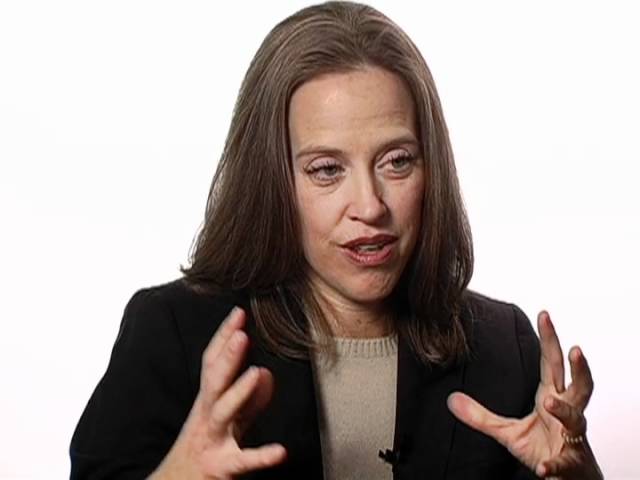
Wendy Kopp on Leadership | Big Think
Posted
April 24, 2012
Views
1,650
Likes
8
Comments
1
Engagement
0.55%
April 24, 2012
1,650
8
1
0.55%
Every word spoken in this episode is indexed. Type any phrase to jump straight to the moment it was said.
Type any word or phrase that may have been spoken. Click a result to seek the player to that exact moment.
Try a name, a topic, or a quoted line
See what was published immediately before and after this episode.
 3:44Now Playing
Wendy Kopp on Leadership
New videos DAILY
Join Big Think Edge for exclusive videos
----------------------------------------------------------------------------------
The founder of Teach For America talks about the importance of building allies.
----------------------------------------------------------------------------------
Wendy Kopp:
Wendy Kopp proposed the creation of Teach For America in her undergraduate senior thesis in 1989 and has spent the last 19 years working to sustain and grow the organization. In the 2008-2009 school year, more than 6,200 corps members are teaching in our country's neediest communities, reaching approximately 400,000 students. They join more than 14,000 Teach For America alumni who—still in their 20s and 30s—are already assuming significant leadership roles in education and social reform. Under Kopp's leadership, Teach For America is in the midst of an effort to grow to scale while maximizing the impact of corps members and alumni as a force for short- and long-term change. Kopp also serves as the chief executive of Teach For All, which is supporting the development of Teach For America's model in other countries. She is the author of One Day, All Children: The Unlikely Triumph of Teach For America and What I Learned Along the Way, and holds a bachelor's degree from Princeton University, where she participated in the undergraduate program of the Woodrow Wilson School of Public and International Affairs.
----------------------------------------------------------------------------------
TRANSCRIPT:
Question: What have you learned running Teach For America for the last 20 years?
Kopp: You know, I guess what I would say is that this whole process has been a search for allies, you know, and it’s just you’re looking for people who understand this and really deeply believe in it and want to help make it happen. And there are plenty of people out there who have said no along the way or for whatever reason don’t, you know, haven’t gravitated to this as the fundamental, you know, force that I think it has the potential to be, but for every one who hasn’t been compelled there’s at least one person who has, and, really, all you need to, you know, grow a social enterprise is enough allies, you know? So, I guess, I think persistence in finding supporter and in just expanding constantly the set of true believers out there is a huge piece of what it takes to really ultimately make a social enterprise work.
Question: What have been your greatest leadership challenges?
Kopp: That’s a… I don't know. I would say, yes, this has been, we’ve been at this for 18 years now, and it has been just an incessant learning curve on every front in terms of, you know, actually even just how do we manage something on a significant scale? How do we ensure its financial sustainability? How do we navigate a very complex education policy environment? And, most centrally, really, you know, how do we do this well? Like, how do we recruit the select people straight out of college to teach in the most challenging teaching situations in the country, and not just survive but really excel with their kids so that they do in fact help put kids growing up today on the level playing field with kids in other communities and, as a result, learn the right lessons rather than becoming more disillusioned, actually, become more committed to the possibility of change. It’s incredibly complex set of things to figure out all the same time, how to do well. And I would say that we’re still on the learning curve on every piece of that.
Question: What resources were most important for the success of Teach For America?
Kopp: Probably one of the greatest strengths of Teach For America has been that we sort of, we knew at the front end that we didn’t have the answers and we set out to find them and have been just so open and responsive and really searching for help on every level of this and continue to be. So, our program has evolved just completely dramatically. You know, based on feedback from the core members themselves, our own research into what is working and what isn’t working, feedback from experienced teachers and educators and such, and the same is true at every, you know, on every dimension of what we do. I mean, I think, you know, we try hard to be successful but, inevitably, just learn many lessons along the way. And so, I think that embracing, you know, the process of constant learning and continuous improvement is honestly probably part of the core of our success.
Sentinel Indexing in Progress
Metadata and chapters are available. Claim extraction for this episode is pending.
All video content is delivered via YouTube embedded players in accordance with the YouTube Terms of Service. Sentinel provides research tools that promote discovery and accountability across political media.