Big Think
@bigthink·8.8M subscribers·10.1K videos
What are the major issues confronting the U.S.? Robert Hormats | Big Think
Posted
April 24, 2012
Views
178
Likes
1
Engagement
0.56%
April 24, 2012
178
1
0.56%
Every word spoken in this episode is indexed. Type any phrase to jump straight to the moment it was said.
Type any word or phrase that may have been spoken. Click a result to seek the player to that exact moment.
Try a name, a topic, or a quoted line
Episode Timeline
Every episode in order around the one you’re watching — click any card and the page flips straight to it.
 4:28Now Playing
What are the major issues confronting the U.S.?
New videos DAILY
Join Big Think Edge for exclusive videos
----------------------------------------------------------------------------------
We lack political vision, Hormats says.
----------------------------------------------------------------------------------
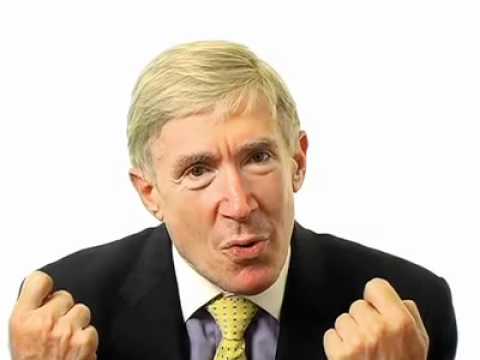
Robert D. Hormats:
Robert D. Hormats is the U.S. Under Secretary of State for Economic, Business, and Agricultural Affairs. He was formerly vice chairman of Goldman Sachs (International) and managing director of Goldman, Sachs & Co.
Hormats has also served as ambassador and deputy US Trade Representative, and senior deputy assistant secretary for Economic and Business Affairs at the US Department of State. He was a senior staff member on the National Security Council and senior economic advisor to National Security Advisors Henry Kissinger, Brent Scowcroft, and Zbigniew Brzezinski. Hormats has received the French Legion of Honor and Arthur Fleming Award.
Mr. Hormats has been a visiting lecturer at Princeton University and is a member of the Board of Visitors of the Fletcher School of Law and Diplomacy and the Dean's Council of the John F. Kennedy School of Government at Harvard University.
Mr. Hormats' publications include Abraham Lincoln and the Global Economy; American Albatross: The Foreign Debt Dilemma; and Reforming the International Monetary System. Mr. Hormats earned a B.A. from Tufts University with a concentration in economics and political science; an M.A. and a Ph.D. in international economics from the Fletcher School of Law and Diplomacy.
----------------------------------------------------------------------------------
TRANSCRIPT:
Question: What are the major issues confronting the U.S.?
Robert Hormats: Well of course currently the mess in Iraq stands out. You can’t avoid reading about that. That is, I think, so debilitating to our country internally, and so harmful to our image abroad, so harmful to the respect that we would like to be held in abroad. And we’re simply not because that’s been done so badly and messed up so badly. And instead of making us more secure, I think it has certainly made us less secure in the sense that it’s trained a whole new generation of jihadists.
Now obviously there were threats to the United States before, and there would have been threats without the Iraq War; but it has not made us any more secure in itself.
And second, it’s caused us to loose an enormous amount of our prestige and our aura of being a constructive participant in the global system.
When I was in Africa, I was in Kenya, and there was a picture of the president of Kenya, Uhuru Kenyatta, in every little hut; and a picture of John F. Kenney next to him. You don’t see in a hut in Kenya today, a picture of the current president and a picture of George W. Bush.
America’s image in the world I think has suffered very badly, and that obviously is of considerable concern to me.
The second is that in the broader war on terrorism, we’re going to have to deal with that not only by Homeland Security, but by helping other countries address the kind of issues that are important to them. This won’t make us 100 percent secure, but at least it improves our ability to deal with the man or the woman on the street in some of these societies where there’s a great deal of bitterness toward the United States. It will help.
Third, I look around and I am worried about the future of our country because I don’t see in the political system a great deal of vision. I don’t see people who are willing to address the tough issues that our country is going to have to deal with. I see a lot of people looking at the polls, a lot of people trying to come up with solutions that are popular at the moment, or at least are not unpopular at the moment; but not willing to educate Americans to the kind of tough issues that our country is going to have to deal with in the future. In fact, almost consciously avoiding those. And that troubles me when I read the paper and watch television.
And then in our society, when you see things like celebrated actors and actress who were acting up, they get huge amounts of time on TV. If we diverted the same amount of time to encouraging kids to study mathematics or physics; or if we devoted the same amount of time to celebrating people who are successful – kids who are successful in the sciences, for instance, as we do celebrating a few rock stars who misbehave, we would create a better image. We’re good at what we celebrate.
And in fact if you celebrate dysfunctional behavior, which you see on TV all the time, instead of celebrating people who’ve made real accomplishments in medicine, and in science, and in various parts of the productive economy, we’d be a lot better off if we did the latter. We would be a lot better off.
Read the full transcript at
Sentinel Indexing in Progress
Metadata and chapters are available. Claim extraction for this episode is pending.
All video content is delivered via YouTube embedded players in accordance with the YouTube Terms of Service. Sentinel provides research tools that promote discovery and accountability across political media.