Big Think
@bigthink·8.8M subscribers·10.1K videos
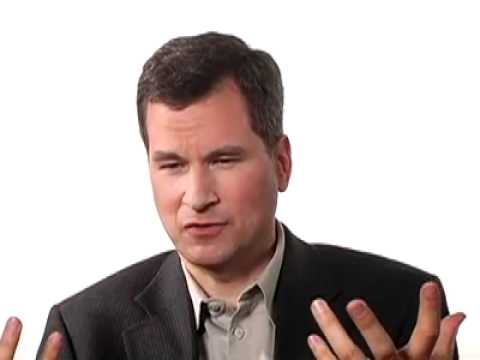
Big Think Interview With Francine Prose | Big Think
Posted
April 24, 2012
Views
6,720
Likes
60
Comments
27
Engagement
1.29%
April 24, 2012
6,720
60
27
1.29%
Every word spoken in this episode is indexed. Type any phrase to jump straight to the moment it was said.
Type any word or phrase that may have been spoken. Click a result to seek the player to that exact moment.
Try a name, a topic, or a quoted line
Episode Timeline
Every episode in order around the one you’re watching — click any card and the page flips straight to it.
 31:53Now Playing
Big Think Interview With Francine Prose
New videos DAILY
Join Big Think Edge for exclusive videos
----------------------------------------------------------------------------------
Francine Prose:
Francine Prose is the author of fifteen books of fiction, including A Changed Man and Blue Angel, which was a finalist for the National Book Award, and the nonfiction New York Times bestseller Reading Like a Writer. Her latest novel, Goldengrove, was published in September 2008. She is the president of PEN American Center. She lives in New York City.
----------------------------------------------------------------------------------
TRANSCRIPT:
Question: Why is Anne Frank’s diary of universal interest to readers?
Francine Prose: I wrote the book essentially because I was trying to figure that out. What is it about this book that made it explode that way in popularity and readership and the devotion of its readers? So the first thing I decided to do, or thought I was going to do, was to look at the book as a book and as a work of literature, really, because that was the thing that seemed to me really hadn’t exactly been done before. I mean it had been talked about in all different sorts of ways but not that way. So I thought having written Reading Like a Writer, which is all about close reading, I would do a kind of straight up close reading of the book; a kind of tribute to the book.
And look at the way Anne used dialogue, narration, passages of reflection, dramatized scenes, and so forth and really so many novelistic techniques work throughout the book. Also, it had occurred to me that in ten or 20 years all the survivors of that time will be gone. And here’s a book that will survive. Here are names of actual people that we’ll remember among all those millions who were killed and again it was written by a 13 to 15 year old girl. So I set out to figure out why that happened. So the first surprise, really for me, was how consciously crafted the book was.
I mean, I thought just what many people thought which was she wrote in this little checked diary and that was it. And then when she was arrested along with her family, the diary was left in the attic and it was essentially transcribed and published. Well what I discovered was that, in fact, she had gone back and rewritten the entire book. She had rewritten it from start to finish. So starting in the spring of 1944, so essentially the last few months in the attic, and very consciously set out to write something that would be published; that would be read. So it wasn’t quite the accident that most people think. I mean, she really thought of herself as a writer.
She thought of what she was writing as a work of literature. She thought, you know, her intention was to do a kind of novel; almost like a girl’s detective romance, in a way, based on her diary. So that’s what she thought she was doing.
Question: What kind of writer was Anne Frank?
Francine Prose: She was very conscious of what she was doing. I mean, for example, people think that the device of calling the diary Kitty and of framing the diary entries as letters to the unknown, unseen, imagined, imaginary friend Kitty was again some kind of spontaneous thing that she did. Well the early diary entries, for example, the first diary entry in which she decides to talk to Kitty, to call the diary Kitty, is dated June 20th, 1942 but again it was written in 1944. So that decision to call the diary Kitty, which sounds like the decision of a 13 year old, was actually the work of a 15 year old trying to imagine her way back into the persona and the mind of the 13 year old that she was. And even that, I mean that device of using Kitty, being able to write partly in the second person to a particular audience turns the reader into that audience. So it’s not as if she is writing into the ether really, she writing to a very particular person and when we read it, we become that person, that listener, that intimate friend of hers.
Question: Was Anne Frank a self-conscious writer?
Francine Prose: I mean, she sounds very innocent and open and it sounds completely unselfconscious but one of the things I thought about and discovered and thought about some more is how much craft it takes to sound unselfconscious. I mean, in fact, the unselfconscious way of writing sounds self-conscious. I mean, when most people start to write—sit down and start to write their journals and diaries, what you get is this kind of stilted, you know, and you can see it on peoples’ blogs all the time that kind of, you know, you’re looking in the mirror and writing at the same time in a certain way. So that naturalness and that kind of flowing quality of her narration was actually something worked on;
Read the full transcript at
Sentinel Indexing in Progress
Metadata and chapters are available. Claim extraction for this episode is pending.
All video content is delivered via YouTube embedded players in accordance with the YouTube Terms of Service. Sentinel provides research tools that promote discovery and accountability across political media.