Big Think
@bigthink·8.8M subscribers·10.1K videos
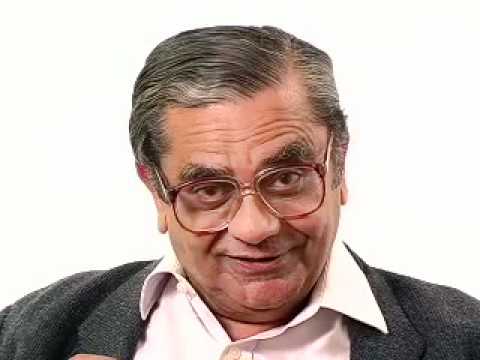
What are the pros and cons of globalization? | Jagdish Bhagwati | Big Think
Posted
April 24, 2012
Views
30,124
Likes
60
Comments
8
Engagement
0.23%
April 24, 2012
30,124
60
8
0.23%
Every word spoken in this episode is indexed. Type any phrase to jump straight to the moment it was said.
Type any word or phrase that may have been spoken. Click a result to seek the player to that exact moment.
Try a name, a topic, or a quoted line
 4:50Now Playing
What are the pros and cons of globalization?
New videos DAILY
Join Big Think Edge for exclusive videos
----------------------------------------------------------------------------------
The pros and cons of an unstoppable phenomenon.
----------------------------------------------------------------------------------
Jagdish Bhagwati:
One of the most influential trade theorists of his generation, Jagdish Bhagwati is a professor of economics at Columbia University and a Senior Fellow in International Economics at the Council on Foreign Relations. From 1991-1993 Bhagwati was an Economic Policy Advisor to Arthur Dunkel, the Director of GATT. For the World Trade Organization, he has been an External Advisor to the WTO and has served on the Expert Group on the Future of the WTO appointed by the Director General. Bhagwati has been a Special Advisor to the UN on Globalization. He was also on the Advisory Committee to Secretary General Kofi Annan on the NEPAD process in Africa, and a member of the Eminent Persons Group under the chairmanship of President Fernando Henrique Cartoso on the future of the United Nations Conference on Trade and Development.
Bhagwati is the recipient of several prizes and honorary degrees, including Gold and Silver Stars from Japan's Order of the Rising Sun and the Padma Vibhushan from the government of India. The author and/or editor of over fifty volumes and over three hundred articles, Bhagwati's articles have appeared in The New York Times, The Wall Street Journal, The Financial Times, The New Republic and The Times Literary Supplement. He founded the Journal of International Economics in 1971 and another journal, Economics & Politics, in 1989.
His most recent books are In Defense of Globalization (2004) and Free Trade Today (2002); his early books, particularly India: Planning for Industrialization (1970) and India (1975) opened the doors for current economic reform in India; on these reforms he was advisor to India's Finance Minister, now Prime Minister.
Bhagwati has delivered lectures at many top educational institutions and appeared on television shows including the MacNeil Lehrer News Hour, the Charlie Rose Show and Bloomberg. He is a director of the National Bureau of Economic Research, a Fellow of the Econometric Society, a member of the American Philosophical Society and the American Academy of Arts and Sciences, a Distinguished Fellow of the American Economic Association, on the board of the Academic Advisory Board of Human Rights Watch, Asia and on the Council of the Economic Priorities Accreditation Agency. The recipient of many awards, among them the Mahalanobis Memorial Medal, the Bernhard Harms Prize, the Kenan Prize, the John R. Commons Award, the Freedom Prize and the Frank E. Seidman Distinguished Award in Political Economy, he has been awarded honorary degrees from several universities.
Jagdish Bhagwati graduated from Cambridge University in 1956 and continued his studies at MIT and Oxford. Before joining the faculty at Columbia, he was a professor at the Indian Statistical Institute, the Delhi School of Economics, and MIT.
----------------------------------------------------------------------------------
TRANSCRIPT:
Jagdish Bhagwati: The strongest argument for globalization is that it enables you to profit from specialization. Now by that I don’t mean that there’s a static specialization. Like I’m going to be the ___________ water or ___________.
Because endowments, technology, everything is changing all the time. What I mean is that at any one point of time, you have a certain set of endowments which you have accumulated, you have shaped and so on, which then define what you’re good at.
But once you do that, then we economists say – and this goes back to Adam Smith at its very essence over 200 years ago – “Maybe I can do everything better than you can.” Like I can maybe interview better than you do. I can teach better than you do. But clearly my greatest advantage over you certainly is in teaching, certainly not in; I may be a little bit better than you at interviewing.
You know there’s this Jewish joke about someone asks somebody, “Can you play the violin?” And the answer by this Jewish wit is that, “Well maybe I can, but I’ve never tried.” So maybe I’m a better interviewer, but I’ve never tried it.
Read the full transcript at
Sentinel Indexing in Progress
Metadata and chapters are available. Claim extraction for this episode is pending.
All video content is delivered via YouTube embedded players in accordance with the YouTube Terms of Service. Sentinel provides research tools that promote discovery and accountability across political media.