Big Think
@bigthink·8.8M subscribers·10.1K videos
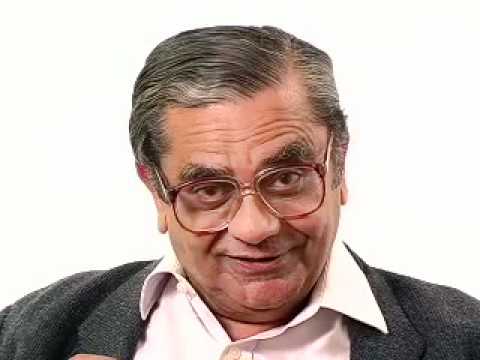
Does globalization widen the income gap? | Peter Thiel | Big Think
Posted
April 24, 2012
Views
8,794
Likes
116
Comments
11
Engagement
1.44%
April 24, 2012
8,794
116
11
1.44%
Every word spoken in this episode is indexed. Type any phrase to jump straight to the moment it was said.
Type any word or phrase that may have been spoken. Click a result to seek the player to that exact moment.
Try a name, a topic, or a quoted line
 5:17Now Playing
Does globalization widen the income gap?
New videos DAILY
Join Big Think Edge for exclusive videos
----------------------------------------------------------------------------------
It’s not at all clear, Thiel says, that income disparities are growing globally.
----------------------------------------------------------------------------------
Peter Thiel:
Peter Thiel is an American entrepreneur, hedge fund manager and venture capitalist. He is Clarium’s President and the Chairman of the firm’s investment committee, which oversees the firm’s research, investment, and trading strategies. Before starting Clarium, Peter served as Chairman and CEO of PayPal, an Internet company he co-founded in December 1998 and was acquired by eBay for $1.5 billion in October 2002.
Prior to founding PayPal, Peter ran Thiel Capital Management , the predecessor to Clarium, which started with $1 million under management in 1996. Peter began his financial career as a derivatives trader at CS Financial Products, after practicing securities law at Sullivan & Cromwell.
In addition to managing Clarium, Peter is active in a variety of philanthropic and educational pursuits; he sits on the Board of Directors of the Pacific Research Institute, the Board of Visitors of Stanford Law School, and is an adviser to the Singularity Institute for Artificial Intelligence. Peter received a BA in Philosophy from Stanford University and a JD from Stanford Law School. He is self-described libertarian and a minority investor in Big Think.
----------------------------------------------------------------------------------
TRANSCRIPT:
Question: Does globalization widen the income gap?
Peter Thiel: Yes. I think it is the case that there has been a widening income disparity within the U.S. It is not clear that this has been happening on a global basis. If you look at the numbers of very poor people who have gotten _________ China as well as India, it is not at all clear that global wealth disparities are increasing or decreasing. I think that’s much more open to debate.
But in the developed countries, there does seem to be quite a bit of pressure – especially on people in the middle class who are competing for jobs with people who are asking for much lower salaries. Your car factory worker in Detroit versus a car factory worker in _________ in China.
I think there are probably a whole set of different factors that are driving this. There’s a technological shift from an industrial to an information age economy where knowledge is more important.
There’s a globalization aspect certainly; which is a legacy of these massive disparities that have historically existed.
There’s a whole set of different factors to this. Whatever the analysis is, you then have another different set of questions as to what if anything one should do about it. And it seems to me it would be a very big mistake to just end globalization.
This is where the people who complain about globalization leading to greater disparities – why they’ve been so ineffective, at least thus far politically, is because if you actually end globalization, this would just be an unmitigated disaster. And there’s no logic, there’s no peaceful way to end it. If you imagine getting together a group of anti-globalization activists and politicians at some sort of worldwide conference to bring about the end of globalization, this would have to be like a self-contradictory farce. Or perhaps a cover for some other version of globalization such as for a worldwide communist revolution or something like that.
Globalization will not end by collective political action. It will not end by individual choice, because it makes too much sense for individuals.
The only way globalization will end is by world war. And that’s how it ended in 1914, and that’s the risk of how it could end again.
I don’t think there’s anything automatic about it, but I think the alternatives are very terrible.
Question: How can we ease these tensions?
Peter Thiel: Again, without having all the answers here, I think one of the challenges is that we have to we have to start by being honest with people; and we have to start by recognizing that a lot of these constituencies have expectations that are completely crazy.
Read the full transcript at
Sentinel Indexing in Progress
Metadata and chapters are available. Claim extraction for this episode is pending.
All video content is delivered via YouTube embedded players in accordance with the YouTube Terms of Service. Sentinel provides research tools that promote discovery and accountability across political media.