Big Think
@bigthink·8.8M subscribers·10.1K videos
What challenges do Black women face in America? Nelson George | Big Think
Posted
April 24, 2012
Views
4,883
Likes
57
Comments
26
Engagement
1.70%
April 24, 2012
4,883
57
26
1.70%
Every word spoken in this episode is indexed. Type any phrase to jump straight to the moment it was said.
Type any word or phrase that may have been spoken. Click a result to seek the player to that exact moment.
Try a name, a topic, or a quoted line
Episode Timeline
Every episode in order around the one you’re watching — click any card and the page flips straight to it.
 2:27Now Playing
What challenges do Black women face in America?
New videos DAILY
Join Big Think Edge for exclusive videos
----------------------------------------------------------------------------------
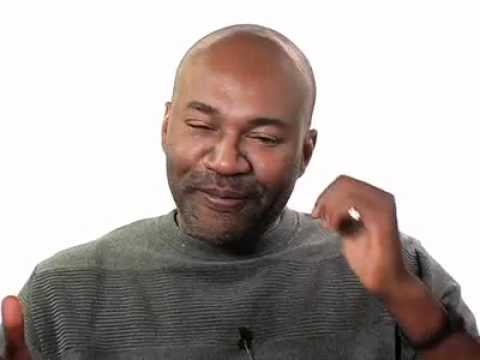
George talks about a new generation of super achievers.
----------------------------------------------------------------------------------
Nelson George:
Nelson George is a novelist, cultural critic, and filmmaker. After receiving his degree from St. John's University in 1982, George first worked for New York's Amsterdam News, later becoming an editor at Billboard and a columnist for the Village Voice. Many of his books -- both fiction and non-fiction -- have focused on black popular culture. George is the author of Hip Hop America and The Death of Rhythm and Blues, both studies of black urban music, as well as the novels Night Work and Urban Romance. George co-wrote the films Strictly Business (1991) and CB4 (1993); he also directed To Be a Black Man, a short based on a piece he wrote for the Voice that starred Samuel L. Jackson.
----------------------------------------------------------------------------------
TRANSCRIPT:
Question: What challenges do Black women face in America
Nelson George: Well you know there is this real interesting dichotomy. It may be ___________. I use that phrase. But in the Black woman’s existence today in the States, they are still compared to Black men, and actually compared to even Hispanic women and other . . . they’ve really done a remarkable job, those that make it to the professional level. There’s a big white collar community. There’s an incredible group of Black women professionals who have made it to some of the highest levels in this country. I guess Condoleezza Rice is a great example, you know obviously, and Oprah. But they’re like “up there”. But __________ strata of women who, either with husbands, or very often without husbands are maintaining families and have gone to good colleges, and have doctorate degrees, and are kind of a backbone of super achievers. They’re some super achievers. And they are big parts of why, you know, you look at Toni Morrison, and you look at that kind of work, there’s just a remarkable group of women who have really achieved. At the same time on the lower end you have the poorest of the poor and the most vulnerable of the vulnerable as Black women. They get some of the lowest income jobs when they . . . heavily burdened with childcare along with low incomes jobs. They’re the ones most vulnerable to HIV infection, and the infection rate numbers are incredibly high. So on one hand the women who are able to push through are some of the most vibrant and strongest people in this country. But those who haven’t been able to make it through are really burdened with the burden of racism and sexism on top of ‘em. So it’s really, you know, an incredibly tough and complicated thing. You know I look at . . . I look at my family and the women in my family and their journeys, it’s just very, very difficult to pull yourself out. But those who pull themselves out, it’s interesting, if they can get up there, and get out, and gather enough money and enough support from family, they can really become . . . they really, I think, exceed at the highest levels when given the right . . . given the chance.
Sentinel Indexing in Progress
Metadata and chapters are available. Claim extraction for this episode is pending.
All video content is delivered via YouTube embedded players in accordance with the YouTube Terms of Service. Sentinel provides research tools that promote discovery and accountability across political media.