Big Think
@bigthink·8.8M subscribers·10.1K videos
Does the Black upper class have a responsibility to the lower class? Nelson George | Big Think
Posted
April 24, 2012
Views
6,417
Likes
53
Comments
33
Engagement
April 24, 2012
6,417
53
33
1.34%
Every word spoken in this episode is indexed. Type any phrase to jump straight to the moment it was said.
Type any word or phrase that may have been spoken. Click a result to seek the player to that exact moment.
Try a name, a topic, or a quoted line
Episode Timeline
Every episode in order around the one you’re watching — click any card and the page flips straight to it.
 2:27
2:27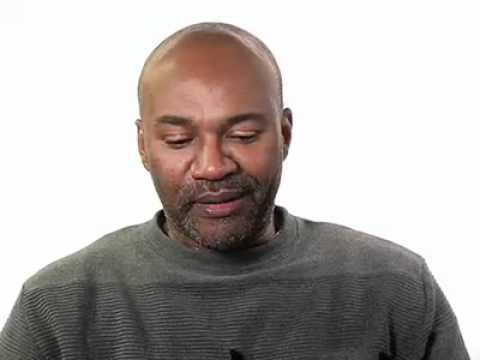 2:03Now Playing
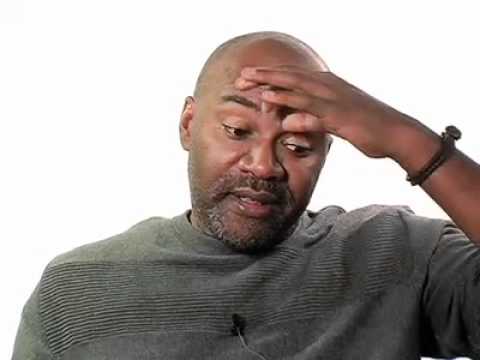
Does the Black upper class have a responsibility to the lower class?
New videos DAILY
Join Big Think Edge for exclusive videos
----------------------------------------------------------------------------------
Poverty, George says, is not a Black issue.
----------------------------------------------------------------------------------
Nelson George:
Nelson George is a novelist, cultural critic, and filmmaker. After receiving his degree from St. John's University in 1982, George first worked for New York's Amsterdam News, later becoming an editor at Billboard and a columnist for the Village Voice. Many of his books -- both fiction and non-fiction -- have focused on black popular culture. George is the author of Hip Hop America and The Death of Rhythm and Blues, both studies of black urban music, as well as the novels Night Work and Urban Romance. George co-wrote the films Strictly Business (1991) and CB4 (1993); he also directed To Be a Black Man, a short based on a piece he wrote for the Voice that starred Samuel L. Jackson.
----------------------------------------------------------------------------------
TRANSCRIPT:
Question: Does the Black upper class have a responsibility to the lower class?
Nelson George: You know I don’t know. I mean there’s a whole ___________. I don’t really . . . I’m not a big follower of leaders. I’m not a big advocate of the big, powerful leader thing. I think it’s about the people who make changes . . . Or changes are made every day by people who do the work every day. The kind of work my sister does – giving out condoms, talking to people – to me that’s leadership. And I don’t really expect a Wall Street guy or Richard Parsons . . . Dick Parsons can donate $20 million to whatever, and that’s great. But without teachers who on a day-to-day basis interact with the kids who are spending the $20 million, the $20 million goes out the door. So I’m not . . . I don’t really get . . . That whole thing that upper class . . . it doesn’t mean anything to me. I was raised up by a little old Black woman with two kids struggling in the projects who taught me how to read before I went to school. That’s leadership. So I don’t really worry about . . . I’m not worried about people . . . I don’t think . . . I think that’s a false, actually, even discussion because it presupposes that Black Americans have a particular responsibility to poor people that White Americans don’t. No one . . . You know does Stallone have a particular responsibility to make sure that working class Italians in Corona, you know, get helped? Probably not. Do rich Americans have a responsibility to poor Americans to help them get a more equitable opportunity in this country? Yes. That’s the way I look at it. I don’t think poverty is a Black issue. I think it’s an American issue.
Sentinel Indexing in Progress
Metadata and chapters are available. Claim extraction for this episode is pending.
All video content is delivered via YouTube embedded players in accordance with the YouTube Terms of Service. Sentinel provides research tools that promote discovery and accountability across political media.