Big Think
@bigthink·8.8M subscribers·10.1K videos
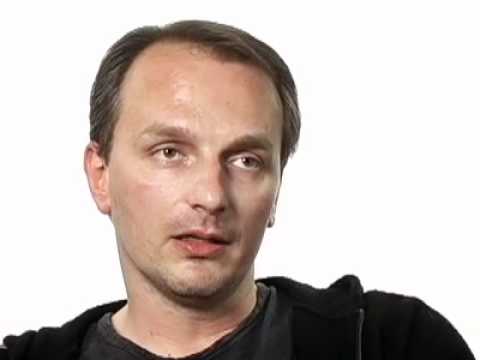
What is gerontology? Aubrey de Grey | Big Think
Posted
April 24, 2012
Views
7,874
Likes
57
Comments
5
Engagement
0.79%
April 24, 2012
7,874
57
5
0.79%
Every word spoken in this episode is indexed. Type any phrase to jump straight to the moment it was said.
Type any word or phrase that may have been spoken. Click a result to seek the player to that exact moment.
Try a name, a topic, or a quoted line
Episode Timeline
Every episode in order around the one you’re watching — click any card and the page flips straight to it.
 2:57
2:57 5:36Now Playing
What is gerontology?
New videos DAILY
Join Big Think Edge for exclusive videos
----------------------------------------------------------------------------------
Gerontology is the study of aging, something that Aubrey sees as treatable.
----------------------------------------------------------------------------------
Aubrey de Grey:
Aubrey de Grey, PhD, is Chairman and Chief Science Officer of the Methuselah Foundation. The core of his research is the identification of all forms of cellular and molecular damage whose accumulation contributes to human aging, and the design of interventions to remove, repair, replace, or render harmless all such damage so as to arrest or even reverse the biological aging process. He has published extensively on these and other areas of gerontology in the scientific literature, and is also Editor-in-Chief of the high-impact journal Rejuvenation Research, the only peer-reviewed academic journal focusing on intervention in aging.
----------------------------------------------------------------------------------
TRANSCRIPT:
Question: What do you do?
Aubrey de Grey: The best way to describe what I do as a biologist is to start by describing what I don’t do. Because there’s one big thing that nearly all biologists do that I don’t do which is experiments. I don’t have my own laboratory. I never have had. I don’t even have training in experimental work. So I work as what, in physics, would be called a theoretician – a theoretical biologist. I bring my ideas together. I take the ideas and the results that other people have generated in the laboratory, and I come up with new proposals for experiments … both experiments to understand aging better, and also experiments to combat aging. And I … I’m able to do this in a manner that experimental biologists are less able to do simply because I have more time. Because experiments are very time consuming. Just the same way that in physics, there are a lots of people who do that – who spend their time bringing ideas together, and who work symbiotically with the experimentalists – that should be the same with biology. In biology, however, it turns out that very, very few people work on the synthesis side. And actually that’s one of the big reasons that I chose to go into the field, because I felt I could make a big contribution simply because there were so few other people trying to do the same thing.
Sentinel Indexing in Progress
Metadata and chapters are available. Claim extraction for this episode is pending.
All video content is delivered via YouTube embedded players in accordance with the YouTube Terms of Service. Sentinel provides research tools that promote discovery and accountability across political media.