Big Think
@bigthink·8.8M subscribers·10.1K videos
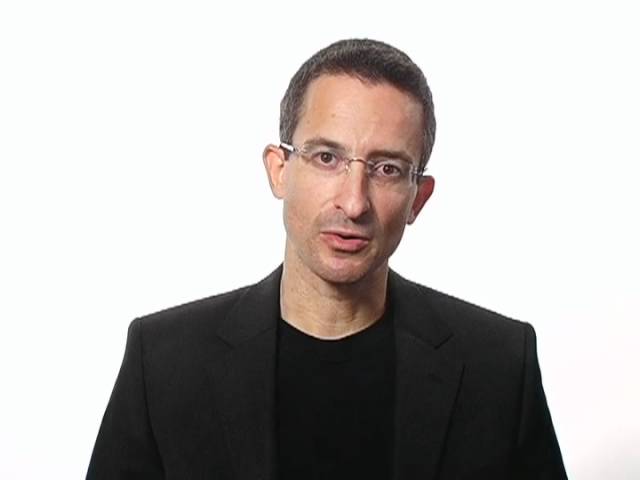
Nicholas Lemann: Is the media responsible for the war in Iraq? | Big Think
Posted
April 24, 2012
Views
178
April 24, 2012
178
Every word spoken in this episode is indexed. Type any phrase to jump straight to the moment it was said.
Type any word or phrase that may have been spoken. Click a result to seek the player to that exact moment.
Try a name, a topic, or a quoted line
Episode Timeline
Every episode in order around the one you’re watching — click any card and the page flips straight to it.
 2:57Now Playing
Nicholas Lemann: Is the media responsible for the war in Iraq?
New videos DAILY
Join Big Think Edge for exclusive videos
----------------------------------------------------------------------------------
This raises a larger issue of the press’ role in politics, Lemann says.
----------------------------------------------------------------------------------
Nick Lemann:
Nick Lemann is the Dean of the Columbia University School of Journalism and a former New Yorker staff writer. While at Harvard – where he graduated in 1976 – Lemann served as President of the Crimson. He has worked as a reporter and editor at The Washington Monthly, Texas Monthly, The Atlantic Monthly and The Washington Post, focusing primarily on national affairs.
Lemann is the author of The Promised Land: The Great Black Migration and How It Changed America, The Big Test: The Secret History of the American Meritocracy, about the SAT, and most recently, Redemption: The Last Battle of the Civil War, about the failure of Reconstruction. At Columbia, where he was hired as Dean of the Journalism School in 2003, Lemann implemented a two-year curriculum and has focused on teaching alternative journalistic mediums in the Internet age.
----------------------------------------------------------------------------------
TRANSCRIPT:
Nicholas Lemann: Well this gets to a larger question. The larger question is, “To what extent is the press a kind of determinative factor in political outcomes?” And that’s, you know . . . A lot of people have studied that, and it’s very hard to prove that the press has any effect at all on political outcomes. Reporters love to think we do, and politicians . . . They would say, “Politicians wouldn’t spend so much time paying attention to us if we didn’t matter a lot.” The primary responsibility for the war in Iraq lies with the Bush administration. And Congress voted for it, and it was popular in the polls, and it was in some non-logical way fueled by 9/11. So we’re talking about a fairly fine-grained thing here, which is the leading voices in the elite press who we rely on is, you know, by weight of very small part of journalism, but a leadership part – a part we rely on – to sort of set signals about outcomes didn’t have its finest hour at that moment. It was a hard story to report. Some people reported it well, and there were some, you know, overly credulous reporting. So . . . But I don’t think the press is responsible for the war in Iraq. I mean let me put it another way. My own belief – and we’ll never know this for 50 years – I don’t think the war in Iraq had anything to do with the question of whether there were weapons of mass destruction in Iraq. I don’t think that was the motive for the Bush administration primarily in wanting to go . . . in wanting to go wage war in Iraq. And it was an argument that was put forward for war. Not the only argument. It was sort of the narrative leading up to the war because it . . . it was kind of available as a rationale. And in the end, you know the way it was set up, there is no way to tell whether a country has weapons of mass destruction. And furthermore I would add I can’t think of an example of the outside world really being successful in stopping a country, any country from having a nuclear program. So you know I’m not really buying into the idea that there was this massive . . . that the press bears primary responsibility. I’m not saying the press performed magnificently or couldn’t have done a better job either.
Sentinel Indexing in Progress
Metadata and chapters are available. Claim extraction for this episode is pending.
All video content is delivered via YouTube embedded players in accordance with the YouTube Terms of Service. Sentinel provides research tools that promote discovery and accountability across political media.