Big Think
@bigthink·8.8M subscribers·10.1K videos
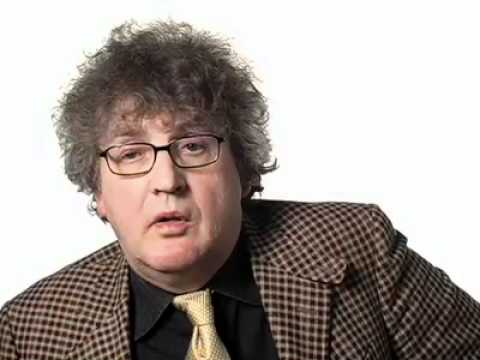
What themes do you have left to explore in your poetry? Paul Muldoon | Big Think
Posted
April 24, 2012
Views
448
Likes
7
Engagement
1.56%
April 24, 2012
448
7
1.56%
Every word spoken in this episode is indexed. Type any phrase to jump straight to the moment it was said.
Type any word or phrase that may have been spoken. Click a result to seek the player to that exact moment.
Try a name, a topic, or a quoted line
Episode Timeline
Every episode in order around the one you’re watching — click any card and the page flips straight to it.
 4:30Now Playing
What themes do you have left to explore in your poetry?
New videos DAILY
Join Big Think Edge for exclusive videos
----------------------------------------------------------------------------------
We are tiny little organisms that, if we are lucky, says Muldoon, “might have half dozen obsessions on which we can draw.”
----------------------------------------------------------------------------------
Paul Muldoon:
Paul Muldoon is a writer, academic and educator, as well as Pulitzer Prize-winning poet from County Armagh, Northern Ireland. Since 1987 he has lived in the United States, where he is now Howard G. B. Clark '21 Professor at Princeton University and Chair of the Peter B. Lewis Center for the Arts. In 2007 he was appointed Poetry Editor of The New Yorker. Between 1999 and 2004 he was Professor of Poetry at the University of Oxford, where he is an honorary Fellow of Hertford College. He won the 2003 Pulitzer Prize for this work, Moy Sand and Gravel (2002).
A Fellow of the Royal Society of Literature, the American Academy of Arts and Sciences and the American Academy of Arts and Letters, Paul Muldoon was given an American Academy of Arts and Letters award in literature for 1996. Other recent awards are the 1994 T. S. Eliot Prize, the 1997 Irish Times Poetry Prize, the 2003 Griffin International Prize for Excellence in Poetry, the 2004 American Ireland Fund Literary Award, the 2004 Shakespeare Prize, the 2005 Aspen Prize for Poetry, and the 2006 European Prize for Poetry. He has been described by The Times Literary Supplement as "the most significant English-language poet born since the second World War."
----------------------------------------------------------------------------------
TRANSCRIPT:
Question: What themes do you have left to explore in your poetry?
Paul Muldoon: I have no idea which themes I might be exploring, partly of course because I suspect, I expect, like most writers, I don’t begin with themes, I don’t think when I write, here is my theme for the day.
In fact it’s the last thing I would thing about. In fact, I might never think about it. I rarely think about it, I’d say. I could barely tell you what the themes in my poems are. I could say there are some of them about Ireland.
Yeats had this great phrase about the only two suitable themes were sex and the dead. Those are the only two themes.
I have no idea. One doesn’t think about that, at least I don’t think about it, for the simple reason that that will take care of itself.
One might say that we are very basic little organisms in the world, though we’d prefer to think we’re not. And if we’re lucky, if we’re lucky, we might have half dozen obsessions on which we can draw, to which we might appeal, not consciously necessarily. And those will turn out be our themes.
We tend to think about similar things. We tend to think about similar things: love, lost love, death, joy, a little bit of joy. But joy, it is not so interesting as grief, alas. If I tell you, “I am so happy today,” you’re not really going to be so interested in that if I tell you, “I feel awful today.” Because then you can give me a shoulder to cry on. Whereas if I will tell you I am happy, there’s really nothing you can do for me except to say, “what’s your problem?”
So the themes; I have no idea. I suppose one other things I have to say that, when I do think about it, which is not too often then I think probably not too often for the very good reason that it is troubling when I think about it. It gets harder and harder to be a lyric poet, which I suppose is basically what I am. It gets harder and harder to do that. It does not get easier. It gets harder. And one doesn’t want to repeat oneself, though of course one ends up doing that. All sorts of things. One wants to try to do better I suppose and doesn’t, one thing to do it does not necessarily make it so, unfortunately. So that’s always troubling to think about.
I hope that if it comes to the point as, which may have already arrived, who knows, where what I am doing and what I am trying to do is just so dreadful that, somebody will take me to one side and say, “please, maybe that email person would be that the person to do it. Stop doing it.”
And I think actually, alas, one looks around and there are many artist who--however distinguished there careers have been--really have stayed on the train one stop or two stops too long. It’s sad. One hopes that I will just go to Florida before that.
Sentinel Indexing in Progress
Metadata and chapters are available. Claim extraction for this episode is pending.
All video content is delivered via YouTube embedded players in accordance with the YouTube Terms of Service. Sentinel provides research tools that promote discovery and accountability across political media.