Big Think
@bigthink·8.8M subscribers·10.1K videos
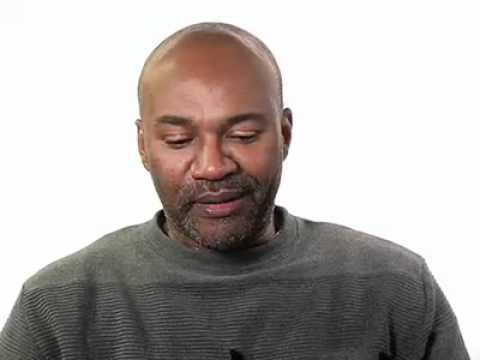
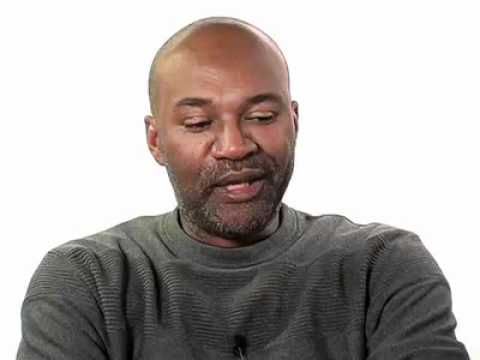
Are you an American poet or an Irish poet? Paul Muldoon | Big Think
Posted
April 24, 2012
Views
852
Likes
8
Engagement
0.94%
April 24, 2012
852
8
0.94%
Every word spoken in this episode is indexed. Type any phrase to jump straight to the moment it was said.
Type any word or phrase that may have been spoken. Click a result to seek the player to that exact moment.
Try a name, a topic, or a quoted line
Episode Timeline
Every episode in order around the one you’re watching — click any card and the page flips straight to it.
 3:39Now Playing
Are you an American poet or an Irish poet
New videos DAILY
Join Big Think Edge for exclusive videos
----------------------------------------------------------------------------------
Anyone can call Muldoon a poet.
----------------------------------------------------------------------------------
Paul Muldoon:
Paul Muldoon is a writer, academic and educator, as well as Pulitzer Prize-winning poet from County Armagh, Northern Ireland. Since 1987 he has lived in the United States, where he is now Howard G. B. Clark '21 Professor at Princeton University and Chair of the Peter B. Lewis Center for the Arts. In 2007 he was appointed Poetry Editor of The New Yorker. Between 1999 and 2004 he was Professor of Poetry at the University of Oxford, where he is an honorary Fellow of Hertford College. He won the 2003 Pulitzer Prize for this work, Moy Sand and Gravel (2002).
A Fellow of the Royal Society of Literature, the American Academy of Arts and Sciences and the American Academy of Arts and Letters, Paul Muldoon was given an American Academy of Arts and Letters award in literature for 1996. Other recent awards are the 1994 T. S. Eliot Prize, the 1997 Irish Times Poetry Prize, the 2003 Griffin International Prize for Excellence in Poetry, the 2004 American Ireland Fund Literary Award, the 2004 Shakespeare Prize, the 2005 Aspen Prize for Poetry, and the 2006 European Prize for Poetry. He has been described by The Times Literary Supplement as "the most significant English-language poet born since the second World War."
----------------------------------------------------------------------------------
TRANSCRIPT:
Question: Are you an American poet or an Irish poet?
Paul Muldoon: I think what I have said is that I would be happy to be considered a poet by anybody, and honestly, I really don’t care if I am thought of as an American poet or an Irish poet. It’ll be great to be thought of as a poet at all really. It’s a rather tall order.
I’m a person who was born in Ireland, who has lived in the US for the long time and you can call me whatever you like; and one is called down all sorts of things, so I am not too concerned about that.
Fact is that one of the glories of the present state of the nation is that, while I am an American citizen, I have never given up my Irish citizenship, and so that makes life a lot simpler in some ways. And I say that because the fact that it acknowledges the complexity of being here that one does not necessarily equal some geographical appellation.
One of my discoveries over the last year or so has been that I was given as a present by someone a DNA test, and, when I sent off my DNA test--I am not sure what I was expecting--but anyways it came back and the burden of it was that I was, as it were, let’s say it says 85% European, whatever that means, and 15% East Asian. And this is a phenomenon that’s quite common in Ireland, and I’m not entirely sure what it means. It’s a phenomenon that I’m pretty sure very old. It may go back to the Vikings and it may go back further, much further, to a time when middle Europe had influences from further east. So I rather delight in that.
I’m really very interested in things being accepted as being much more complex as they truly are rather than these moves towards simplification and notions of purity, for example, in the ethnic or racial vein, which of course bring us very quickly to the concentration camp.
Sentinel Indexing in Progress
Metadata and chapters are available. Claim extraction for this episode is pending.
All video content is delivered via YouTube embedded players in accordance with the YouTube Terms of Service. Sentinel provides research tools that promote discovery and accountability across political media.