Big Think
@bigthink·8.8M subscribers·10.1K videos
When The Journalist Becomes the Story | Big Think
Posted
April 24, 2012
Views
672
Likes
5
Comments
5
Engagement
1.49%
April 24, 2012
672
5
5
1.49%
Every word spoken in this episode is indexed. Type any phrase to jump straight to the moment it was said.
Type any word or phrase that may have been spoken. Click a result to seek the player to that exact moment.
Try a name, a topic, or a quoted line
 3:07Now Playing
When The Journalist Becomes the Story
New videos DAILY
Join Big Think Edge for exclusive videos
----------------------------------------------------------------------------------
When the house is fire, you jump in with a bucket of water, as Kurt Pitzer did with Mahdi Obeidi.
----------------------------------------------------------------------------------
Kurt Pitzer:
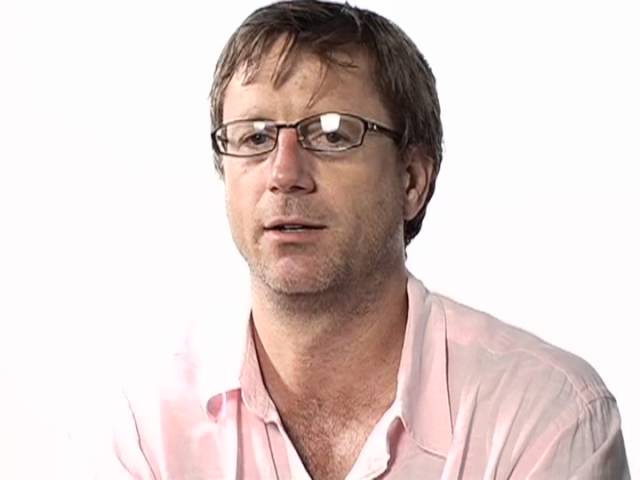
Kurt Pitzer is a former commercial longline fisherman and relief worker who has reported from many of the world's turbulent regions, including the Balkans, the Middle East, Afghanistan, and Iraq. He was embedded with the Army's 3rd Infantry Division during the invasion of Iraq, then jumped his embed as Baghdad fell. He met Dr. Mahdi Obeidi soon afterward and helped him go public with Saddam Hussein's remaining nuclear secrets. He and Obeidi cowrote The Bomb in My Garden: The Secrets of Saddam's Nuclear Mastermind, which was published in paperback in September 2005.
----------------------------------------------------------------------------------
TRANSCRIPT:
Question: When does a journalist go from objective bystander to active participant?
Pitzer: In fact, journalists are not supposed to become part of the story or get involved and, but there, it happens all the time when you’re in a dramatic fast changing situation, and you have a choice between taking some notes about a burning house with people in it or jumping in with a bucket of water. You’re gonna jump in with a bucket of water, if you have a heart in you. [Laughs] And, so it’s impossible to stay completely removed and just sit back and jot notes even if that’s our job. And in Iraq, I became completely… I had to put down my pen. I met a guy who needed to get his family out of the country. And for weeks, I was trying to help him, at great risk to himself and partly to me. And I’ve gone way beyond the [pail] of what a journalist should be doing, but you just have to be willing to do that sometimes.
Question: Who was it?
Pitzer: Well, this particular nuclear scientist who had, his name was Mahdi Obeidi, and he had run the centrifuge program for Saddam Hussein, and he had the last remaining bits of the program buried in his garden and wanted to turn them in to the Americans and receive safe passage out of Iraq for him and his family. And while that was being negotiated, and I was helping him do that, partly just by having a satellite phone and being with him everyday, we had to be in hiding because if it had become known that he was cooperating with the Americans, he would have been targeted and probably killed. So there was no way I could write his story. And it’s one of those situations that you kind of don’t want as a journalist, it’s to become the story, and I was actually sitting on this wonderful, important story. It was a piece of news. This was the guy who knew what had happened to the nuclear program, while the American and international inspectors were roaming around Iraq, looking for evidence of that program. And there, we knew. I knew, and I was talking to the guy who knew that there was no program and I couldn’t print the story. And sometimes, you just have to put your journalist hat down and take up your human hat.
Sentinel Indexing in Progress
Metadata and chapters are available. Claim extraction for this episode is pending.
All video content is delivered via YouTube embedded players in accordance with the YouTube Terms of Service. Sentinel provides research tools that promote discovery and accountability across political media.