Big Think
@bigthink·8.8M subscribers·10.1K videos
Mary Lou Jepsen On The Future of Computer Design | Big Think
Posted
April 24, 2012
Views
128
Likes
1
Engagement
0.78%
April 24, 2012
128
1
0.78%
Every word spoken in this episode is indexed. Type any phrase to jump straight to the moment it was said.
Type any word or phrase that may have been spoken. Click a result to seek the player to that exact moment.
Try a name, a topic, or a quoted line
 6:00Now Playing
Mary Lou Jepsen On The Future of Computer Design
New videos DAILY
Join Big Think Edge for exclusive videos
----------------------------------------------------------------------------------
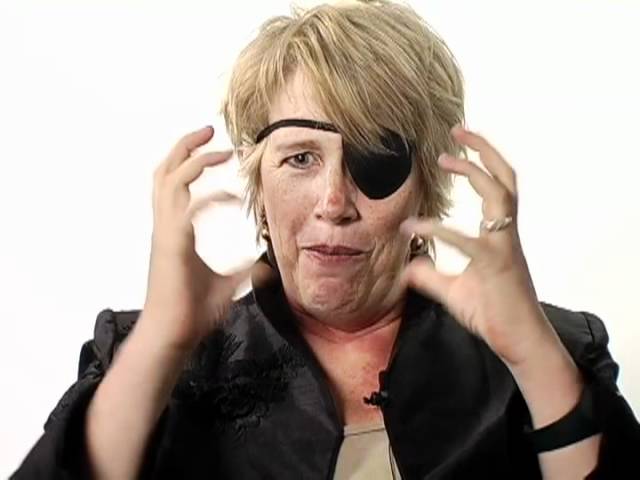
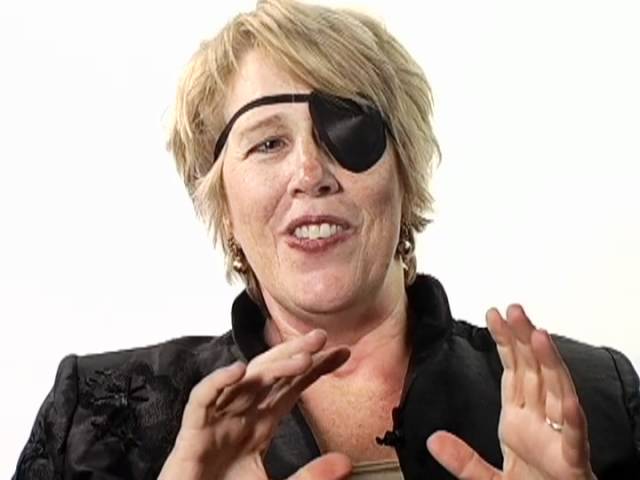
Mary Lou Jepsen describes the XO and predicts where computer evolution is headed.
----------------------------------------------------------------------------------
Mary Lou Jepsen:
Mary Lou Jepsen was recently named one of the hundred most influential people in the world by Time Magazine in May 2008 for her work in creating Pixel Qi, and her previous work in creating One Laptop per Child where she was the founding chief technology officer and its first employee. Notably Mary Lou invented the laptop's sunlight-readable display technology and co-invented its ultra-low-power management system. Critically, she architected the XO laptop and transformed it into mass production. Mary Lou's earlier contributions have had world-wide adoptioin in successful HDTV, projector and head-mounted display products. In 1995 she co-founded the Microdisplay Corporation and served as its chief technology officer through 2003. Until the end of 2004, she was a group executive and the chief technology officer of the display division at Intel Corporation. Mary Lou holds a Ph.D. in Optical Sciences, a B.S. in Electrical Engineering (with honors) and a B.A. (req.) in Studio Art all from Brown University as well as a Master of Science in Holography from the MIT Media Lab.
----------------------------------------------------------------------------------
TRANSCRIPT:
Question: What do you see when you use an XO laptop?
Jepsen: Yeah. Word processing, internet, drawing, music making applications, there’s a video camera and video editing. What else is there? There’s a built-in oscilloscope which you can turn into like an EKG heart monitor or anything else or alarm systems if you don’t want to see who’s going where. There are lots of different programming environments. One programming environment is really simple and you snap together commands sort of like Lego pieces. It’s called Turtle and it was originally written in the ‘60s by sort of one of the fathers of this project, Seymour Papert who studied with Piaget and came up with really pushing forward the idea that the computer is the most powerful technology of our time and we should use it with children and this idea of constructionist learning. Learning by doing is a very powerful way of learning. So he wrote in the ’60s a computer language for children which when you think about the ‘60s, I mean computers were the size of, you know, bigger than the room that we’re in right now and people thought, “Why are you doing this for 6-year-old kids?” But ultimately now this sort of vision he had in the ‘60s is finally being realized.
Question: What will a computer look like in 10 years?
Jepsen: Yeah, they’ll be smaller and lower cost but ten years out it’s interesting. I mean I guess the really crazy ideas that I’ve been thinking about, I don’t know when I can get them to work, but there’s two ideas especially if you sort of think that the computer can fit in your cell phone or smaller in your pocket, it’s a chip or something, but you need some way to see what’s on there and some way to input. An input maybe can be voice or maybe it’ll be touch but why don’t we just have like a can of spray display and you can spray it on any surface, right, and then you can beam to the information that’s in your cell phone like device so you can see it really big and then after two hours or something it evaporates and eats carbon dioxide, for example. That’s one kind of idea but that’s 20, 50 years out. It’s sort of funny for me to sort of put that forward because what I contended with the OLPC laptop is rather than inventing a new kind of technology how do we use the existing manufacturing processes as is, no changes, no process changes, no material changes, but really conceptually different to get the thing out and shipping as quickly as possible? And I think it’s a lot easier than creating new things, although I’d like to do both and people do work on both. The problem in my industry, the display industry in particular, is that it usually takes more than 20 years to develop a new display technology and then usually the incumbent technology is still better as the window of opportunity is too expensive and it gets shut down after a couple billion dollars is spent. And so what we’re trying to do is say it’s sort of like in Silicon everybody uses about the same general process in Silicon.
Read the full transcript at
Sentinel Indexing in Progress
Metadata and chapters are available. Claim extraction for this episode is pending.
All video content is delivered via YouTube embedded players in accordance with the YouTube Terms of Service. Sentinel provides research tools that promote discovery and accountability across political media.