Big Think
@bigthink·8.8M subscribers·10.1K videos
Brad Templeton: Today's Surveillance Society is Beyond Orwellian | Big Think
Posted
August 21, 2014
Views
39,039
Likes
1,222
Comments
154
Engagement
3.52%
August 21, 2014
39,039
1,222
154
3.52%
Every word spoken in this episode is indexed. Type any phrase to jump straight to the moment it was said.
Type any word or phrase that may have been spoken. Click a result to seek the player to that exact moment.
Try a name, a topic, or a quoted line
 3:32Now Playing
Brad Templeton: Today's Surveillance Society is Beyond Orwellian
New videos DAILY
Join Big Think Edge for exclusive video lessons from top thinkers and doers
----------------------------------------------------------------------------------
Brad Templeton argues that we're all a part of a surveillance apparatus that would even be beyond the imagination George Orwell. The problem, he says, is the belief that privacy and security are mutually exclusive. Templeton is a Board Member and Former Chair of Electronic Frontier Foundation and the Track Chair for Computing at Singularity University.
----------------------------------------------------------------------------------
BRAD TEMPLETON:
Brad Templeton is the Track Chair for Computing at Singularity University, developer of and commentator on self-driving cars, software architect, board member of the Electronic Frontier Foundation, internet entrepreneur, futurist lecturer, writer and observer of cyberspace issues, hobby photographer, and an artist.
Templeton has been a consultant on Google’s team designing a driverless car and lectures and blogs about the emerging technology of automated transportation. He is also noted as a speaker and writer covering copyright law and political and social issues related to computing and networks. He is a director of the futurist Foresight Nanotech Institute, a think tank and public interest organization focused on transformative future technologies.
Templeton was founder, publisher and software architect at ClariNet Communications Corp., which in the 1990s became the first internet-based business, creating an electronic newspaper. He has been active in the computer network community since 1979, participated in the building and growth of USENET from its earliest days, and in 1987 founded and edited a special USENET conference devoted to comedy.
Templeton has been involved in the development of important pieces of software including VisiCalc, the world’s first computer spreadsheet, and Stuffit for archiving and compressing computer files.
In 1996, ClariNet joined the ACLU and others in opposing the Communications Decency Act, part of the Telecom bill passed during Clinton Administration. The U.S. Supreme Court sided with the plaintiffs and ruled that the Act violated the First Amendment in seeking to impose anti-indecency standards on the internet.
----------------------------------------------------------------------------------
TRANSCRIPT:
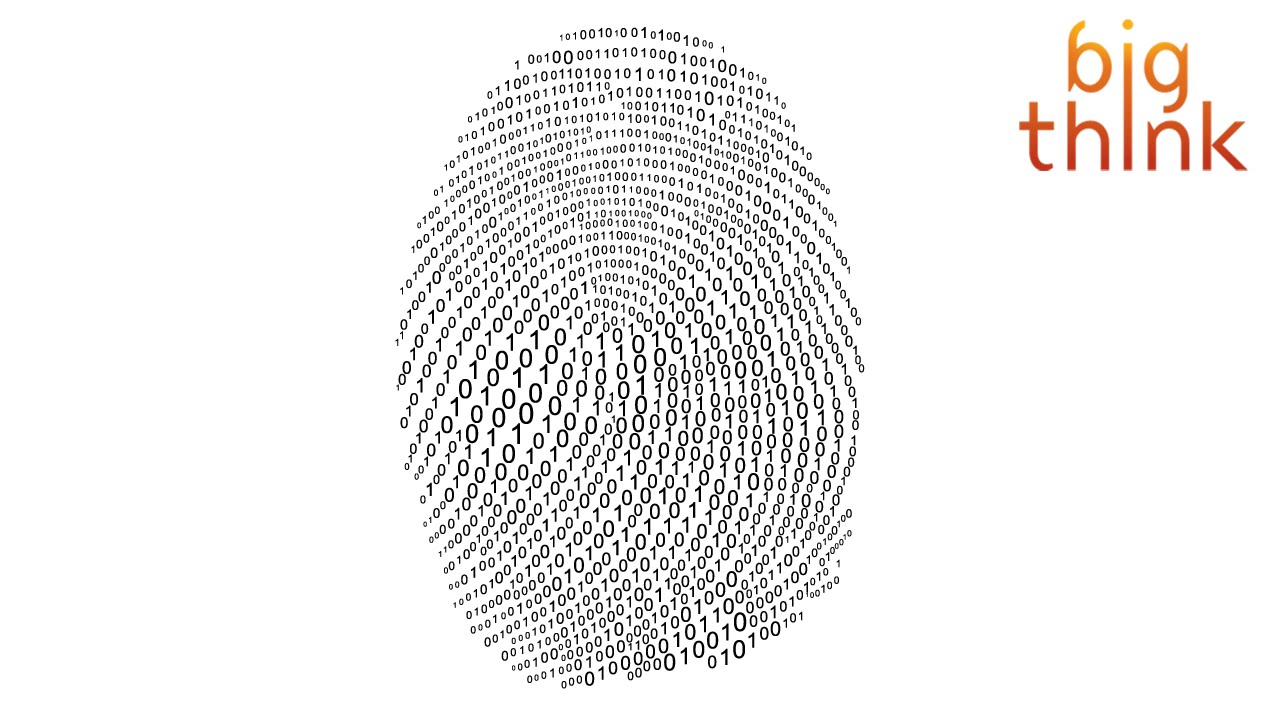
Brad Templeton: We went, and by we I meant all of us, we went and built this wonderful Internet thing you've heard of. And we're all using it all the time for all of our lives. We're buying things on it, we're having sex over it, we're communicating with our friends, just so many aspects of our life are all going on this network and we've spent immense amounts of money to build it and build all the handheld devices and the computers, all the software. But what has the government done and what has big business done? They've turned it into the world's greatest surveillance apparatus, a surveillance apparatus that even George Orwell probably wouldn't have dreamed of. And that wasn't why we built it. We didn't make it to be a surveillance apparatus. But unfortunately we've learned, thanks to Edward Snowden, who has revealed what the NSA has been doing, that the NSA and other spy agencies around the world are doing is, they're making it a surveillance apparatus; they're tracking all of the phone calls you make in terms of records and where you were and who you talked to, and in many cases recording the actual voice.
They are, because they say they need to find a needle in haystack, looking at the entire haystack. They're looking at everything innocent people do in order to find guilty people. And nobody thinks that we shouldn't have police and intelligence agents whose job it is to find bad guys and stop bad guys. That's not a question. But a free society makes a decision for itself. It makes a decision to limit the power of its police and its intelligence agents. It makes the decision to let some bad things happen, to let some guilty people get away in order to avoid punishing innocent people, doing surveillance on people who are innocent and there's no reason to suspect them. But unfortunately that's not what happens. And unfortunately Mr. Snowden has shown us just the depth to which it's going on. And that's the biggest challenge we're facing, how to make societies realize that we do need our privacy and we do need to limit the power of these organizations. We do need to draw a line somewhere. And more then draw a line, we need to make people think there's not necessarily some trade-off between privacy and security, that it's possible sometimes to keep your rights and g...
For the full transcript, check out
Sentinel Indexing in Progress
Metadata and chapters are available. Claim extraction for this episode is pending.
All video content is delivered via YouTube embedded players in accordance with the YouTube Terms of Service. Sentinel provides research tools that promote discovery and accountability across political media.