Big Think
@bigthink·8.8M subscribers·10.1K videos
Want to Avoid Student Loans? Sell Your Future. | Big Think
Posted
August 25, 2014
Views
41,440
Likes
571
Comments
546
Engagement
2.70%
August 25, 2014
41,440
571
546
2.70%
Every word spoken in this episode is indexed. Type any phrase to jump straight to the moment it was said.
Type any word or phrase that may have been spoken. Click a result to seek the player to that exact moment.
Try a name, a topic, or a quoted line
 3:57Now Playing
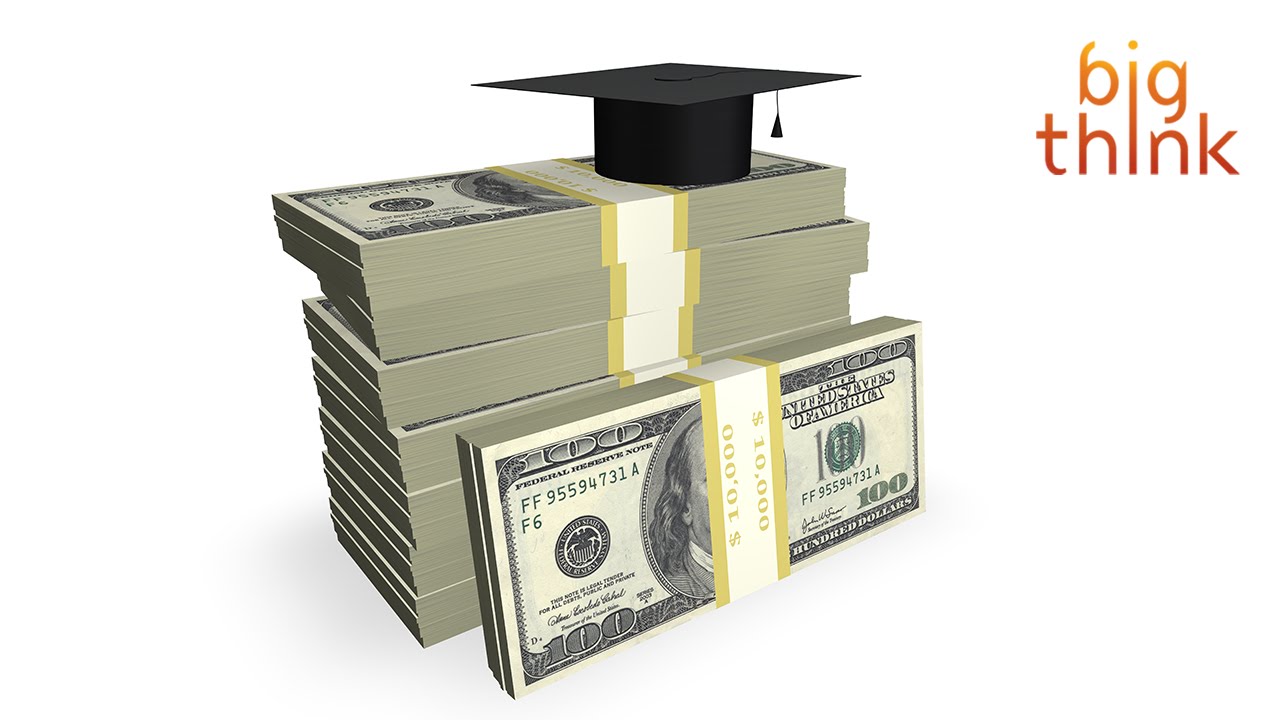
Want to Avoid Student Loans? Sell Your Future.
Watch the newest video from Big Think
Join Big Think Edge for exclusive videos
----------------------------------------------------------------------------------
Economist Daniel Altman acknowledges that the student loan industry in the United States is a disaster. The obvious solution of government intervention by way of forgiveness could make things even thornier. Rather, Altman imagines a scenario where students could sell shares of their future income to fund their education.
----------------------------------------------------------------------------------
DANIEL ALTMAN:
Daniel Altman is Big Think's Chief Economist and an adjunct faculty member at New York University's Stern School of Business. Daniel wrote economic commentary for The Economist, The New York Times, and The International Herald Tribune before founding North Yard Economics, a non-profit consulting firm serving developing countries, in 2008. In between, he served as an economic advisor in the British government and wrote four books, most recently Outrageous Fortunes: The Twelve Surprising Trends That Will Reshape the Global Economy.
----------------------------------------------------------------------------------
TRANSCRIPT:
Daniel Altman: Some of the casualties of the recent economic downturn have been students and former students who are carrying huge burdens of loans from their education. Now these are not the government backed loans that have very low interest rates. These are loans taken out in the private sector that have much higher interest rates that students use to top up the money they need for their scholarship. Now what happened was that students came out of school at a time when jobs were hard to find and incomes were depressed or at least not moving up. And so the money that they thought they would have to pay off their student loans wasn’t there. And they were also in an environment where it was hard for them to renegotiate these loans because they didn’t look like very good credit risks. So a lot of people are stuck with loans that they simply can’t pay at the rates that they promised to do. What should we do?
Well, if we were to forgive some of these loans or have a government program that would help to bail students out, then you could argue that anybody should take out loans because they needn’t worry that if they weren’t able to pay that they would somehow be bankrupt. That somebody would always come to scoop them up and help them to pay. And that’s a problem that economists call moral hazard. That there’s a probability that people will take risks and behave badly that increases when they know there’s a safety net waiting to catch them if things go wrong. Now putting that aside though I think it would be more useful to consider some innovative solutions to this problem. The problem essentially was that no one predicted that things could be so bad for these students that they wouldn’t be able to pay their loans.
Not even the people who lent them the money in the first place. It’s better for them if the students actually pay. So how do you deal with this possibility, a sort of black swan that nobody thought something like this could ever happen?
Well, one way is to link how students raise money for their education to the income that they’ll actually earn. So instead of lending a student money you actually would buy shares in that student’s future income. You’d become an equity investor rather than a debt investor in that student. This is something that a lot of people have wanted to do for quite some time and there have been startup companies that have tried to figure out what the numbers would look like to do this but there’s a lot of risk. You don’t want to constrain a student too much in his or her education but if a student enters college saying I’m going to become a corporate lawyer and then decides to become a poet, well the value of the shares might drop somewhat because their expected income might be a little bit lower. So how do you make a good match between students who want to get some of their money right now that they would earn in the future to pay for their education and investors who see a possibility of a high return?
I think that to do that we need to structure interesting contracts, we need to do the actuarial basis to figure out how likely the students are to actually make these earnings and then we might have a shot at creating some of these types of devices, these types of securities. But I think the most important thing is for this to be something that can be widespread.
Read the full transcript at
Sentinel Indexing in Progress
Metadata and chapters are available. Claim extraction for this episode is pending.
All video content is delivered via YouTube embedded players in accordance with the YouTube Terms of Service. Sentinel provides research tools that promote discovery and accountability across political media.