Big Think
@bigthink·8.8M subscribers·10.1K videos
Searching For a Better Battery, with Brad Templeton | Big Think
Posted
November 17, 2014
Views
34,199
Likes
590
Comments
93
Engagement
2.00%
November 17, 2014
34,199
590
93
2.00%
Every word spoken in this episode is indexed. Type any phrase to jump straight to the moment it was said.
Type any word or phrase that may have been spoken. Click a result to seek the player to that exact moment.
Try a name, a topic, or a quoted line
 1:59Now Playing
Searching For a Better Battery, with Brad Templeton
Watch the newest video from Big Think
Join Big Think Edge for exclusive videos
----------------------------------------------------------------------------------
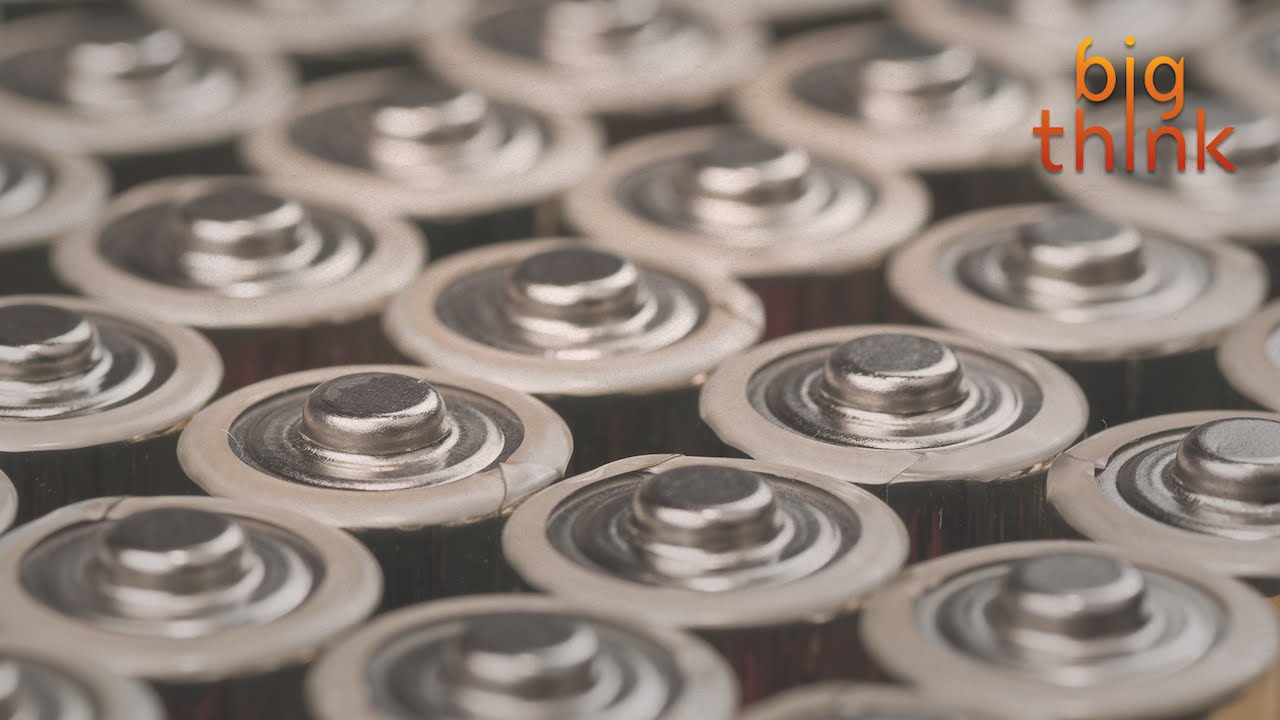
In this day and age, we and our gadgets are limited by the archaic ways we store our power. Tech guru Brad Templeton explains that a breakthrough in battery technology would spark an exciting wave of innovation and enable the future of computing to be realized.
----------------------------------------------------------------------------------
BRAD TEMPLETON:
Brad Templeton is the Track Chair for Computing at Singularity University, developer of and commentator on self-driving cars, software architect, board member of the Electronic Frontier Foundation, internet entrepreneur, futurist lecturer, writer and observer of cyberspace issues, hobby photographer, and an artist.
Templeton has been a consultant on Google’s team designing a driverless car and lectures and blogs about the emerging technology of automated transportation. He is also noted as a speaker and writer covering copyright law and political and social issues related to computing and networks. He is a director of the futurist Foresight Nanotech Institute, a think tank and public interest organization focused on transformative future technologies.
Templeton was founder, publisher and software architect at ClariNet Communications Corp., which in the 1990s became the first internet-based business, creating an electronic newspaper. He has been active in the computer network community since 1979, participated in the building and growth of USENET from its earliest days, and in 1987 founded and edited a special USENET conference devoted to comedy.
Templeton has been involved in the development of important pieces of software including VisiCalc, the world’s first computer spreadsheet, and Stuffit for archiving and compressing computer files.
In 1996, ClariNet joined the ACLU and others in opposing the Communications Decency Act, part of the Telecom bill passed during Clinton Administration. The U.S. Supreme Court sided with the plaintiffs and ruled that the Act violated the First Amendment in seeking to impose anti-indecency standards on the internet.
----------------------------------------------------------------------------------
TRANSCRIPT:
Brad Templeton: One of the biggest barriers in making computers faster is how much power they consume. And in fact, one thing that stopped your computer from having a faster clock rate, where it used to be it was another gigahertz every year you double that clock rate, is that that requires a lot of energy. And it's so much that your chips would melt if we ran them a lot faster. And if you looked inside a modern desktop computer you've probably seen it's got a big tower with silver veins and fan blowing on it. That's to get all the heat out. And that's making it hard to make the desktop computers faster. In your pocket you're limited by what the battery can do. And we have had better battery chemistries over time, but again this is an area where breakthroughs are needed for cars, as well as for devices we have in our pockets, and even for storing power that's generated from the power grid. We really would love to switch to renewal power like solar and wind, but the problem is that these only come when the sun is shining or the wind is blowing and so you need to store the power to use at a later time and that's actually a pretty difficult challenge. Batteries are one potential way to do it, pumping water uphill is a way to do it if you have reservoirs, but that itself presents its own some challenge.
Now when you get down to the battery you've probably, if you've ever looked inside a modern phone, that is if you have one you can open anymore, you've probably seen that most of that phone is actually the battery. That's the thing which is giving you all the weight. It's the thing that makes an iPad hard to hold in your hands because it's got a big heavy battery. We would love to see improvement in that. There are lots of things in the lab, but there's a pretty important rule that people have come to understand. When someone tells you "I can do this in the lab. I can make it for a dollar a kilogram." Or whatever it is the price they think they can do, the correct answer says "Okay I'll order a bunch." And then I'll say "Oh wait I can't actually deliver them to you." So you have to really make it commercializiable before you can say you have it and that hasn't happened yet.
Directed / Produced by Jonathan Fowler, Elizabeth Rodd, and Dillon Fitton
In this day and age, we and our gadgets are limited by the archaic ways we store our power. Tech guru Brad Templeton explains that a breakthrough in battery technology would spark an exciting wave of innovation and enable the future of computing to be realized.
Sentinel Indexing in Progress
Metadata and chapters are available. Claim extraction for this episode is pending.
All video content is delivered via YouTube embedded players in accordance with the YouTube Terms of Service. Sentinel provides research tools that promote discovery and accountability across political media.