Big Think
@bigthink·8.8M subscribers·10.1K videos
Dan Harris: Think You're a Good Multitasker? Stop Lying. | Big Think
Posted
November 24, 2014
Views
43,426
Likes
1,136
Comments
157
Engagement
2.98%
November 24, 2014
43,426
1,136
157
2.98%
Every word spoken in this episode is indexed. Type any phrase to jump straight to the moment it was said.
Type any word or phrase that may have been spoken. Click a result to seek the player to that exact moment.
Try a name, a topic, or a quoted line
 1:34Now Playing
Dan Harris: Think You're a Good Multitasker? Stop Lying.
Watch the newest video from Big Think
Join Big Think Edge for exclusive videos
----------------------------------------------------------------------------------
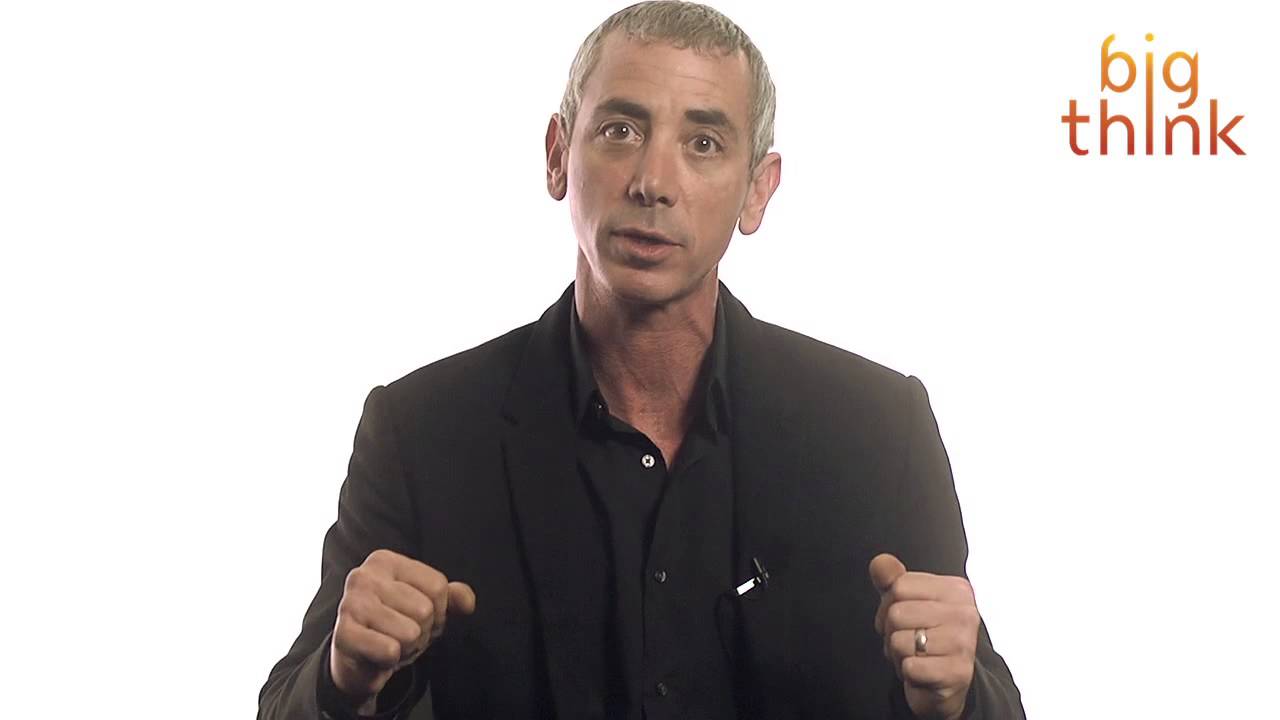
ABC News Correspondent Dan Harris explains why anyone who boasts about their ability to multitask is lying to themselves. "We literally neurologically cannot do more than one thing at a time," says Harris, who instead defines what we consider multitasking as "doing many things poorly."
----------------------------------------------------------------------------------
DAN HARRIS:
Dan Harris was named co-anchor of ABC News' weekend edition of "Good Morning America" in October 2010. He is also a correspondent for ABC News' broadcasts and platforms including "World News with Diane Sawyer," "Good Morning America," "Nightline," ABC News Digital and ABC News Radio, and for four years anchored "World News Sunday."
Harris joined ABC News in March 2000 and has covered many of the biggest stories in recent years. He has reported on the mass shootings in Newtown, Connecticut, Aurora, Colorado and Tucson, Arizona, and has covered natural disasters from Haiti to Myanmar to New Orleans. He has also reported on combat in Afghanistan, Israel, Gaza and the West Bank, and has made six visits to Iraq.
Harris has made it a priority to report on the world's most vulnerable populations, producing stories about child slaves in Haiti, youths accused of witchcraft in the Congo and predatory pedophiles who travel from the U.S. to Cambodia. He has also covered endangered animals from such diverse datelines as Namibia, Madagascar, Papua New Guinea and Nepal.
Domestically, Harris has led ABC News' coverage of faith, with a particular focus on the evangelical movement. He scored one of the first interviews with former pastor Ted Haggard after his sex and drugs scandal.
In 2012 Harris anchored ABC News Digital's Election Night debate and Inauguration coverage.
Prior to joining ABC News, Harris was an anchor at New England Cable News (NECN), the largest regional cable news network in the country, from 1997 to 2000. Before that he was an anchor and political reporter at WCSH, an NBC affiliate in Portland, Maine, for two years. He began his broadcasting career as a reporter for WLBZ, the NBC affiliate in Bangor, Maine.
Harris has been honored several times for his journalistic contributions. He received an Edward R. Murrow Award for his reporting on a young Iraqi man who received the help he needed in order to move to America, and in 2009 won an Emmy Award for his "Nightline" report, "How to Buy a Child in Ten Hours."
A graduate of Colby College in Waterville, Maine, Harris also holds honorary doctorate degrees from Colby and Massachusetts College of Liberal Arts. He was raised in Newton, Massachusetts, a suburb of Boston, and currently lives in New York City.
----------------------------------------------------------------------------------
TRANSCRIPT:
Dan Harris: What I love about this notion of multitasking is people brag about how good they are at it. In fact, it’s a lie. It’s a lie we’re telling ourselves over and over again. I have a friend named Janice Marturano who’s a former executive at General Mills and she now teaches meditation to corporate executives all over America and all over the world. As she pointed out to me, multitasking is a computer derived term. Computers have many processors. We have only one processor. We literally neurologically cannot do more than one thing at a time.
So every time you think you’re multitasking, essentially that’s a short way of saying you’re doing many things poorly. What I’ve learned to do – and it’s hard – is to try to do one thing at a time. So if I’m on the phone I turn off my computer monitor and actually listen, radical as it may sound, to the person to whom I’m speaking. If I’m working on a story at work, writing a story, I shut down my email and try to actually focus on what I’m doing. And what I’ve found is that I move through my tasks in a much more rapid way, in a much more effective way and I’m doing a better job. Now I’m not gonna lie to you, there are times when we have to multitask. There’s no question about it. Things get so hectic in my office and I’m sure in the lives of anybody who’s watching this where multitasking becomes impossible to avoid. I found myself walking down the hallway the other day with a glass of water hanging out of my mouth and I’m typing away on my Blackberry and walking at the same time. So I’m a huge hypocrite on this score, there’s no question about it. But I do my best to avoid it because I know I do my best work when I’m only doing one thing at a time.
Directed / Produced by Jonathan Fowler, Elizabeth Rodd, and Dillon Fitton...
Read the full transcript at
Sentinel Indexing in Progress
Metadata and chapters are available. Claim extraction for this episode is pending.
All video content is delivered via YouTube embedded players in accordance with the YouTube Terms of Service. Sentinel provides research tools that promote discovery and accountability across political media.