Big Think
@bigthink·8.8M subscribers·10.1K videos
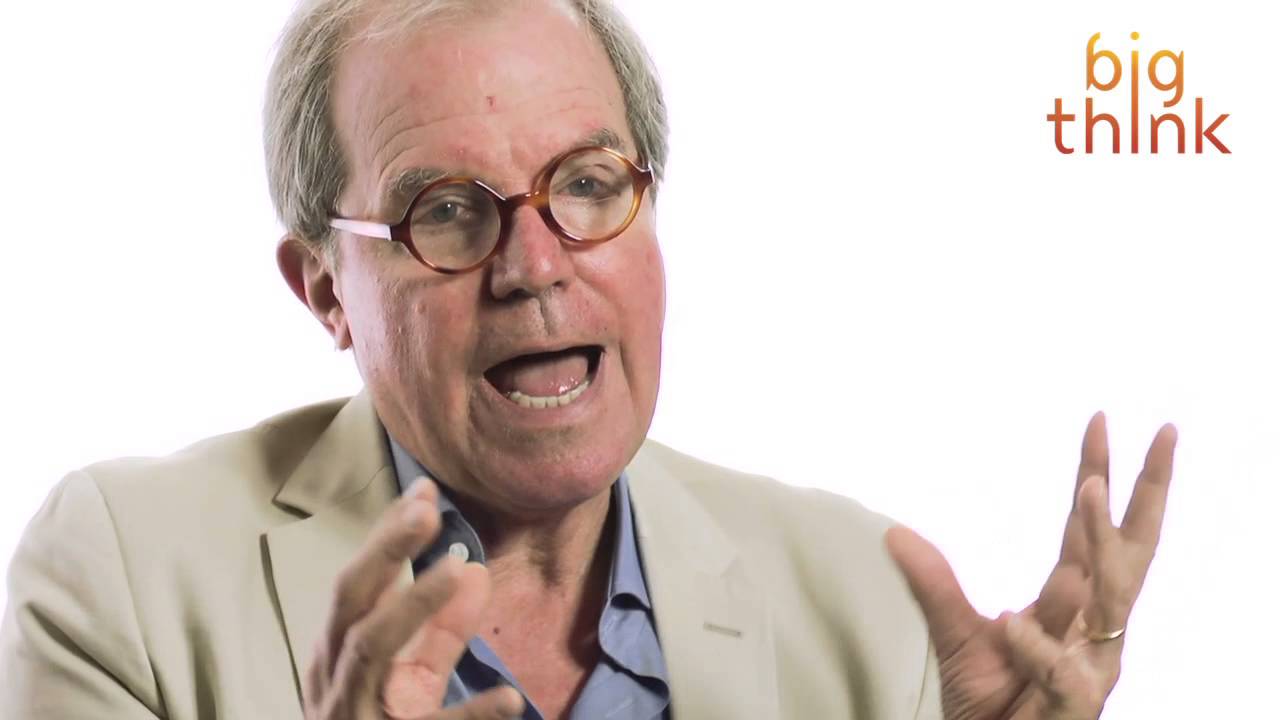
Vivek Wadhwa: Get Ready for The Next Wave of Tech Disruptions | Big Think
Posted
December 16, 2014
Views
76,435
Likes
1,792
Comments
219
Engagement
2.63%
December 16, 2014
76,435
1,792
219
2.63%
Every word spoken in this episode is indexed. Type any phrase to jump straight to the moment it was said.
Type any word or phrase that may have been spoken. Click a result to seek the player to that exact moment.
Try a name, a topic, or a quoted line
See what was published immediately before and after this episode.
 8:03Now Playing
Vivek Wadhwa: Get Ready for The Next Wave of Tech Disruptions
Watch the newest video from Big Think
Join Big Think Edge for exclusive videos
----------------------------------------------------------------------------------
Futurist Vivek Wadhwa predicts change "at a scale which is unimaginable before," thanks to advances in technologies like robotics and 3D printing. "New trillion dollar industries will wipe out out existing trillion dollar industries," he says. "This is the future we’re headed into, for better or for worse."
----------------------------------------------------------------------------------
VIVEK WADHWA:
Vivek Wadhwa is a Distinguished Fellow at Carnegie Mellon University's College of Engineering. He is a globally syndicated columnist for The Washington Post and author of The Driver in the Driverless Car: How Our Technology Choices Will Create the Future; The Immigrant Exodus: Why America Is Losing the Global Race to Capture Entrepreneurial Talent, which was named by The Economist as a Book of the Year of 2012; and of Innovating Women: The Changing Face of Technology, which documents the struggles and triumphs of women. Wadhwa has held appointments at Duke University, Stanford Law School, Harvard Law School, Emory University, and Singularity University. You can follow him on Twitter @wadhwa.
----------------------------------------------------------------------------------
TRANSCRIPT:
Vivek Wadhwa: One of the things that has begun to worry me is the fact that I'm seeing change happening at a scale which is unimaginable before and that it's impacting industry after industry after industry. Every industry I've looked at I've seen a trend of major disruption happening. Manufacturing is the most obvious. With robotics and 3-D printing, as of this year, it is cheaper to manufacture in the United States than it is in China. It is cheaper to manufacture in Europe than it is in China. Why is that? Because with automated robots that have two arms, that have screens, which show you their emotion, with the sensors they have around them, I'm talking about Baxter from the Rethink Robotics or Universal. These robots have become very sophisticated. The cost of operation is less than the cost of human labor. So we can now have robots working 24/7 doing the things that human beings did. Give it five years and these robots will become ever more sophisticated. They'll be doing many, many more jobs, which means that the manufacturing industry is going to be disrupted in a very big way. The good news for America is that it's coming back here. The good news for Europe is that it's coming back there. The good news for Asia is that it's also going to become a local industry. Bad news for China because it's no longer going to happen in China.
So, by the end of the decade you're going to see major upheaval in manufacturing, opportunities and problems. Move into the next decade, these robots will probably go on strike because we won't need them anymore. We'll have 3-D printers now. Within 15 to 20 years we'll be able to 3-D print electronics. So imagine being able to design your own iPhone and print it at home. That is what becomes technically feasible in the 15 to 20 year timeframe. So you're talking about major disruption happening to manufacturing in the short-term and then even greater disruption happening in the long term. Now look at finance. We're seeing the turmoil that Bitcoin is creating. You now have many parties supporting it. Well, you also have crowdfunding shaking up the venture capital industry that they've become less relevant. We'll soon have crowdfunding for loans that in some countries already they're experimenting with taking out loans by if you want to buy a house, if you want to buy a car you simply get it from a large number of people.
You're now moving into cardless transactions for purchasing goods. We may not need the banks anymore. We may not need financial institutions the way we do right now. So there's going to be disruption happening to financial services whether or not financial services realizes it. In the USA they seem to be complacent because they've got laws protecting them. But the same laws don't apply in other countries. We may well have major innovations happening abroad which come now to the United States. Look at healthcare. That already we now have Apple putting a stake in the ground saying we're...
Read the full transcript at
Sentinel Indexing in Progress
Metadata and chapters are available. Claim extraction for this episode is pending.
All video content is delivered via YouTube embedded players in accordance with the YouTube Terms of Service. Sentinel provides research tools that promote discovery and accountability across political media.