Big Think
@bigthink·8.8M subscribers·10.1K videos
Larry Summers: We Need to Invest in Infrastructure | Big Think
Posted
December 17, 2014
Views
11,947
Likes
275
Comments
155
Engagement
3.60%
December 17, 2014
11,947
275
155
3.60%
Every word spoken in this episode is indexed. Type any phrase to jump straight to the moment it was said.
Type any word or phrase that may have been spoken. Click a result to seek the player to that exact moment.
Try a name, a topic, or a quoted line
See what was published immediately before and after this episode.
 1:57Now Playing
Larry Summers: We Need to Invest in Infrastructure
Watch the newest video from Big Think
Join Big Think Edge for exclusive videos
----------------------------------------------------------------------------------
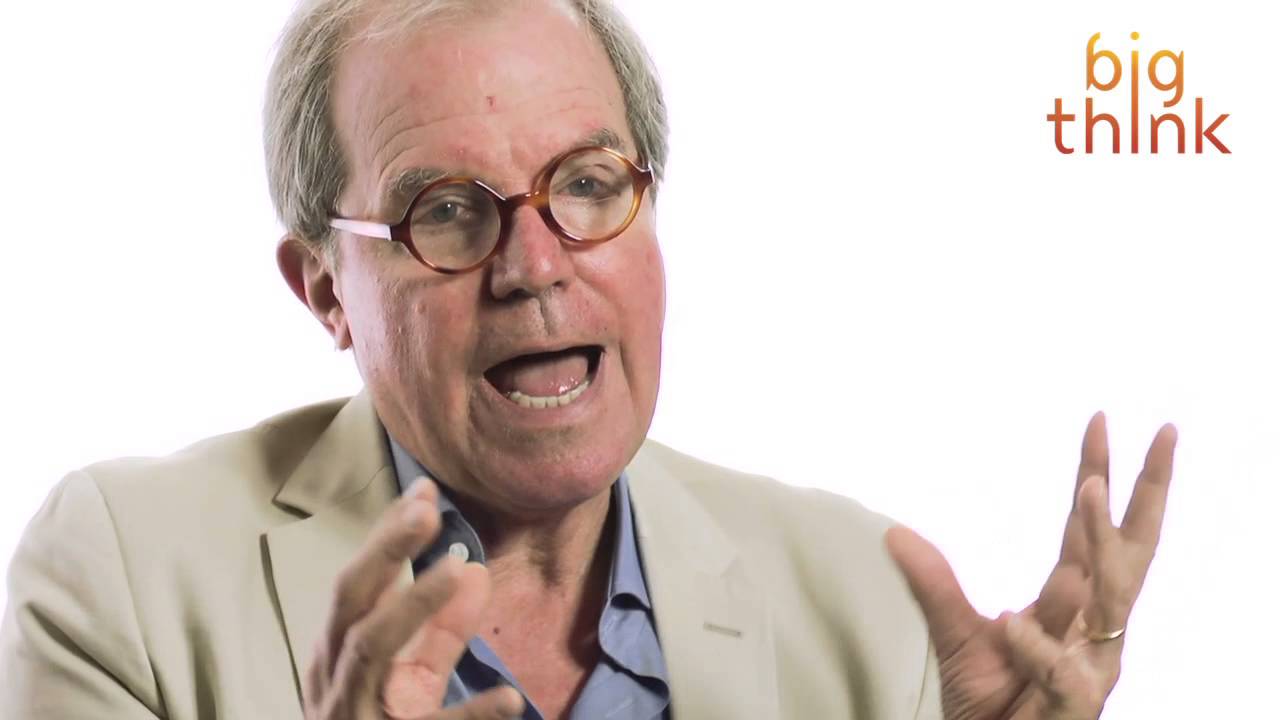
Interest rates are low. Construction unemployment is high. There's no better time than now to invest in major infrastructure projects. Economist Larry Summers asks what we're waiting for.
----------------------------------------------------------------------------------
LAWRENCE H. SUMMERS:
Lawrence H. Summers is an American economist. He is the Charles W. Eliot University Professor and President Emeritus at Harvard University, where he became one of the university's youngest tenured faculty at age 28.
The author of over 150 journal articles, Dr. Summers' wide-ranging contributions to economic research were recognized with the John Bates Clark Medal, given every two years to the outstanding American economist under the age of 40. He was also the first social scientist to receive the National Science Foundation’s Alan T. Waterman Award for outstanding scientific achievement.
Beyond his academic career, Dr. Summers has held a number of distinguished appointments in government. He previously served as Director of the National Economic Council for the Obama Administration, Secretary of the Treasury for the Clinton Administration, and Chief Economist of the World Bank.
Lawrence Summers received his S.B. from MIT and his Ph.D. in economics from Harvard. He and his wife Elisa New, a professor of English at Harvard, have six children.
----------------------------------------------------------------------------------
TRANSCRIPT:
Larry Summers: If a moment when a long term interest rate of 2.2 percent and a construction unemployment rate that is in double digits, if that kind of moment is not the right moment to fix Kennedy Airport I don’t know when that moment will ever come. We as a country have been chronically under investing in infrastructure for a long time. Almost never in the history of the United States since the second World War have we been devoting as low a proportion of our national output to investments in infrastructure as we are today. And you see the consequences in potholes in our highways. You see it in occasional bridge collapses. You see it in the fact that we have thousands of schools across the country where paint is chipping of the walls even as we tell our children that education is the most important thing. You see it in the fact that we have an air traffic control system in the United States that relies on vacuum tube technology and where it’s almost impossible to get anyone to do a repair who’s under 60 years of age because they don’t have any contact with the relevant technologies. You see it in the fact that in a variety of wireless and broadband technologies the United States lags a number of other countries. So I think there’s enormous opportunity for productive infrastructure investment and certainly at a moment when the long term interest rate is so low there’s a great deal of investment on which we could earn a social return very much in excess of the social cost.
Directed/Produced by Jonathan Fowler, Elizabeth Rodd, and Dillon Fitton
Interest rates are low. Construction unemployment is high. There's no better time than now to invest in major infrastructure projects. Economist Larry Summers asks what we're waiting for.
Sentinel Indexing in Progress
Metadata and chapters are available. Claim extraction for this episode is pending.
All video content is delivered via YouTube embedded players in accordance with the YouTube Terms of Service. Sentinel provides research tools that promote discovery and accountability across political media.