Big Think
@bigthink·8.8M subscribers·10.1K videos
David Eagleman: Can a Computer Simulate Consciousness? | Big Think
Posted
November 11, 2015
Views
32,564
Likes
1,176
Comments
213
Engagement
4.27%
November 11, 2015
32,564
1,176
213
4.27%
Every word spoken in this episode is indexed. Type any phrase to jump straight to the moment it was said.
Type any word or phrase that may have been spoken. Click a result to seek the player to that exact moment.
Try a name, a topic, or a quoted line
See what was published immediately before and after this episode.
 3:50Now Playing
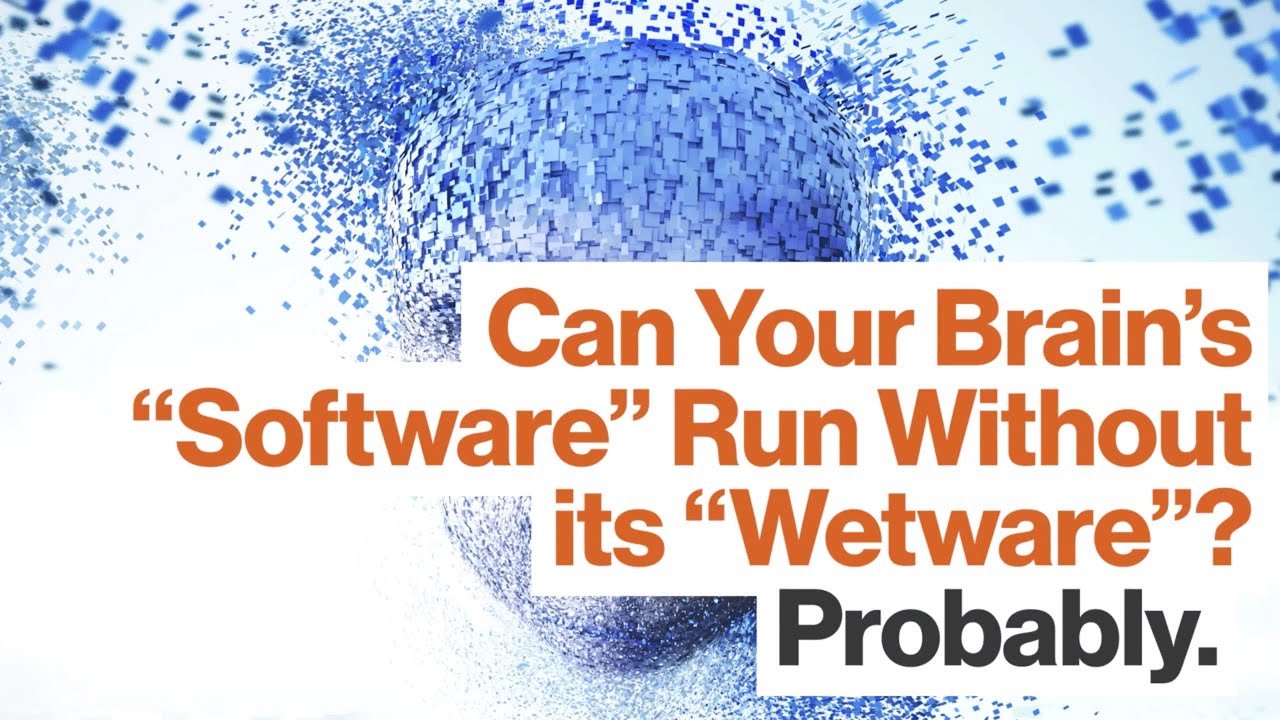
Can a Computer Simulate Consciousness?
Watch the newest video from Big Think
Join Big Think Edge for exclusive videos
----------------------------------------------------------------------------------
David Eagleman is the host of The Brain on PBS, as well as the author of the book of the same name. In this video, he tackles several fascinating subjects concerning your brain. If the brain is merely the hardware, could we emulate its software somewhere else? Could we simulate your version of consciousness on a man-made computer? Yes, says Eagleman, although it's not going to happen anytime soon. But when it does, and we're able to move beyond our flesh, deep space travel goes from being impossible to possible.
----------------------------------------------------------------------------------
DAVID EAGLEMAN:
David Eagleman is a neuroscientist and a New York Times bestselling author. He directs the Laboratory for Perception and Action at the Baylor College of Medicine, where he also directs the Initiative on Neuroscience and Law. He is best known for his work on time perception, brain plasticity, synesthesia, and neurolaw.
He is the writer and presenter of the PBS epic series, The Brain with David Eagleman, and the author of the companion book, The Brain: The Story of You.
Beyond his 100+ academic publications, he has published many popular books. His bestselling book Incognito: The Secret Lives of the Brain, explores the neuroscience "under the hood" of the conscious mind: all the aspects of neural function to which we have no awareness or access. His work of fiction, SUM, is an international bestseller published in 28 languages and turned into two operas. Why the Net Matters examines what the advent of the internet means on the timescale of civilizations. The award-winning Wednesday is Indigo Blue explores the neurological condition of synesthesia, in which the senses are blended.
Eagleman is a TED speaker, a Guggenheim Fellow, a winner of the McGovern Award for Excellence in Biomedical Communication, a Next Generation Texas Fellow, Vice-Chair on the World Economic Forum's Global Agenda Council on Neuroscience & Behaviour, a research fellow in the Institute for Ethics and Emerging Technologies, Chief Scientific Advisor for the Mind Science Foundation, and a board member of The Long Now Foundation. He has served as an academic editor for several scientific journals. He was named Science Educator of the Year by the Society for Neuroscience, and was featured as one of the Brightest Idea Guys by Italy's Style magazine. He is founder of the company BrainCheck and the cofounder of the company NeoSensory. He was the scientific advisor for the television drama Perception, and has been profiled on the Colbert Report, NOVA Science Now, the New Yorker, CNN's Next List, and many other venues. He appears regularly on radio and television to discuss literature and science.
----------------------------------------------------------------------------------
TRANSCRIPT:
David Eagleman: The big picture in modern neuroscience is that you are the sum total of all the pieces and parts of your brain. It’s a vastly complicated network of neurons, almost 100 billion neurons, each of which has 10,000 connections to its neighbors. So we’re talking a thousand trillion neurons. It’s a system of such complexity that it bankrupts our language. But, fundamentally it’s only three pounds and we’ve got it cornered and it’s right there and it’s a physical system.
The computational hypothesis of brain function suggests that the physical wetware isn’t the stuff that matters. It’s what are the algorithms that are running on top of the wetware. In other words: What is the brain actually doing? What’s it implementing software-wise that matters? Hypothetically we should be able to take the physical stuff of the brain and reproduce what it’s doing. In other words, reproduce its software on other substrates. So we could take your brain and reproduce it out of beer cans and tennis balls and it would still run just fine. And if we said hey, "How are you feeling in there?" This beer can/tennis ball machine would say "Oh, I’m feeling fine. It’s a little cold, whatever."
It’s also hypothetically a possibility that we could copy your brain and reproduce it in silica, which means on a computer at zeroes and ones, actually run the simulation of your brain. The challenges of reproducing a brain can’t be underestimated. It would take something like a zettabyte of computational capacity to run a simulation of a human brain. And that is the entire computational capacity of our planet right now.
There’s a lot of debate about whether we’ll get to a simulation of the human brain in 50 years or 500 years, but those would probably be the bounds. ...
To read the transcript, please go to
Sentinel Indexing in Progress
Metadata and chapters are available. Claim extraction for this episode is pending.
All video content is delivered via YouTube embedded players in accordance with the YouTube Terms of Service. Sentinel provides research tools that promote discovery and accountability across political media.