Big Think
@bigthink·8.8M subscribers·10.1K videos
The Secrets of Family Dinner, with Bruce Feiler | Big Think
Posted
November 12, 2015
Views
29,097
Likes
801
Comments
51
Engagement
2.93%
November 12, 2015
29,097
801
51
2.93%
Every word spoken in this episode is indexed. Type any phrase to jump straight to the moment it was said.
Type any word or phrase that may have been spoken. Click a result to seek the player to that exact moment.
Try a name, a topic, or a quoted line
See what was published immediately before and after this episode.
 6:03Now Playing
The Secrets of Family Dinner
Watch the newest video from Big Think
Join Big Think Edge for exclusive videos
----------------------------------------------------------------------------------
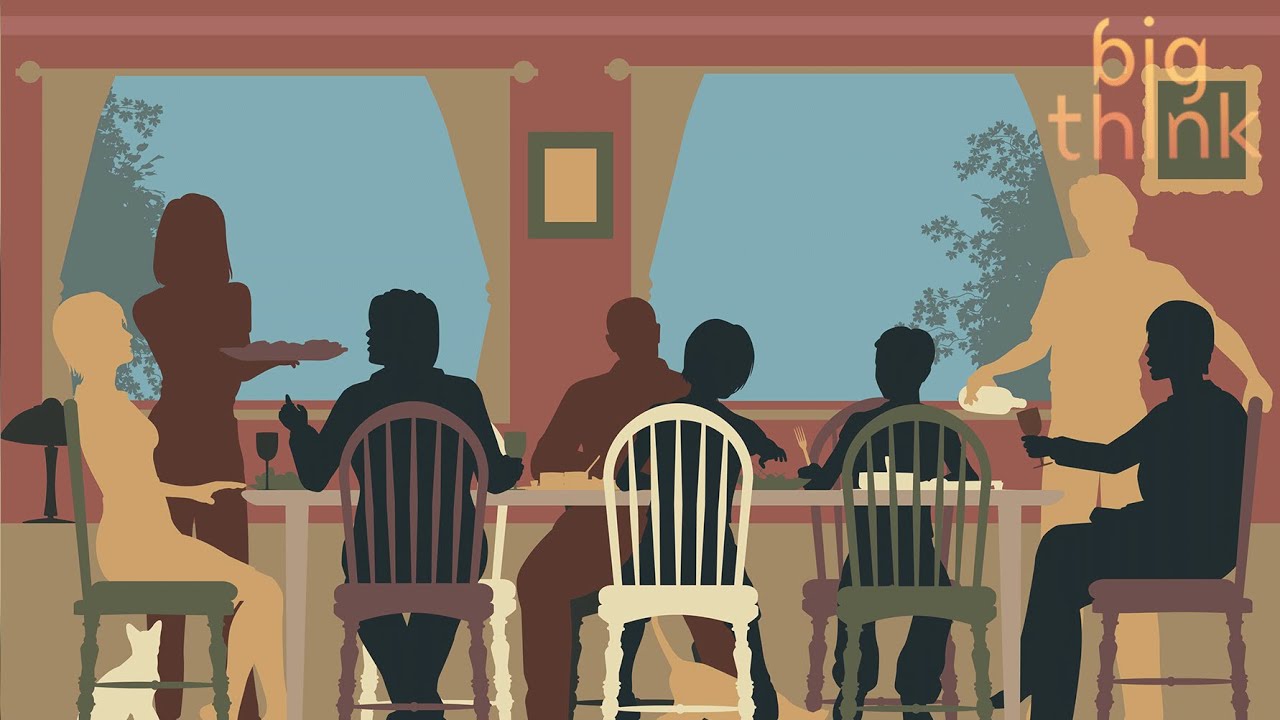
Research shows that eating together brings a family closer and helps children develop. The problem is many Americans don't do it—the United States ranks 33rd out of 35 countries. Despite this, Bruce Feiler explains how you don't necessarily need to all sit rank and file, elbows on the table, in order to experience the benefits of sharing a meal. The secret is communication.
----------------------------------------------------------------------------------
BRUCE FEILER:
Bruce Feiler is one of America’s most popular voices on family, faith, and survival. He writes the “This Life” column about contemporary families for the Sunday New York Times and is the author of five consecutive New York Times bestsellers. For his new book The Secrets of Happy Families, he sought out the most creative minds from Silicon Valley to the country’s top negotiators, from the set of Modern Family to the Green Berets and asked what team-building exercises and problem-solving techniques they use with their families. Feiler then tested these ideas with his own wife and kids.
----------------------------------------------------------------------------------
TRANSCRIPT:
Bruce Feiler: If there’s one thing that all families have been told it’s have family dinner with your kids. And the truth is there’s a lot of research that says it’s great for children. The problem is that many people can’t do it. A third of us are not doing it regularly. Americans ranked 33 out of 35 countries in terms of having family meals together. But dig deeper into the research and it’s quite revealing and actually quite hopeful for parents. It turns out there’s only ten minutes of conversation in any mealtime. The rest is taken up with take your elbows off the table and pass the ketchup.
But it’s that ten minutes that really matters. So if you can have family dinner, fantastic. But if you can’t you don’t have to feel guilty or doomed if mom has to work late or junior has a sports practice. You can time shift family dinner – another idea taken from outside families that can help families. So have family breakfast. For a bedtime snack at 8:30. Even one meal – one on the weekends can have the same benefits.
Let me mention just a couple of things you can do to reduce stress at the dinner table and a couple of things you can do to increase communication.
First of all let’s talk about siblings who are fighting at the table, okay. Sibling rivalry is a huge problem in families. As the father of twins I certainly know that. And the research shows if you give your kids a task to do, say ten minutes before they come to the meal time, that will remind them that they can work together and they actually get along. And that will have a halo effect and carry over to the meal time and reduce stress. So actually having kids set the table or help you prepare dinner – even a few minutes before dinner can actually make the dinner itself less stressful and more bonding.
But the research clearly shows that families should spend less time worrying about what they do wrong and more time focusing on what they do right. So what can you talk about at dinner that’s gonna help your family. Here’s two quick ideas. One, play a game called bad and good. Have everybody go around, say what happened bad to them and then go around and say what happened good to them. And here’s the key. The parents should do it too.
There’s something about the actual task of parents showing that they have problems too. That they have challenges – things that they’re solving in real time that gives kids confidence that when they have a challenge they can overcome that challenge also.
The second thing you can do – and maybe even should do is talk about your family history. This is my single favorite tip from The Secrets of Happy Families. Researchers at Emory gave kids a Do You Know test. Do you know where your grandparents were born? Where your parents went to high school? An aunt or an uncle who had an illness that they overcame. Kids who knew more about their family history had a higher sense of self-esteem and a greater belief that they could control their own lives. It was the number one predictor of a child’s emotional well-being. And as the researcher explained to me, these kids have a sense that they’re part of a longer narrative. A big family that goes back generations..........
To read the transcript, please go to
Sentinel Indexing in Progress
Metadata and chapters are available. Claim extraction for this episode is pending.
All video content is delivered via YouTube embedded players in accordance with the YouTube Terms of Service. Sentinel provides research tools that promote discovery and accountability across political media.