Big Think
@bigthink·8.8M subscribers·10.1K videos
Can the Olympics Render Our Tribal Impulses Harmless? | Sebastian Junger | Big Think
Posted
August 1, 2016
Views
8,671
Likes
241
Comments
24
Engagement
August 1, 2016
8,671
241
24
3.06%
Every word spoken in this episode is indexed. Type any phrase to jump straight to the moment it was said.
Type any word or phrase that may have been spoken. Click a result to seek the player to that exact moment.
Try a name, a topic, or a quoted line
 2:54Now Playing
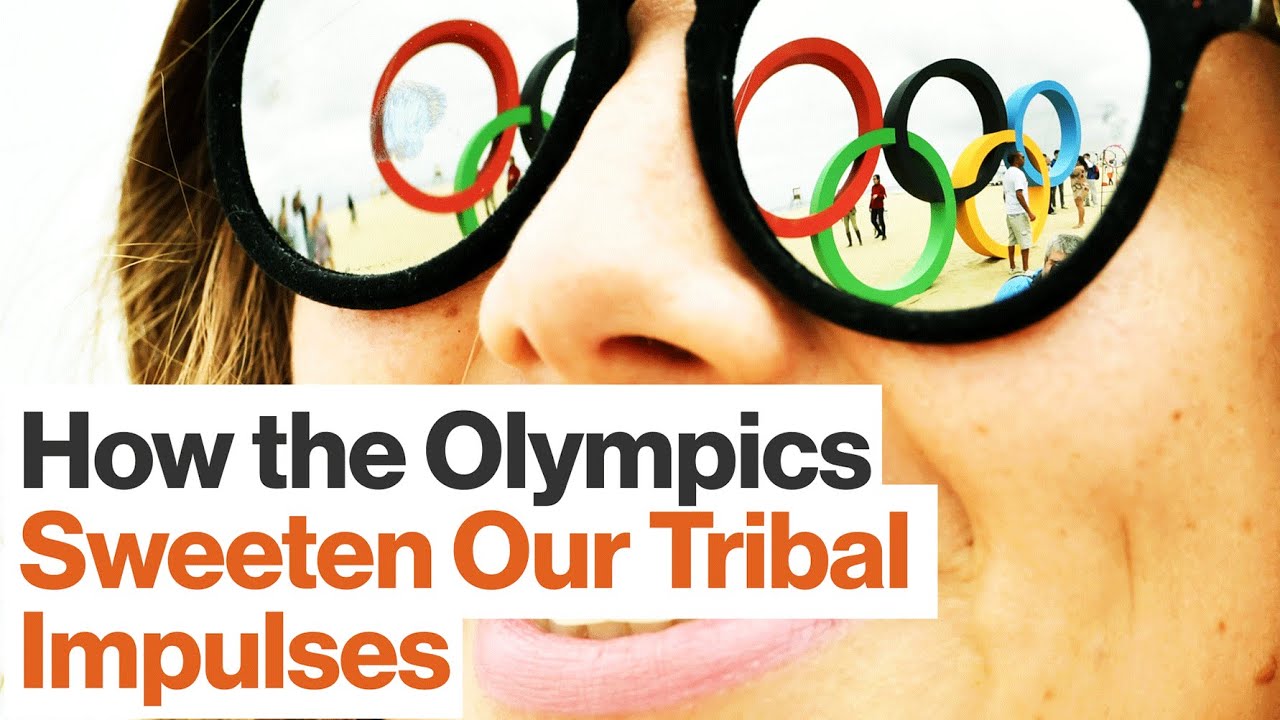
Can the Olympics Render Our Tribal Impulses Harmless?
New videos DAILY
Join Big Think Edge for exclusive video lessons from top thinkers and doers
----------------------------------------------------------------------------------
Olympic history traces back to 776 BCE, where there was only one event, a race won by a cook called Coroebus. Since then, the Olympics have evolved. There are more games, more locations, and more people can attend, as women were once banned from attending in Ancient Olympia.
----------------------------------------------------------------------------------
SEBASTIAN JUNGER:
Sebastian Junger is the #1 New York Times Bestselling author of THE PERFECT STORM, FIRE, A DEATH IN BELMONT, WAR and TRIBE. As an award-winning journalist, a contributing editor to Vanity Fair and a special correspondent at ABC News, he has covered major international news stories around the world, and has received both a National Magazine Award and a Peabody Award. Junger is also a documentary filmmaker whose debut film "Restrepo", a feature-length documentary (co-directed with Tim Hetherington), was nominated for an Academy Award and won the Grand Jury Prize at Sundance.
"Restrepo," which chronicled the deployment of a platoon of U.S. soldiers in Afghanistan's Korengal Valley, is widely considered to have broken new ground in war reporting. Junger has since produced and directed three additional documentaries about war and its aftermath. "Which Way Is The Front Line From Here?", which premiered on HBO, chronicles the life and career of his friend and colleague, photojournalist Tim Hetherington, who was killed while covering the civil war in Libya in 2011. "Korengal" returns to the subject of combat and tries to answer the eternal question of why young men miss war. "The Last Patrol", which also premiered on HBO, examines the complexities of returning from war by following Junger and three friends--all of whom had experienced combat, either as soldiers or reporters--as they travel up the East Coast railroad lines on foot as "high-speed vagrants."
Junger has also written for magazines including Harper's, The New York Times Magazine, National Geographic Adventure, Outside and Men's Journal. His reporting on Afghanistan in 2000, profiling Northern Alliance leader Ahmed Shah Massoud, who was assassinated just days before 9/11, became the subject of the National Geographic documentary "Into the Forbidden Zone," and introduced America to the Afghan resistance fighting the Taliban. He lives in New York City and Cape Cod.
----------------------------------------------------------------------------------
TRANSCRIPT:
Sebastian Junger: Sports are an interesting way for people who experience a collective identity. Sports teams in this country have their own sort of tribal impulses against each other. But then, you know, drop a few bombs on Pearl Harbor and then all of a sudden we’re one country facing an enemy. And people just naturally cohere into groups. And when you create a group just by necessity you’re also creating a whole bunch of people who aren’t in your group. And just mathematically know – that’s just a mathematical truth. And one of the interesting things about the Olympics is that it’s a chance for nations to demonstrate their nationness, to demonstrate the fact that they actually see themselves as a nation which is a beautiful thing. I mean that’s what we have organized ourselves into nations. That’s the modern world and when you see that on display it can be really moving. But it also because hopefully we’re sort of bigger than ourselves it also allows nations to entertain some kind of communalism between each other that’s sort of channeled through the ability of competition.
At the end of the day when you have different nations competing in the Olympics one of the things they’re all agreeing on is the incredible beauty and nobility of the human animal performing at its absolute peak. I’m reminded of a world class long distance runner that I’m friends with who competed in the mile in the 1960s and 70s. And he was at an international track meet in England and he was lined up on the track with the best milers in the world including the great Steve Ovett. And right before they started the race Steve Ovett pumped his fist in the air – he’s an amazing athlete. I think he had the world record for a while. He’s an amazing athlete. He raised his hand, pumped his fist in the air and he said okay gentlemen, let’s make it a good one. And what he was saying there, I mean he was going to try as hard as he could to win that race. But what he was also saying is look, it’s up to all of us to bring nobility to what we’re doing and what everyone in this arena has gathered to watch. So let’s do it. Don’t let them down. And I think the Olympics at their best can rise to that standard that Steve Ovett set at that moment.
Sentinel Indexing in Progress
Metadata and chapters are available. Claim extraction for this episode is pending.
All video content is delivered via YouTube embedded players in accordance with the YouTube Terms of Service. Sentinel provides research tools that promote discovery and accountability across political media.