Big Think
@bigthink·8.8M subscribers·10.1K videos
Writing 101: Choose Your Critics Wisely | Jacqueline Woodson | Big Think
Posted
August 10, 2016
Views
18,700
Likes
698
Comments
54
Engagement
4.02%
August 10, 2016
18,700
698
54
4.02%
Every word spoken in this episode is indexed. Type any phrase to jump straight to the moment it was said.
Type any word or phrase that may have been spoken. Click a result to seek the player to that exact moment.
Try a name, a topic, or a quoted line
 5:25Now Playing
Writing 101: Choose Your Critics Wisely
Watch the newest video from Big Think
Join Big Think Edge for exclusive videos
----------------------------------------------------------------------------------
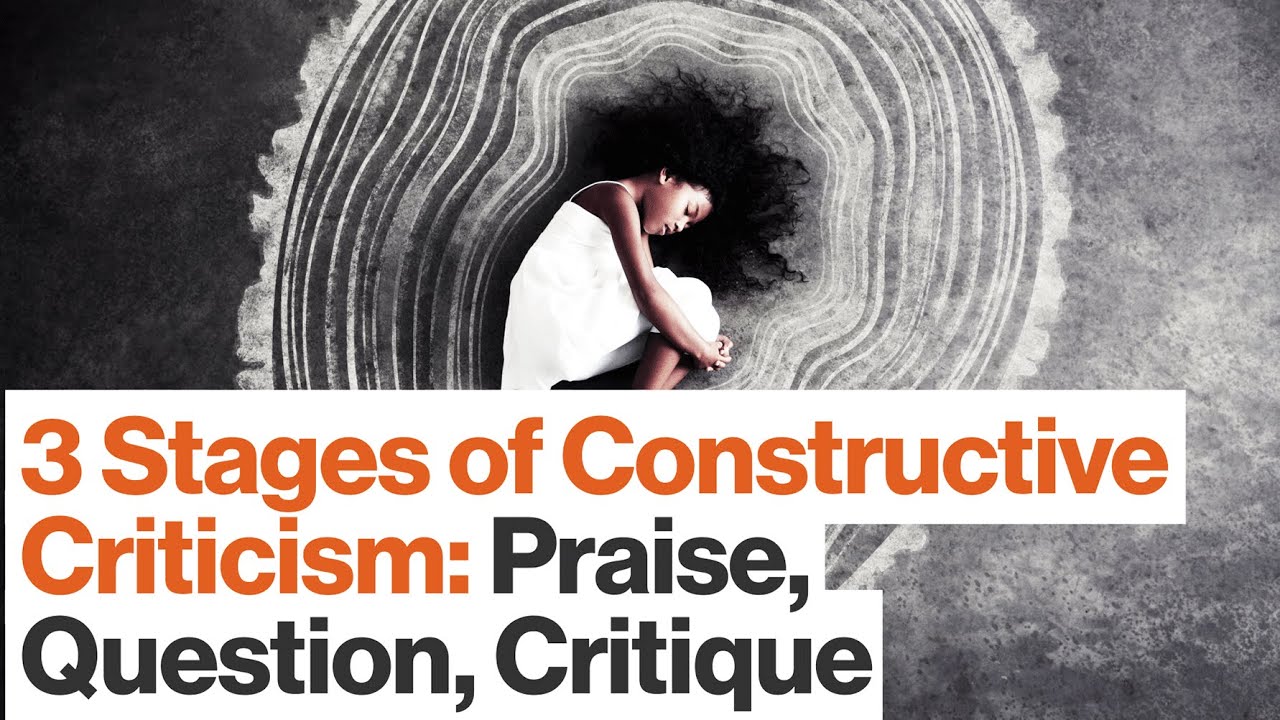
National Book Award winner Jacqueline Woodson talks us through her writing and editing process, and gives useful steps for how to handle criticism.Writing is a long process. Most authors have their individual ways to make it work, their own carefully designed method to make sure they actually finish what they started. Sometimes it works, sometimes it doesn’t. Sometimes there’s a gaping plot hole that means rewriting several chapters to solve one problem, and sometimes it turns out okay. There are published writers who reread their work and still find flaws, and there are authors who can’t stand to read their own work ever again. With each type of writing, type of plot, type of character – from Sherlock Holmes to Juliet Capulet – there are many different types of revision.
Jacqueline Woodson, 2014 National Book Award winner and author of many books, including Miracle’s Boys and her most recent Another Brooklyn, has figured the writing process out – or what works for her, in any case, although it does feel quite universal. For Woodson, it’s important that each new manuscript starts with a lot of praise – it must be heaped upon her. Launching into criticism without that ego fortification, she would feel too conflicted and upset about her work to continue. There needs to be some level of hope and happiness in relation to the book, because if people just drive straight into the "this doesn’t make sense, this doesn’t work, I don’t like this bit,’ an aspiring author can feel that there is too much work to be done in order to save the novel in the first place. Once there is a level of confidence related to the work, constructive criticism can begin, which for Woodson takes the form of asking a trusted friend or mentor for their questions relating to the piece. This gives her a chance to address those issues and clear up any assumed knowledge issues, clunky character traits, or plot points. The third step is asking for more specific feedback and critique, where constructive comments are balanced with insight into what this person likes about your work. Vulnerability is inevitable, but it’s easier to experience when it’s cushioned with some self-confidence.
There is a difference between constructive criticism, and "destructive" criticism as Woodson warns. Constructive criticism has a very certain aim, which is to help an artist move forward and be better. Destructive commentary may not have an aim or provide solutions, only distress. It is important to know the difference, when giving and receiving advice, and only solicit advice from those you respect. Without it, no one can move up and onwards to better things.
----------------------------------------------------------------------------------
JACQUELINE WOODSON :
Jacquelin Woodson is the acclaimed New York Times bestselling and National Book Award–winning author of Another Brooklyn and Brown Girl Dreaming. A former drama therapist and social worker for homeless youth, Woodson was born in Columbus, Ohio and grew up in Greenville, South Carolina and Brooklyn, New York. She is the author of over 30 books for children and young adults, including From the Notebooks of Melanin Sun (1995), recipient of both the Coretta Scott King Honor and the Jane Addams Children’s Book Award; Miracle’s Boys (2000), which also won the Coretta Scott King Award, and the Los Angeles Times Book Prize; Hush (2002), which was a National Book Award Finalist; Locomotion (2003), also a National Book Award Finalist; Coming on Home Soon (2004), a Caldecott Honor Book and a Booklist Editors’ Choice; and Behind You (2004), which was included in the New York Public Library’s list of best Books of the Teen Age.
Three of Woodson’s books have won the Newbery Honor: Show Way (2005), Feathers (2007), and After Tupac & D Foster (2008). Her recent books include the young adult novel Beneath a Meth Moon (2012); and Brown Girl Dreaming (2014), a novel in verse about Woodson’s family and segregation in the South, which won the National Book Award and the Newbery Honor Award. In an op-ed for the New York Times, Woodson described how she wrote the book: “As I interviewed relatives in both Ohio and Greenville, S.C., I began to piece together the story of my mother’s life, my grandparents’ lives and the lives of cousins, aunts and uncles.
----------------------------------------------------------------------------------
TRANSCRIPT :
Jacqueline Woodson: In terms of a criticism here's how I deal with it, and this is having written 32 books.
Read the full transcript at
Sentinel Indexing in Progress
Metadata and chapters are available. Claim extraction for this episode is pending.
All video content is delivered via YouTube embedded players in accordance with the YouTube Terms of Service. Sentinel provides research tools that promote discovery and accountability across political media.