Big Think
@bigthink·8.8M subscribers·10.1K videos
NASA Was about to Eat Itself — Then Private Enterprise Stepped In | Julian Guthrie
Posted
October 12, 2016
Views
11,217
Likes
209
Comments
61
Engagement
October 12, 2016
11,217
209
61
2.41%
Every word spoken in this episode is indexed. Type any phrase to jump straight to the moment it was said.
Type any word or phrase that may have been spoken. Click a result to seek the player to that exact moment.
Try a name, a topic, or a quoted line
 4:54Now Playing
NASA Was about to Eat Itself — Then Private Enterprise Stepped In |
Watch the newest video from Big Think
Join Big Think Edge for exclusive videos
----------------------------------------------------------------------------------
Are you a maverick or are you a mouse? Author Julian Guthrie brings us one of the great entrepreneurial adventure stories of our time in 'How to Make a Spaceship'.It seems ‘a-ha!’ moments might be contagious. Journalist Julian Guthrie’s latest book, How to Make a Spaceship, sprang from an interview she did with Peter Diamandis, chairman and CEO of the X PRIZE Foundation, which designs and launches large incentive prizes to drive radical breakthroughs for the benefit of humanity.
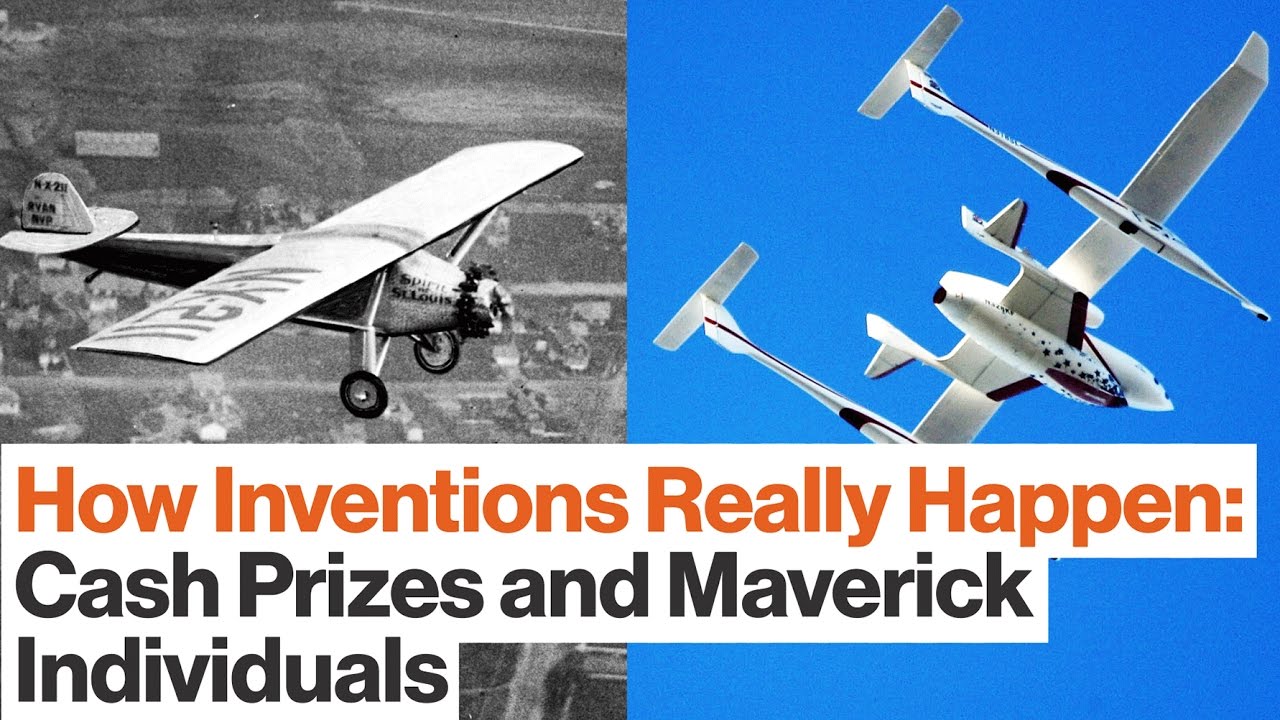
In this interview, Diamandis told her of an a-ha moment he had back in 1993: he was reading The Spirit of St. Louis and realized that 25-year-old American aviator Charles Lindbergh didn't make his historic 1927 non-stop flight from Long Island, New York to Paris, France as a publicity stunt; he did it to win the $25,000 Orteig Prize. A light-bulb switched on, and the X PRIZE foundation was born out of Diamandis’ desire to adopt the incentive model that kick-started the golden age of aviation, and apply it to the space age.
This recount by Diamandis spurred on a surge of creativity that resulted in Guthrie’s new book, where she asks the question: what fuels great leaps of invention? The answer it seems is renegades, mavericks, competition, and both inspiration and detachment from the government.
The magic of NASA in the 1960s was an example of the government at its best. The space program ignited imagination and curiosity in the public, and in just eight years it successfully launched man to the moon. But as all things do, NASA’s missions got more complicated and costly. By the late 1980s, the Challenger space shuttle had been destroyed in flight and killed all seven crew members, and Mars was being described as "a trillion dollars away". Space exploration seemed unsafe, which disenfranchised the public, and absurdly expensive, which disenfranchised independent inventors.
Then came the Ansari X PRIZE for private spaceflight, which was opened in 1996, where X PRIZE offered a $10 million incentive to the first non-government organization to launch a reusable manned spacecraft into space – but here was the catch: they had to do it twice, safely, within two weeks. Guthrie’s book tells the story of the 26 teams that participated, from all over the world, ranging from amateur hobbyists, to a toothpaste factory worker, to corporate-sponsored super teams and how, after eight years (the magic number), a winner crossed the finish line with a comparatively low-cost solution to space flight.
What was the genius of this incentive model? Guthrie explains several factors: small teams often have more ingenuity and freedom than large bureaucratic institutions; some of the most brilliant minds want nothing to do with the government; unconventional resumes like former hackers and off-the-grid inventors bring unexpected ideas from all disciplines (Lindberg himself was a total nobody until he won the Orteig Prize), and lastly: money and ego are powerful motivators.
Some of humanity’s greatest innovations – such as railroads and personal computers – did not involve the government. Sometimes it’s faster for a free-agent maverick to make innovative leaps than a weighty industry giant. Guthrie’s How To Make a Spaceship is a compelling, adventurous tale – which is the only way you get Richard Branson to write the preface and Stephen Hawking to pen the afterword.
Julian Guthrie’s book is How to Make a Spaceship: A Band Of Renegades, An Epic Race, And The Birth Of Private Spaceflight.
----------------------------------------------------------------------------------
JULIAN GUTHRIE:
Julian Guthrie is an award-winning journalist who spent 20 years at the San Francisco Chronicle and has been published by The Wall Street Journal, The Huffington Post, Salon.com, Forbes FYI and others. Author of three books, her most recent release is How to Make a Spaceship: A Band of Renegades, an Epic Race, and the Birth of Private Spaceflight, which tells the story of a cast of characters who dreamed of getting to space without the government's help. This cast includes aviators, test pilots, engineering school dropouts, NASA retirees, billionaires, and a particularly determined space geek who refused to give up on his outsized dream.
----------------------------------------------------------------------------------
TRANSCRIPT:
Julian Guthrie: I came to the story, this book, originally through an interview that I did with Peter Diamandis for the San Francisco Chronicle. And I asked him this seemingly simple question of how did this whole XPrize thing start. And he said,
Read the full transcript at
Sentinel Indexing in Progress
Metadata and chapters are available. Claim extraction for this episode is pending.
All video content is delivered via YouTube embedded players in accordance with the YouTube Terms of Service. Sentinel provides research tools that promote discovery and accountability across political media.