Big Think
@bigthink·8.8M subscribers·10.1K videos
Narcissism Doesn't Develop Naturally – It Is a Learned Condition | Alison Gopnik | Big Think
Posted
October 13, 2016
Views
45,054
Likes
822
Comments
198
Engagement
October 13, 2016
45,054
822
198
2.26%
Every word spoken in this episode is indexed. Type any phrase to jump straight to the moment it was said.
Type any word or phrase that may have been spoken. Click a result to seek the player to that exact moment.
Try a name, a topic, or a quoted line
 2:23Now Playing
Narcissism Doesn't Develop Naturally – It Is a Learned Condition
Watch the newest video from Big Think
Join Big Think Edge for exclusive videos
----------------------------------------------------------------------------------
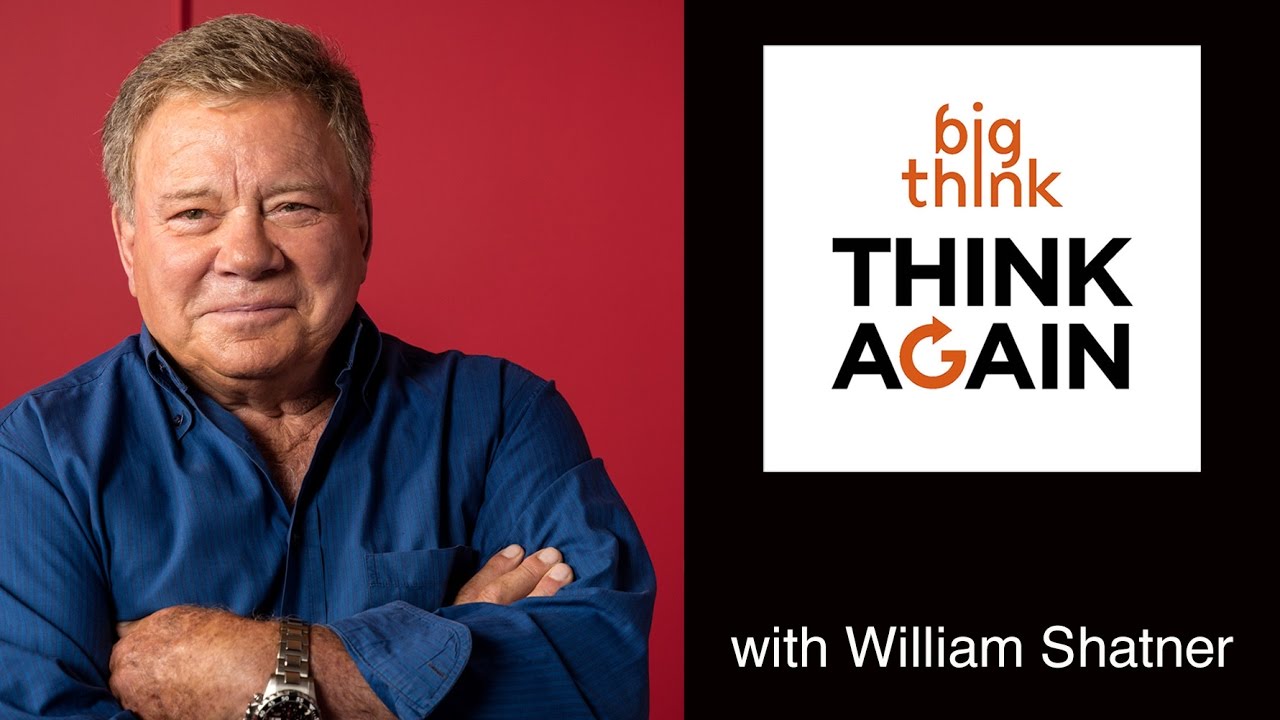
Narcissists aren't born – they're made, says development psychologist Alison Gopnik. She takes issue with the popular notion that children need to unlearn brashnesParents of a newborn baby no doubt look at the bundle in their arms and flash-forward to what their child might grow up to become. Will he or she be an economic genius like Warren Buffet? Or maybe an artistic visionary like David Bowie? What about their heart and mind – will they be happy and funny and kind? And then, somewhere on a lower rung of thought, there are all the fears you don’t let fully materialize: like will he or she grow up to hurt and spite others? What are the chances that they will take after that one sour, twisted relative in the family tree? Psychopaths and narcissists have parents too, some subterranean part of a parent's mind may worry.
According to Dr. Alison Gopnik, a developmental psychologist working at the University of California, Berkeley, infants and young children are not the blank slates we think they are; they are not clueless balls of dough waiting to be shaped. New neuroscience research has flipped that long-held belief on its head – babies aren’t ego-centric wildlings that have to be tamed into civility, and they don’t have to learn how to be good humans from scratch, because from as young as 18 months they are already displaying genuine moral intuition. "The youngest children have a great capacity for empathy and altruism. There's a recent study that shows even 14-month-olds will climb across a bunch of cushions and go across a room to give you a pen if you drop one," Gopnik says.
Recently, she read an article by a New York Times columnist who likened Donald Trump’s behavior to that of a two-year-old, and found herself deeply offended – on behalf of the two-year-old. Narcissism, egotism and a lack of empathy don’t belong to infants, she says, they’re grown-up conditions that happen somewhere in the passage from childhood to adulthood.
The best parents can do is try to encourage children’s natural tendencies towards altruism, without falling into the trap of tribalism that typically comes with that lesson. What Gopnik means by this is that often, children are taught to care about one thing by contrasting it against something they don't have to care about, for example family and friends vs. everyone else, or caring about your country, but not the country next door. The great challenge of raising a child is to present a complete worldview, where empathy doesn’t hit a tribal barrier – or should we say, a wall.
Alison Gopnik's most recent book is The Gardener and the Carpenter: What the New Science of Child Development Tells Us about the Relationship Between Parents and Children.
----------------------------------------------------------------------------------
ALISON GOPNIK:
Alison Gopnik is a professor of psychology and affiliate professor of philosophy at the University of California at Berkeley. She received her BA from McGill University and her PhD. from Oxford University. She is an internationally recognized leader in the study of children’s learning and development and was the first to argue that children’s minds could help us understand deep philosophical questions. She is a columnist (every other week) for The Wall Street Journal. She is the author of over 100 journal articles and several books including “Words, thoughts and theories” (coauthored with Andrew Meltzoff), MIT Press, 1997, and the bestselling and critically acclaimed popular books The Scientist in the Crib (coauthored with Andrew Meltzoff and Patricia Kuhl) William Morrow, 1999, and The Philosophical Baby: What children’s minds tell us about love, truth and the meaning of life, Farrar, Strauss and Giroux, 2009. She has also written widely about cognitive science and psychology for Science, The Times Literary Supplement, The New York Review of Books, The New York Times, New Scientist and Slate, among others. And she has frequently appeared on TV and radio including “The Charlie Rose Show” and “The Colbert Report." She has three sons and lives in Berkeley, California with her husband Alvy Ray Smith.
----------------------------------------------------------------------------------
TRANSCRIPT:
Alison Gopnik: One of the things that we've discovered in neuroscience is that children already have moral intuitions from the time they're extremely young. So even 14-month-olds will go out of their way to try to help someone else who's in trouble. And there's even some evidence that this is true for babies, for infants.
Read the full transcript at
Sentinel Indexing in Progress
Metadata and chapters are available. Claim extraction for this episode is pending.
All video content is delivered via YouTube embedded players in accordance with the YouTube Terms of Service. Sentinel provides research tools that promote discovery and accountability across political media.