Bill Kristol
@ConversationsFCG·74K subscribers·402 videos
Robert Kagan: American Foreign Policy Between WWI and WWII—and Beyond
Posted
April 4, 2023
Views
17,478
April 4, 2023
17,478
Every word spoken in this episode is indexed. Type any phrase to jump straight to the moment it was said.
Type any word or phrase that may have been spoken. Click a result to seek the player to that exact moment.
Try a name, a topic, or a quoted line
 1:21:18Now Playing
American foreign policy between World War I and World War IIand beyond. For more conversations, visit
Chapter 1 (00:15 - 45:06): The Interwar Years
Chapter 2 (45:06 - 1:21:18): The Paradox of American Power
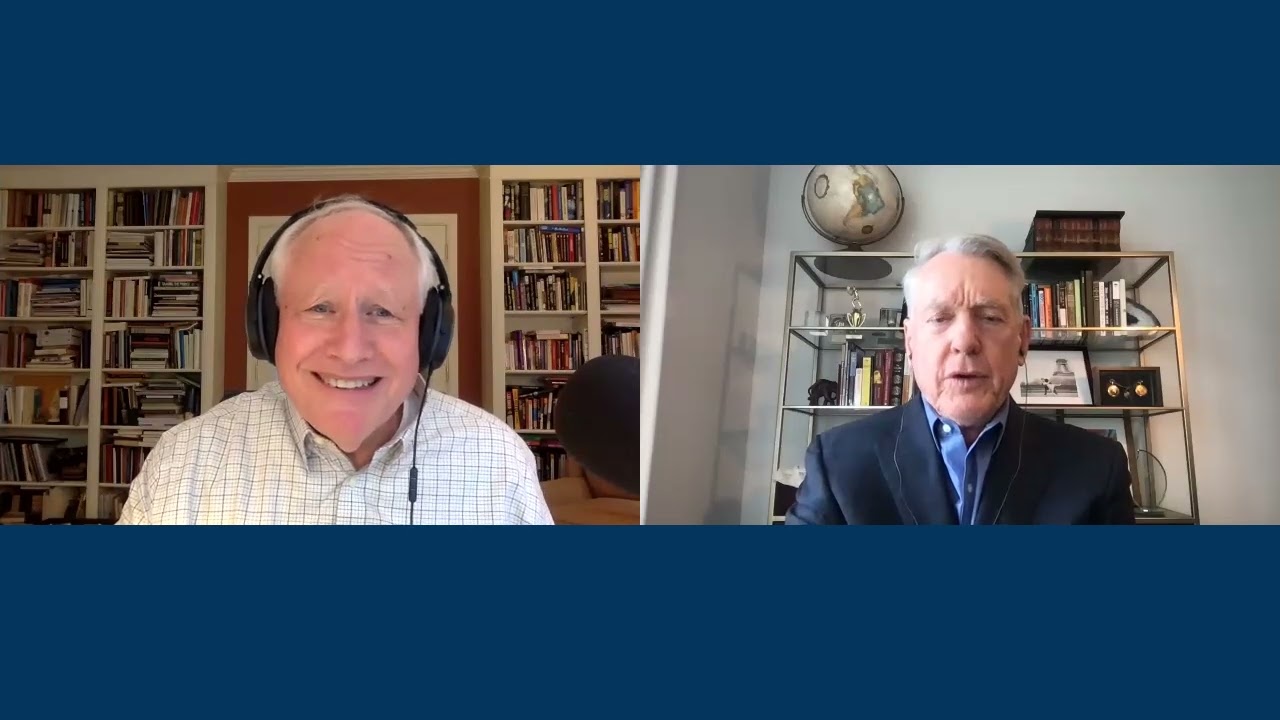
The period between World War I and World War II has long been a reference point in foreign policy debates, yet much about the period remains in dispute. Why did the United States turn away from internationalism after the First World War? Could the US have shaped an enduring liberal world order in the 1920s? To discuss these questions, we are joined by Robert Kagan, the historian and senior fellow at the Brookings Institution. According to Kagan, “Usually the peace is lost at a time when the threats are not obvious, and the need to do something is not obvious.” Drawing on his recent book The Ghost at the Feast, Kagan highlights the centrality of American leadership to any peaceful world order, and contends it was not inevitable the US would turn away from Europe and Asia in the 1920s. He draws particular attention to the interrelation of domestic politics to foreign policy, and considers the possibility of how under different domestic circumstances Woodrow Wilson’s internationalism might have succeeded. Kagan points to an enduring paradox of American foreign policy: “Americans will not tolerate a real serious assault on liberalism in the world writ large, but they are perfectly willing to ignore what’s going on until that challenge appears unmistakably—and they feel they have no choice.” Yet the decisions of the 1920s and 1930s, and of the last eighty years, reveal the profound consequences of inaction as well as action.
Sentinel Indexing in Progress
Metadata and chapters are available. Claim extraction for this episode is pending.
All video content is delivered via YouTube embedded players in accordance with the YouTube Terms of Service. Sentinel provides research tools that promote discovery and accountability across political media.