Bloomberg News
@Bloomberg-News·2.8M subscribers·40.1K videos
Grey Seal Mimics 'Star Wars Theme, 'Twinkle, Twinkle, Little Star'
Posted
June 22, 2019
Views
5,385
Likes
81
Comments
3
Engagement
June 22, 2019
5,385
81
3
1.56%
Every word spoken in this episode is indexed. Type any phrase to jump straight to the moment it was said.
Type any word or phrase that may have been spoken. Click a result to seek the player to that exact moment.
Try a name, a topic, or a quoted line
 0:31Now Playing
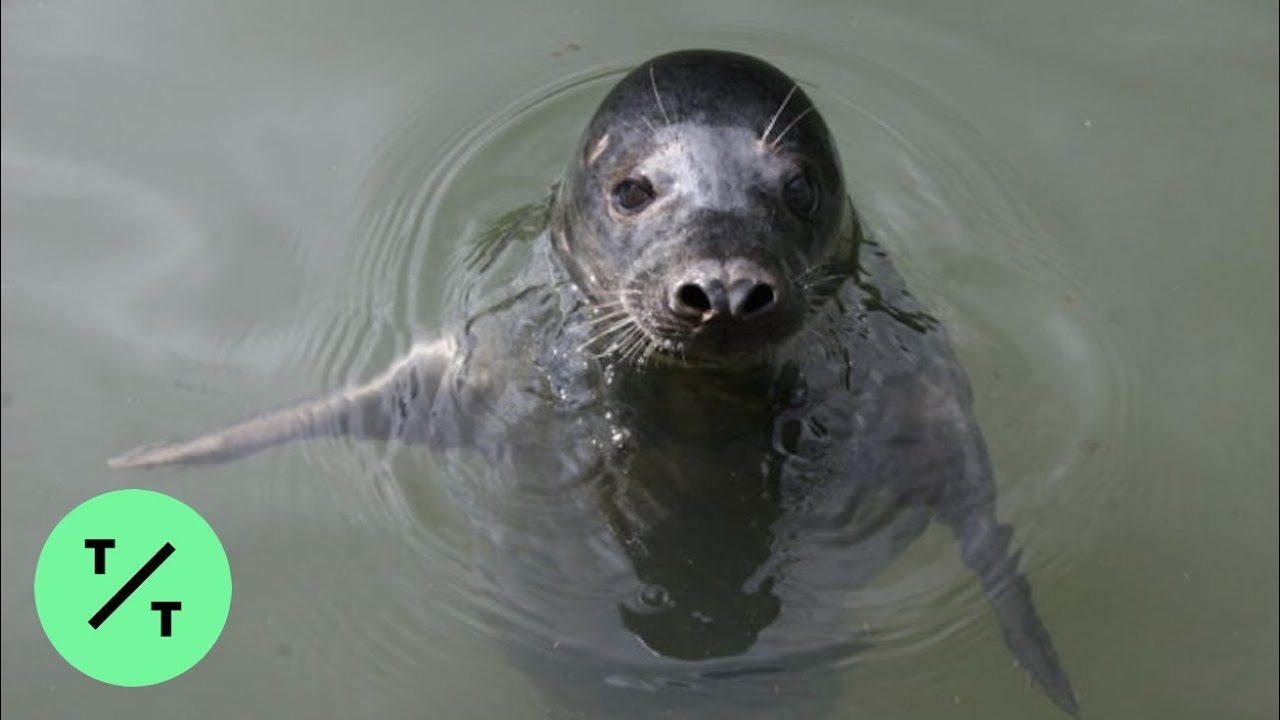
Gray seals can copy the sound of human words and songs, a new research by the University of St Andrews has found.
Grey seals can copy human speech and songs using the same sound production mechanisms as humans, new research carried out at the University of St Andrews has found.
The study, published today in the journal Current Biology, found that seals could be a new model system to study speech disorders.
Researchers Dr Amanda Stansbury and Professor Vincent Janik, of the Scottish Oceans Institute (SOI) at the University of St Andrews, worked with three young grey seals and monitored them from birth to determine their natural repertoire.
These seals were then trained to copy new sounds by changing their formants, the parts of human speech sounds that encode most of the information that we convey to each other.
Zola, one of the seals, was particularly good at copying melodies that were played to her, copying up to ten notes of songs such as Twinkle twinkle little star and other popular themes. Two other seals were taught combinations of human vowel sounds that they copied accurately.
Lead researcher Dr Stansbury, who now works at El Paso Zoo in Texas, said: “I was amazed how well the seals copied the model sounds we played to them.
“Copies were not perfect but given that these are not typical seal sounds it is pretty impressive. Our study really demonstrates how flexible seal vocalisations are. Previous studies just provided anecdotal evidence for this.”
Professor Janik, Director of the SOI at the University of St Andrews, said: “This study gives us a better understanding of the evolution of vocal learning, a skill that is crucial for human language development.
“Surprisingly, nonhuman primates have very limited abilities in this domain. Finding other mammals that use their vocal tract in the same way as us to modify sounds informs us on how vocal skills are influenced by genetics and learning and can ultimately help to develop new methods to study speech disorders.”
Subscribe to our YouTube channel
TICTOC ON SOCIAL:
Follow TicToc on Twitter
Like TicToc on Facebook
Follow TicToc on Instagram
Watch all of TicToc’s videos
Listen to TicToc’s podcast
Subscribe to our newsletter
TicToc by Bloomberg is global news for the life you lead. We are a 24/7 news network that covers breaking news, politics, technology, business and entertainment stories from around the globe, supported by a network of Bloomberg’s 2,700 journalists across 120 countries.
Sentinel Indexing in Progress
Metadata and chapters are available. Claim extraction for this episode is pending.
All video content is delivered via YouTube embedded players in accordance with the YouTube Terms of Service. Sentinel provides research tools that promote discovery and accountability across political media.