Bloomberg News
@Bloomberg-News·2.8M subscribers·40.1K videos
Trump Seeks to Delay 2020 Census After Supreme Court Ruling
Posted
June 27, 2019
Views
810
Likes
4
Comments
4
Engagement
0.99%
June 27, 2019
810
4
4
0.99%
Every word spoken in this episode is indexed. Type any phrase to jump straight to the moment it was said.
Type any word or phrase that may have been spoken. Click a result to seek the player to that exact moment.
Try a name, a topic, or a quoted line
 0:49Now Playing
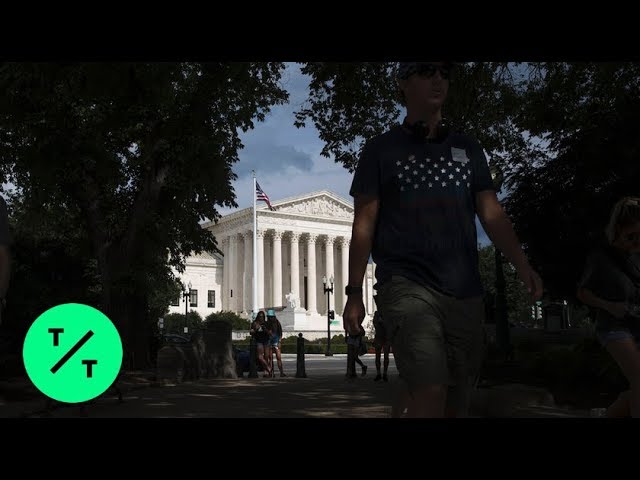
The U.S. Supreme Court put on hold the Trump administration’s plan to include a citizenship question on the 2020 census, prompting President Donald Trump to say he’ll explore trying to delay a survey that by law must be conducted next year.
Issuing the final opinion of its term, a divided court said Thursday that Commerce Secretary Wilbur Ross’s stated rationale for including the citizenship question was “contrived” and couldn’t be squared with the evidence about his true motivations. Chief Justice John Roberts joined the court’s liberals in the majority.
Trump, who’s in Japan for the Group of 20 summit, tweeted that he’s “asked the lawyers if they can delay the Census, no matter how long.” He said it “seems totally ridiculous that our government, and indeed Country, cannot ask a basic question of Citizenship in a very expensive, detailed and important Census, in this case for 2020.”
The court’s decision sets up a race against the clock for the Commerce Department, which houses the Census Bureau, to put forward a justification that can pass legal muster. Any new effort to include the question is sure to face a legal fight that under normal circumstances would take months and land back at the Supreme Court.
The U.S. Constitution requires a census every 10 years, and census day is set by federal law as April 1, so it’s unlikely the administration would be able to delay the survey without congressional agreement. The administration has said the 2020 census questionnaire needed to be ready for printing by June 30; those challenging the citizenship question had said it could be finalized as late as Oct. 31.
Opponents contend that the citizenship question would reduce participation in the survey and that administration officials hid their true aim of boosting Republican and white voters. Ross said the goal was to help the Justice Department enforce the Voting Rights Act, which protects minority voters.
“Altogether, the evidence tells a story that does not match the explanation the secretary gave for his decision,” Roberts wrote for himself and the court’s four liberals, taking a slap at the Trump administration’s decision-making process. He added: “the VRA enforcement rationale -- the sole stated reason -- seems to have been contrived.”
The Supreme Court ruled for the administration on other points. A differently configured majority of justices said Ross was justified in rejecting the recommendation of the Census Bureau that the question not be included because it would cut responses by millions of people.
Ross “determined that reinstating a citizenship question was worth the risk of a potentially lower response rate,” Roberts wrote for himself and the other four conservative justices. “That decision was reasonable and reasonably explained, particularly in light of the long history of the citizenship question on the census.”
Subscribe to our YouTube channel
TICTOC ON SOCIAL:
Follow TicToc on Twitter
Like TicToc on Facebook
Follow TicToc on Instagram
Watch all of TicToc’s videos
Listen to TicToc’s podcast
Subscribe to our newsletter
TicToc by Bloomberg is global news for the life you lead. We are a 24/7 news network that covers breaking news, politics, technology, business and entertainment stories from around the globe, supported by a network of Bloomberg’s 2,700 journalists across 120 countries.
Sentinel Indexing in Progress
Metadata and chapters are available. Claim extraction for this episode is pending.
All video content is delivered via YouTube embedded players in accordance with the YouTube Terms of Service. Sentinel provides research tools that promote discovery and accountability across political media.