
Bloomberg News
@Bloomberg-News·2.8M subscribers·40.1K videos
Supreme Court Rejects Partisan Gerrymandering Cases
Posted
June 28, 2019
Views
6,622
Likes
25
Comments
25
Engagement
0.76%
June 28, 2019
6,622
25
25
0.76%
Every word spoken in this episode is indexed. Type any phrase to jump straight to the moment it was said.
Type any word or phrase that may have been spoken. Click a result to seek the player to that exact moment.
Try a name, a topic, or a quoted line
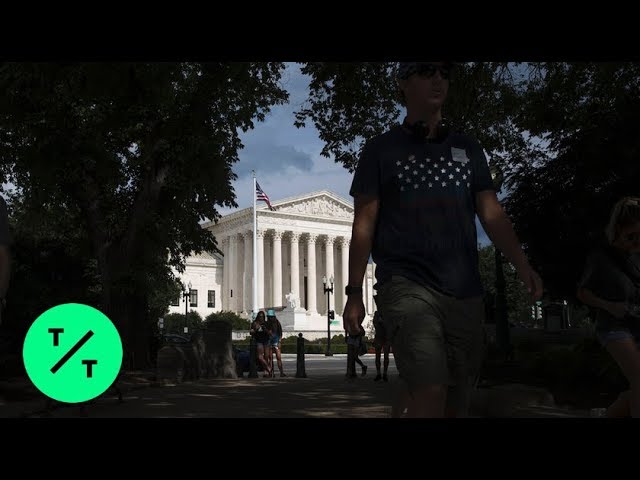 7:15Now Playing
The U.S. Supreme Court ruled it has no constitutional authority to throw out voting maps for being too partisan, effectively giving parties that control state legislatures license to redraw districts to cement their political advantages.
The justices’ 5-4 decision Thursday -- divided along ideological lines -- upholds disputed congressional maps drawn by Maryland Democrats and North Carolina Republicans, while dooming similar challenges being pressed against Republican-made maps in Ohio and Michigan, boosting that party’s prospects in the 2020 elections.
Writing for a majority comprised of Republican-appointed judges, Chief Justice John Roberts said, “partisan gerrymandering is nothing new. Nor is frustration with it.” But he said courts can’t fashion a remedy because the problem requires a political solution, not a judicial one.
“We have no commission to allocate political power and influence in the absence of a constitutional directive or legal standards to guide us in the exercise of such authority,” he said. Siding with the chief justice were Trump appointees Brett Kavanaugh and Neil Gorsuch, along with justices Clarence Thomas and Samuel Alito.
The decision reverses lower court rulings that invalidated the Maryland and North Carolina redistricting efforts. In addition, lower courts had deemed the Ohio and Michigan maps as too partisan and ordered them redrawn for 2020. The high court put those cases on hold pending Thursday’s ruling.
Republicans are currently the more frequent beneficiaries of gerrymanders because their electoral success in 2010 let them draw many of the current maps. The ruling will shape the next round of map-drawing, which will take place around the country after the 2020 census. Those lines will apply starting in 2022.
Dissenting Justice Elena Kagan briefly choked up as she read her opinion from the bench. She called the majority ruling “tragically wrong” and said it was “with respect but deep sadness,” that she and justices Ruth Bader Ginsburg, Stephen Breyer and Sonia Sotomayor disagreed. Each of them were nominated by Democratic presidents.
Kagan said it was the first time the court was refusing to remedy a constitutional violation “because it thinks the task beyond judicial capabilities.” She added that partisan gerrymanders “debased and dishonored our democracy, turning upside-down the core American idea that all governmental power derives from the people.”
Subscribe to our YouTube channel
TICTOC ON SOCIAL:
Follow TicToc on Twitter
Like TicToc on Facebook
Follow TicToc on Instagram
Watch all of TicToc’s videos
Listen to TicToc’s podcast
Subscribe to our newsletter
TicToc by Bloomberg is global news for the life you lead. We are a 24/7 news network that covers breaking news, politics, technology, business and entertainment stories from around the globe, supported by a network of Bloomberg’s 2,700 journalists across 120 countries.
Sentinel Indexing in Progress
Metadata and chapters are available. Claim extraction for this episode is pending.
All video content is delivered via YouTube embedded players in accordance with the YouTube Terms of Service. Sentinel provides research tools that promote discovery and accountability across political media.