
Bloomberg News
@Bloomberg-News·2.8M subscribers·40.1K videos
Hong Kong Police Already Have AI Tech That Can Recognize Faces
Posted
October 25, 2019
Views
8,415
Likes
38
Comments
41
Engagement
October 25, 2019
8,415
38
41
0.94%
Every word spoken in this episode is indexed. Type any phrase to jump straight to the moment it was said.
Type any word or phrase that may have been spoken. Click a result to seek the player to that exact moment.
Try a name, a topic, or a quoted line
See what was published immediately before and after this episode.
 0:52Now Playing
Hong Kong law enforcement authorities have access to artificial intelligence software that can match faces from any video footage to police databases, but it’s unclear if it’s being used to quell months-long pro-democracy protests, according to people familiar with the matter.
Police have been able to use the technology from Sydney-based iOmniscient for at least three years, and engineers from the company have trained dozens of officers on how to use it, said the people, who asked not to be identified because the information isn’t public. The software can scan footage including from closed-circuit television to automatically match faces and license plates to a police database and pick out suspects in a crowd.
In addition to tracking criminals, iOminiscient’s artificial intelligence can be used for everything from finding lost children to managing traffic. In one training session that took place after the protests began in June, the people said, officers asked how to automatically identify license plate numbers using dashboard cameras.
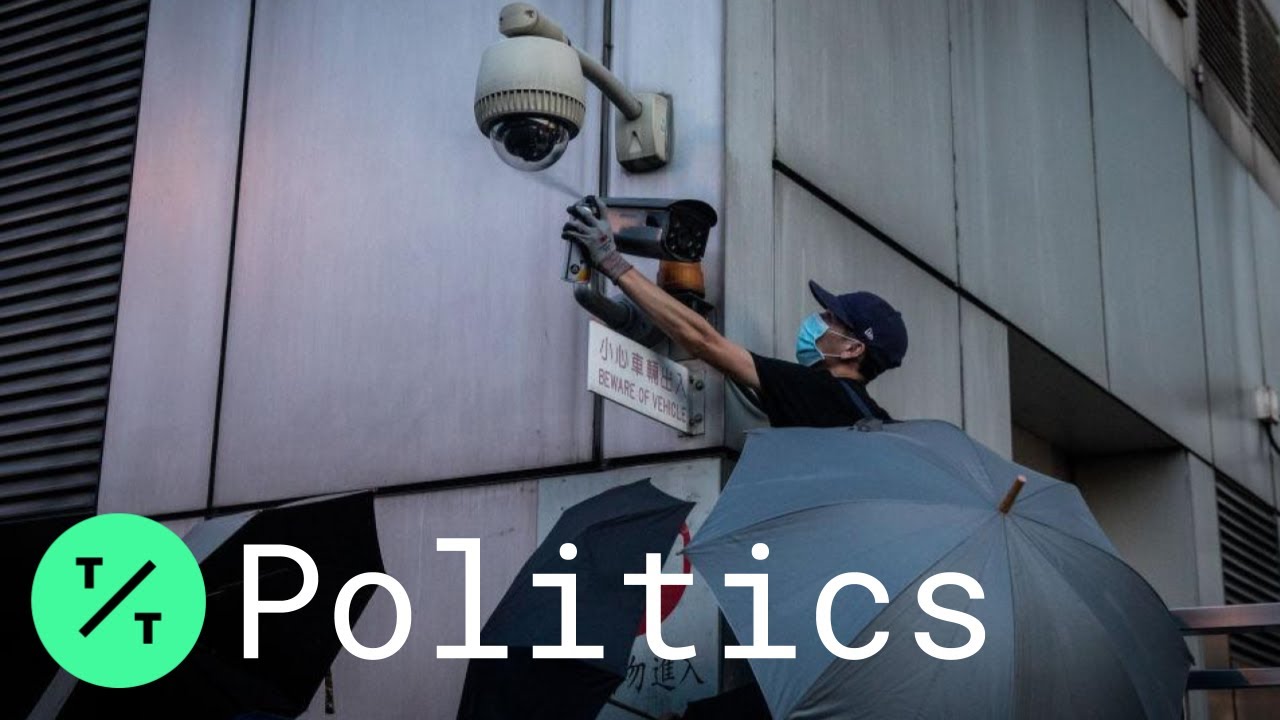
Questions over the use of facial recognition technology have loomed over the protests, stoking fears that Hong Kong is moving closer to a mainland-style surveillance state. Demonstrators have worn masks, destroyed CCTV cameras, torn down so-called smart lampposts and used umbrellas to hide acts of vandalism. Authorities in turn used an emergency law this month for the first time in more than half a century to ban face masks, a move that triggered increased violence.
While Hong Kong’s government has disclosed some ways it uses facial recognition technology, Chief Executive Carrie Lam’s administration and the police haven’t publicly confirmed whether they are using it to monitor the protests. Patrick Nip, secretary for constitutional and mainland affairs, said in June that no government department had procured or developed automated facial recognition-CCTV systems or applied the technology in CCTV systems.
iOmniscient declined to comment on whether Hong Kong’s police use its facial recognition technology. The company said that its technology also has the capability to keep identities anonymous for such uses as crowd control. Its systems are used in more than 50 countries and only a small portion of overall revenue comes from Hong Kong, where business opportunities are relatively limited given privacy concerns and fewer cameras compared with other cities, according to the firm.
Under Hong Kong’s privacy laws, which are more stringent than the mainland, members of the public must be informed if they’re subject to surveillance. If authorities are matching faces or names to identity markers, that would fall under the privacy ordinance, according to Stuart Hargreaves, a law professor at Chinese University of Hong Kong who researches surveillance and privacy issues. However, police can claim an exemption if the data is being used to detect or prevent crime.
“Is the ‘facial recognition’ simply the police combing through video footage for ‘known individuals,’ or is there some kind of automated AI system at play?” Hargreaves said. “The truth is we simply do not know.”
The world’s 5 most-watched cities are all in China, with the top city of Chongqing having about 168 cameras per 1,000 people, according to estimates by Comparitech. By comparison, Hong Kong’s 50,000 CCTVs are one-tenth the number in London and not enough to put it in the top 20 most-watched cities.
Hong Kong authorities have tried to appease concerns by pointing out that there is no in-built facial recognition in recently installed smart lampposts or in CCTV cameras at China government offices. Still, the technology has been used in the city for more than a decade, including at the airport and Shenzhen border for immigration control.
Some Chinese companies recently blacklisted by the U.S. over human rights concerns in the far west region of Xinjiang have their tech in Hong Kong.
On Hong Kong’s streets, riot police have sought to avoid the cameras even while arresting more than 2,000 protesters, including nearly 100 people for violating the mask ban. They’ve used flashlights to disrupt media coverage, and some officers removed ID numbers and donned masks to hide their identities for fear that they could become victims of personal attacks online, known as doxxing.
Subscribe to our YouTube channel
TICTOC ON SOCIAL:
Follow TicToc on Twitter
Like TicToc on Facebook
Follow TicToc on Instagram
Subscribe to our newsletter
TicToc by Bloomberg is global news for the life you lead. We are a 24/7 news network that covers breaking news, politics, technology, business and entertainment stories from around the globe, supported by a network of Bloomberg’s 2,700 journalists across 120 countries.
Sentinel Indexing in Progress
Metadata and chapters are available. Claim extraction for this episode is pending.
All video content is delivered via YouTube embedded players in accordance with the YouTube Terms of Service. Sentinel provides research tools that promote discovery and accountability across political media.