Bloomberg News
@Bloomberg-News·2.8M subscribers·40.1K videos
U.S. Held Record 69,550 Migrant Kids in Custody in 2019: Report
Posted
November 13, 2019
Views
588
Likes
8
Comments
2
Engagement
November 13, 2019
588
8
2
1.70%
Every word spoken in this episode is indexed. Type any phrase to jump straight to the moment it was said.
Type any word or phrase that may have been spoken. Click a result to seek the player to that exact moment.
Try a name, a topic, or a quoted line
See what was published immediately before and after this episode.
 0:55Now Playing
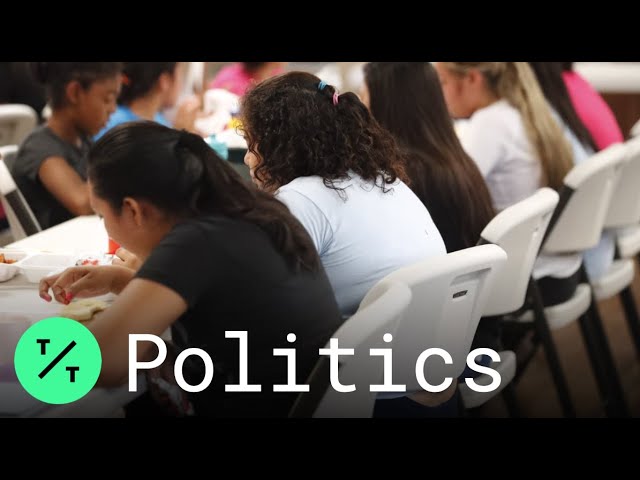
This month new government data shows the little girl is one of an unprecedented 69,550 migrant children held in U.S. government custody over the past year, enough to overflow the typical NFL stadium. That’s more kids detained away from their parents than any other country, according to United Nations researchers. And it’s happening even though the U.S. government has recognized detention can be traumatic for children, putting them at risk of long-term physical and emotional damage.
Some of these migrant children who were in government custody this year have already been deported. Some have reunited with family in the U.S., where they’re trying to go to school and piece back together their lives. About 4,000 are still in government custody, some in large, impersonal shelters. And more arrive every week.
The nearly 70,000 migrant children who were held in government custody over the last year — up 42 percent in fiscal year 2019 from 2018 — spent more time in shelters and away from their families than in prior years. The Trump administration’s series of strict immigration policies has increased the time children spend in detention, despite the government’s own acknowledgment that it does them harm.
“Early experiences are literally built into our brains and bodies,” says Dr. Jack Shonkoff, who directs Harvard University’s Center on the Developing Child. Earlier this year, he told Congress that “decades of peer-reviewed research” shows that detaining kids away from parents or primary caregivers is bad for their health.
One Honduran teen who was held in a large detention center for four months before reuniting with his mother earlier this year said that as each day passed, his fear and anxiety grew.
“There was despair everywhere,” he recalled.
He spoke on condition of anonymity out of concerns for their safety.
The 3-year-old girl, taken from her father when immigration officials caught them near the border in Texas in March 2019, was sent to government-funded foster care. When a caregiver put her on the phone with him, the girl refused to speak, screaming in anger.
What his daughter didn’t, or couldn’t, tell her dad was that another child in her foster home woke her up and began molesting her, according to court records. As the days passed, she began urinating on herself and seemed unable to eat or drink, a foster parent said in the records.
“I felt like I couldn’t do anything to help her,” said her father, who found out about his daughter’s abuse while he was in detention. The father agreed to speak about their case on condition of anonymity for safety reasons.
In June, he gave up and asked a judge to deport them. The government sent him back to Honduras alone. His daughter followed a month later.
On an August afternoon in their hometown, the little girl had her hair tied up in pigtails. She played with her younger sister, but ignored her father and refused to hold his hand.
He didn’t know of any psychological support in their town.
“For now we’re going to try to give her more affection, more love and then if there isn’t a change we’re going to try to find some help,” he said.
Federal law requires the Department of Health and Human Services’ Office of Refugee Resettlement to provide migrant children with food, shelter, and medical and mental health care. But the HHS Office of Inspector General found there aren’t enough clinicians in shelters holding migrant children.
HHS spokesman Mark Weber said that with the largest number of migrant children in their program’s history, “you must give credit to the Office of Refugee Resettlement and the shelter network staff for managing a program that was able to rapidly expand and unify the largest number of kids ever, all in an incredibly difficult environment.”
The American Academy of Pediatrics says migrant children who are detained “face almost universal traumatic histories” and warns of serious consequences if left untreated. But few of the thousands of children separated from their parents are receiving therapy after being deported back to Central America. Many are from impoverished communities where there are few, if any, accessible mental health resources.
Subscribe to our YouTube channel
TICTOC ON SOCIAL:
Follow TicToc on Twitter
Like TicToc on Facebook
Follow TicToc on Instagram
Subscribe to our newsletter
TicToc by Bloomberg is global news for the life you lead. We are a 24/7 news network that covers breaking news, politics, technology, business and entertainment stories from around the globe, supported by a network of Bloomberg’s 2,700 journalists across 120 countries.
Sentinel Indexing in Progress
Metadata and chapters are available. Claim extraction for this episode is pending.
All video content is delivered via YouTube embedded players in accordance with the YouTube Terms of Service. Sentinel provides research tools that promote discovery and accountability across political media.