
Bloomberg News
@Bloomberg-News·2.8M subscribers·40.1K videos
NASA Says Boeing's Starliner Won't Reach the ISS
Posted
December 20, 2019
Views
20,234
Likes
68
Comments
132
Engagement
0.99%
December 20, 2019
20,234
68
132
0.99%
Every word spoken in this episode is indexed. Type any phrase to jump straight to the moment it was said.
Type any word or phrase that may have been spoken. Click a result to seek the player to that exact moment.
Try a name, a topic, or a quoted line
 1:03Now Playing
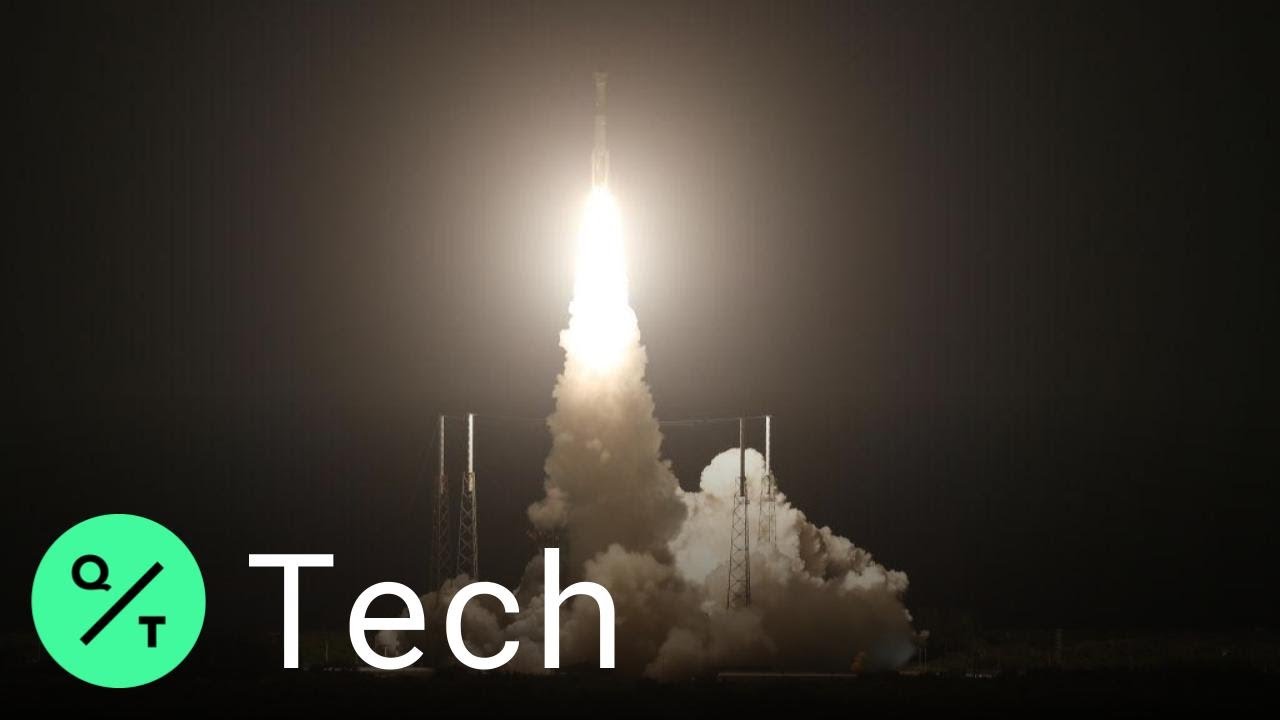
Boeing Co.’s unmanned CST-100 Starliner spacecraft failed to reach the International Space Station on its debut flight, dealing a new blow to the crisis-ridden aerospace giant and heaping uncertainty on NASA’s plan to ferry U.S. astronauts on American-made spacecraft.
About 50 minutes after liftoff Friday, the Starliner was reported out of position to begin its orbital insertion burn, the last boost into an orbit so it could dock at the space station.
“Because #Starliner believed it was in an orbital insertion burn (or that the burn was complete), the dead bands were reduced and the spacecraft burned more fuel than anticipated to maintain precise control. This precluded
@Space_Station rendezvous,” Jim Bridenstine, head of the the National Aeronautics and Space Administration, said in a tweet.
The mishap jeopardizes U.S. plans for human flights as soon as next year by Boeing, which was hired to ferry astronauts to the ISS as part of NASA‘s commercial crew program along with Elon Musk’s Space Exploration Technologies Corp. Boeing’s failure also deepened a sense of crisis around the company, which is already reeling from a nine-month grounding of the 737 Max after two deadly crashes.
NASA and Boeing planned a news conference at 9:30 a.m. ET to discuss the Starliner flight.
The capsule took off aboard a United Launch Alliance Atlas V rocket a little after 6:30 a.m. Friday near Cape Canaveral, Florida, Boeing said. The capsule, with no crew on board, separated and began flight on its own about 15 minutes later.
Starliner had been scheduled to rendezvous with the ISS early Saturday.
The Starliner test flight is the second mission to the space station for NASA’s commercial crew program, which is designed to end U.S. reliance on purchasing seats aboard Russia’s Soyuz spacecraft, which have been the sole crew transport since the Space Shuttle was retired in 2011.
SpaceX conducted a demonstration flight of its Crew Dragon capsule to the ISS in March, also with no one aboard. Musk’s company and Boeing expect to fly astronauts for the first time next year.
NASA in 2014 awarded SpaceX and Boeing combined contracts valued at as much as $6.8 billion to fly U.S. astronauts to the ISS. The agency chose two companies to assure safe, reliable and cost-effective access to space while avoiding the risks giving one provider a monopoly.
The space agency has declined to set dates on manned missions, pending the outcome of the Boeing test flight. The agency and SpaceX plan to perform an in-flight abort test of SpaceX’s Crew Dragon on Jan. 11 from Florida.
Subscribe to our YouTube channel
QUICKTAKE ON SOCIAL:
Follow QuickTake on Twitter: twitter.com/quicktake
Like QuickTake on Facebook: facebook.com/quicktake
Follow QuickTake on Instagram: instagram.com/quicktake
Subscribe to our newsletter
Email us at quicktakenews@gmail.com
QuickTake by Bloomberg is a global news network delivering up-to-the-minute analysis on the biggest news, trends and ideas for a new generation of leaders.
Sentinel Indexing in Progress
Metadata and chapters are available. Claim extraction for this episode is pending.
All video content is delivered via YouTube embedded players in accordance with the YouTube Terms of Service. Sentinel provides research tools that promote discovery and accountability across political media.