
Bloomberg News
@Bloomberg-News·2.8M subscribers·40.1K videos
'Knocking on Hell's Door:' What It Feels Like to Catch Coronavirus
Posted
February 14, 2020
Views
61,621
Likes
427
Comments
206
Engagement
February 14, 2020
61,621
427
206
1.03%
Every word spoken in this episode is indexed. Type any phrase to jump straight to the moment it was said.
Type any word or phrase that may have been spoken. Click a result to seek the player to that exact moment.
Try a name, a topic, or a quoted line
 2:23Now Playing
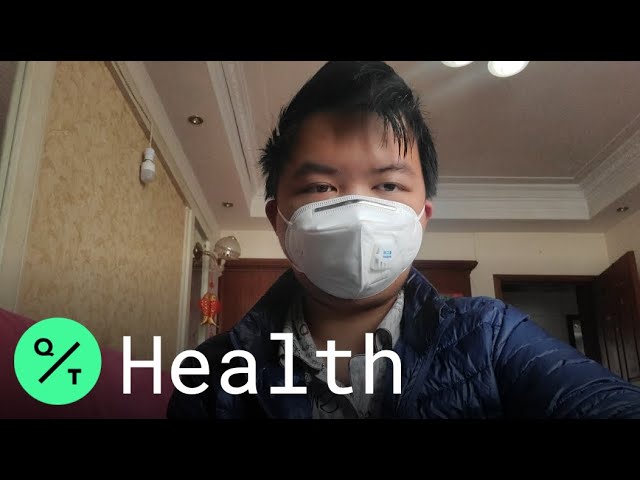
For one coronavirus patient at ground zero of the outbreak, the journey from infection to recovery was a nightmare scenario that entailed multiple hospital visits, symptoms so severe he thought he would die and quarantine under police watch. #ChinaVirus #Coronavirus #CoronavirusOutbreak #CoronavirusSymptoms #Wuhan #China
Tiger Ye -- not his real name -- is a 21-year-old student in Wuhan, the central Chinese city where the new, still little understood virus first emerged. Ye, who doesn’t want to be identified for fear of being ostracized, first suspected he’d caught the illness that’s spread around the world on Jan. 21, when he felt too weak to finish dinner. He checked his temperature, and it was up.
At the time, little was known about the virus now known as 2019-nCov, but paranoia was rapidly building after authorities confirmed the highly contagious pathogen was spreading between humans in the city of 11 million. It was midnight when Ye arrived at Wuhan’s top-tier Tongji Hospital to see a waiting room filled with people like him. Feverish, he knew he would have to wait hours to be tested.
“I was scared,” he said. “Countless cases were piling up on the desks, and every single doctor was wearing protective clothes, something I’d never seen before.”
What followed was more than two weeks of anxiety and desperation as Ye tried to confirm if he had the pneumonia-causing virus and get treatment for his increasingly severe symptoms. He was one of the lucky ones, beating the sickness in part because his father -- a health care worker -- was aware of the risks earlier than most of Wuhan’s population.
More than 1,000 people have died from the new coronavirus in Hubei, the Chinese province that Wuhan is the capital of, as a severe shortage of hospital beds, testing kits and other basic medical equipment mean many have to stand in line for hours to get diagnosed, and some die before even seeing a doctor. China has quarantined vast swathes of Hubei, and the outbreak has caused parts of the world’s second-biggest economy to shut down as scientists across the world race to find a cure.
The night Ye first sought treatment, he was able to procure the medicine from a smaller hospital nearby after abandoning the wait at Tongji. Because his symptoms weren’t classed as very severe, doctors told him to just go home and quarantine himself.
“I suffered from a high fever and pains that tortured every part of my body,” said Ye, who’s a big fan of Japanese culture and has ambitions of becoming a voice actor. He spent days watching Japanese cartoons to distract from the discomfort.
By the time his follow-up appointment at the hospital arrived four days later, the Wuhan government had locked down the city, barring anyone from leaving to stop the virus’ spread. Everything changed in an instant: roads were empty, prices for fresh fruit and vegetables surged, and residents were unsure if they were even allowed to leave their apartments.
Ye’s condition had also deteriorated. “I was coughing like I was going to die,” he said.
At the hospital, multiple CT scans showed it was highly likely Ye had contracted the novel coronavirus and that it had spread to his lungs. Doctors deliberated if he qualified for a nucleic acid test, which would use the virus’ genetic sequence to confirm if he had been infected, but it was decided his case wasn’t severe enough, and the precious supply of test kits had to be reserved for more critical patients.
Diagnosis has emerged as one of the major stumbling blocks in getting the virus under control in Hubei, where the number of those who fear they are infected far outweighs the capacity of hospitals to confirm if they are. On Thursday, Hubei began counting patients who were diagnosed via CT imaging alongside those who tested positive with the nucleic acid kits, resulting in a more than 45% surge in the number of confirmed cases, to nearly 50,000 people.
As Ye convalesced at home after his second hospital visit -- not knowing if he had the virus or not -- his brother and grandmother also began to show symptoms of infection. Overnight, Ye’s condition worsened to the point he thought he might die.
Ye went back to the hospital after his temperature soared to 39 degrees Celsius (about 102 degrees Fahrenheit). Doctors put him on an iv and administered Kaletra, a combination drug used to treat HIV that has shown some success in combating the virus, bringing his temperature down to 37 degrees by the end of the day.
Subscribe to our YouTube channel
QUICKTAKE ON SOCIAL:
Follow QuickTake on Twitter: twitter.com/quicktake
Like QuickTake on Facebook: facebook.com/quicktake
Follow QuickTake on Instagram: instagram.com/quicktake
Subscribe to our newsletter
Email us at quicktakenews@gmail.com
QuickTake by Bloomberg is a global news network delivering up-to-the-minute analysis on the biggest news, trends and ideas for a new generation of leaders.
Sentinel Indexing in Progress
Metadata and chapters are available. Claim extraction for this episode is pending.
All video content is delivered via YouTube embedded players in accordance with the YouTube Terms of Service. Sentinel provides research tools that promote discovery and accountability across political media.