Bloomberg News
@Bloomberg-News·2.8M subscribers·40.1K videos
How Quickly Could COVID-19 Overwhelm Germany's Hospitals? Merkel Does the Math
Posted
April 16, 2020
Views
9,142
Likes
64
Comments
17
Engagement
April 16, 2020
9,142
64
17
0.89%
Every word spoken in this episode is indexed. Type any phrase to jump straight to the moment it was said.
Type any word or phrase that may have been spoken. Click a result to seek the player to that exact moment.
Try a name, a topic, or a quoted line
See what was published immediately before and after this episode.
 1:53Now Playing
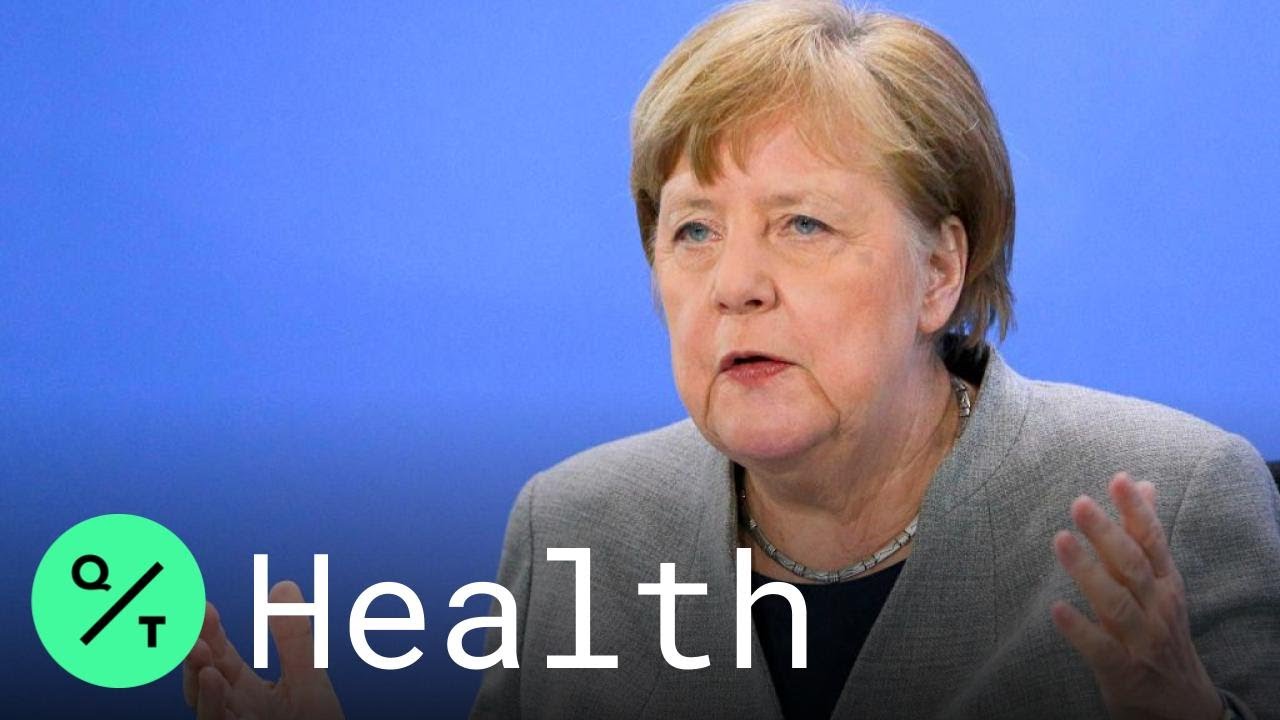
Germany's chancellor, a scientist by training, explained how narrow margins in infection rates can have substantial effects on the ability of the country's health care system to cope with the COVID-19 pandemic.
Angela Merkel made the remarks as she announced that some restrictions will be loosened, while others needed to stay in place despite numbers indicating a slower increase in confirmed new infections.
Merkel explained that authorities were trying to keep the reproduction factor of the rate of infections to one person infecting a single other, rather than passing it on to 1.3 people which would quickly multiply to overhelm the health system.
"The curve has flattened", Merkel said, but warned that the country was still on "thin ice" and dealing with "a fragile situation" in which "caution is the order of the day".
Germany plans to let small shops reopen as early as next week after a four-week coronavirus shutdown, but Europe's biggest economy is keeping strict social distancing rules in place.
After much-anticipated talks Wednesday with Germany's 16 state governors, Merkel set out a plan for the first steps of a slow restart of public life.
A ban on gatherings of more than two people in public has been in place since March 23 and was due to run until Sunday. Merkel said the restrictions will remain in place, and officials will review at the end of the month what happens after May 3.
Nonessential shops also have been closed for nearly four weeks. Other shops of up to 800 square meters (8,600 square feet) will be allowed to start reopening, with hygiene precautions.
Merkel said the decision applies to the period from Monday through May 3.
She said authorities also will recommend that people wear face masks on public transport and when shopping. Major events won't be allowed through August 31.
According to the Johns Hopkins University, Germany has more than 134,000 confirmed COVID-19 cases and more than 3,800 deaths.
For most people, the coronavirus causes mild or moderate symptoms, such as fever and cough, that clear up in two to three weeks. But it can cause more severe illness, including pneumonia, and death for some people, especially older adults and people with existing health problems.
Subscribe to our YouTube channel
QUICKTAKE ON SOCIAL:
Follow QuickTake on Twitter: twitter.com/quicktake
Like QuickTake on Facebook: facebook.com/quicktake
Follow QuickTake on Instagram: instagram.com/quicktake
Subscribe to our newsletter
Email us at quicktakenews@gmail.com
QuickTake by Bloomberg is a global news network delivering up-to-the-minute analysis on the biggest news, trends and ideas for a new generation of leaders.
Sentinel Indexing in Progress
Metadata and chapters are available. Claim extraction for this episode is pending.
All video content is delivered via YouTube embedded players in accordance with the YouTube Terms of Service. Sentinel provides research tools that promote discovery and accountability across political media.