Bloomberg News
@Bloomberg-News·2.8M subscribers·40.1K videos
Hunting for Antibodies to Fight the Coronavirus
Posted
April 20, 2020
Views
5
April 20, 2020
5
Every word spoken in this episode is indexed. Type any phrase to jump straight to the moment it was said.
Type any word or phrase that may have been spoken. Click a result to seek the player to that exact moment.
Try a name, a topic, or a quoted line
See what was published immediately before and after this episode.
 2:31Now Playing
There’s a sliver of hope for people very ill with Covid-19. It’s a bold new treatment that involves taking the blood plasma of people who have recovered from the disease and injecting it into people who are very sick.
The secret is in the antibodies: a protein that is produced when someone’s immune system has fought the virus. But using antibodies to treat the sick is more complicated than just transferring them from one person to another.
What are researchers are doing to sift through the many antibodies out there and find the right ones to help people recover from being infected?
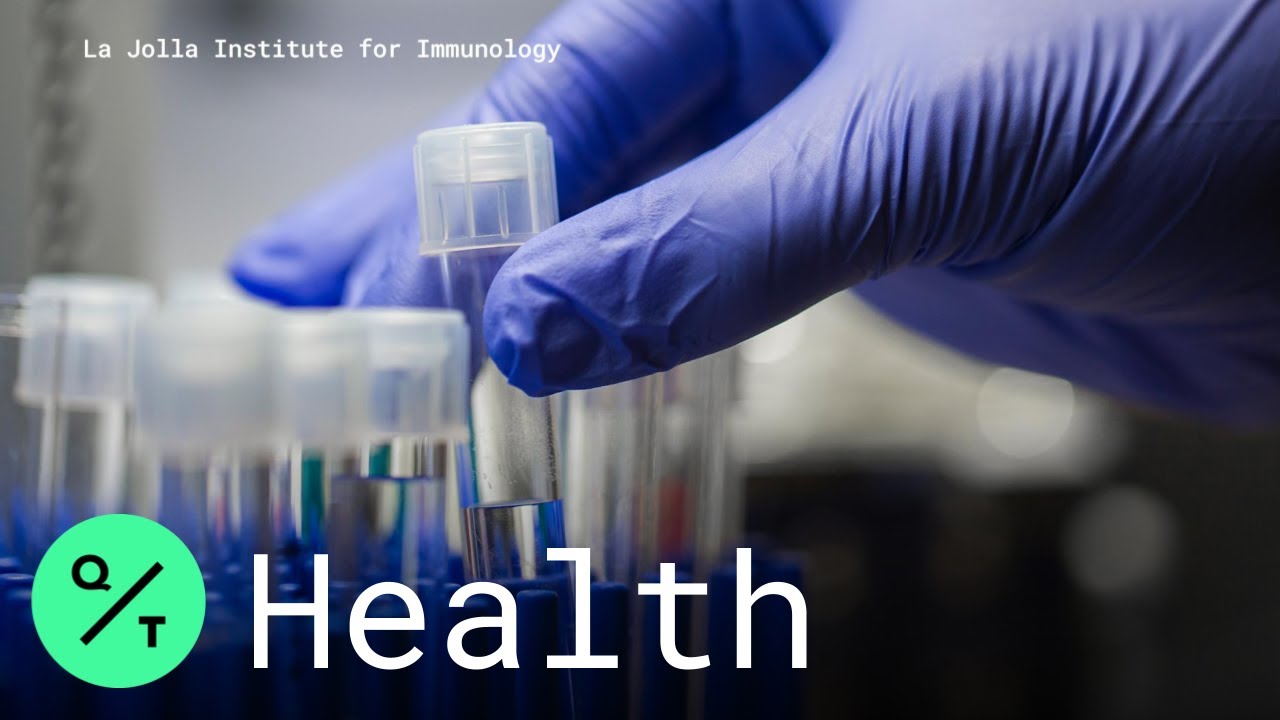
Doctor Erica Ollman Saphire says her job is a lot like military intelligence. She is an immunologist and professor at the La Jolla Institute for Immunology, a nonprofit research center in San Diego. And her job is to find the weak spots in the most deadly viruses and exploit them using antibodies.
“When the military can figure out how to precisely drop a bomb on one particular bad guy sitting in one of a chair in one particular room. One particular compound without any collateral damage. It's because somebody had a really high resolution photograph. So that's what we do for viruses. We take those incredibly high resolution photographs in three dimensions and figure out how do you work? What's your weak spot where are you vulnerable? What happens if you put an antibody here?"
Erica has spent years in this field. She mapped the structure of a key protein that allows Ebola to invade cells. The discovery opened up a way for drug therapies that have greatly improved survival for people with Ebola.
With the coronavirus, currently no drug has been proven to work against it, and a vaccine may be at least a year away. That’s why Erica says antibody infusions from survivors may work out to be the fastest, lifesaving option.
“When someone has recently survived the disease, especially a really new disease for which there aren't any other treatments, the blood of those survivors could be something that helps somebody else. Those survivors have those immune molecules in their blood. And in the absence of any other medicine you could give somebody, you could offer them the survivor’s blood and that gives them that immunity immediately, but temporarily. But that could help.”
Erica’s work involves combing through millions of antibodies that people have made to find the very, very best two or three. The objective is to figure out what antibody treatments could best protect frontline health-care workers and other people at risk of infection, as well as treat Covid-19 patients.
"My job is to be the clearinghouse of the world's antibodies, to gather them, to give them all codenames, to make the study very fair, an organized effort by which we compare them side by side to figure out what works, what's best and why. And my group will also be solving the molecular structures to figure out what do they look like and how do we put the other complementary therapies.”
Dozens of research groups are racing the pandemic to collect and incubate thousands of antibodies. Erica says they’ll send their best to her lab to evaluate in clinical trials. And the results should be known much sooner than parallel research into experimental vaccines. Those take longer to develop because scientists need to first find a molecule that will safely and effectively trigger the kind of infection-fighting antibodies Erica’s lab is already screening.
“An antibody is a natural human molecule. We understand how it works. We've made them before. When you've made them before, it's easy to scale them up again. We understand how to evaluate them. We understand their pharmacokinetics, understand how they behave. It's faster, easier and more straightforward to mobilize an antibody right away than something entirely new.”
Erica’s lab was recently given almost 2 million dollars from the Bill & Melinda Gates foundation to evaluate candidate antibodies in the fight against Covid-19. Patient studies will probably start within a few months...after Erica’s lab has identified the best ones to test.
Subscribe to our YouTube channel
QUICKTAKE ON SOCIAL:
Follow QuickTake on Twitter: twitter.com/quicktake
Like QuickTake on Facebook: facebook.com/quicktake
Follow QuickTake on Instagram: instagram.com/quicktake
Subscribe to our newsletter
Email us at quicktakenews@gmail.com
QuickTake by Bloomberg is a global news network delivering up-to-the-minute analysis on the biggest news, trends and ideas for a new generation of leaders.
Sentinel Indexing in Progress
Metadata and chapters are available. Claim extraction for this episode is pending.
All video content is delivered via YouTube embedded players in accordance with the YouTube Terms of Service. Sentinel provides research tools that promote discovery and accountability across political media.