Bloomberg News
@Bloomberg-News·2.8M subscribers·40.1K videos
Belgian Designer Recycles Plastic Bottle Caps Into Chic Homeware
Posted
October 5, 2020
Views
1,318
Likes
25
Engagement
1.90%
October 5, 2020
1,318
25
1.90%
Every word spoken in this episode is indexed. Type any phrase to jump straight to the moment it was said.
Type any word or phrase that may have been spoken. Click a result to seek the player to that exact moment.
Try a name, a topic, or a quoted line
See what was published immediately before and after this episode.
 1:46Now Playing
The coronavirus crisis may have stopped climate protests around the world, at least temporarily, but their spirit is very much alive.
A young Belgian designer is turning used plastic bottle tops into everyday objects, using creativity to shape her environmental battle.
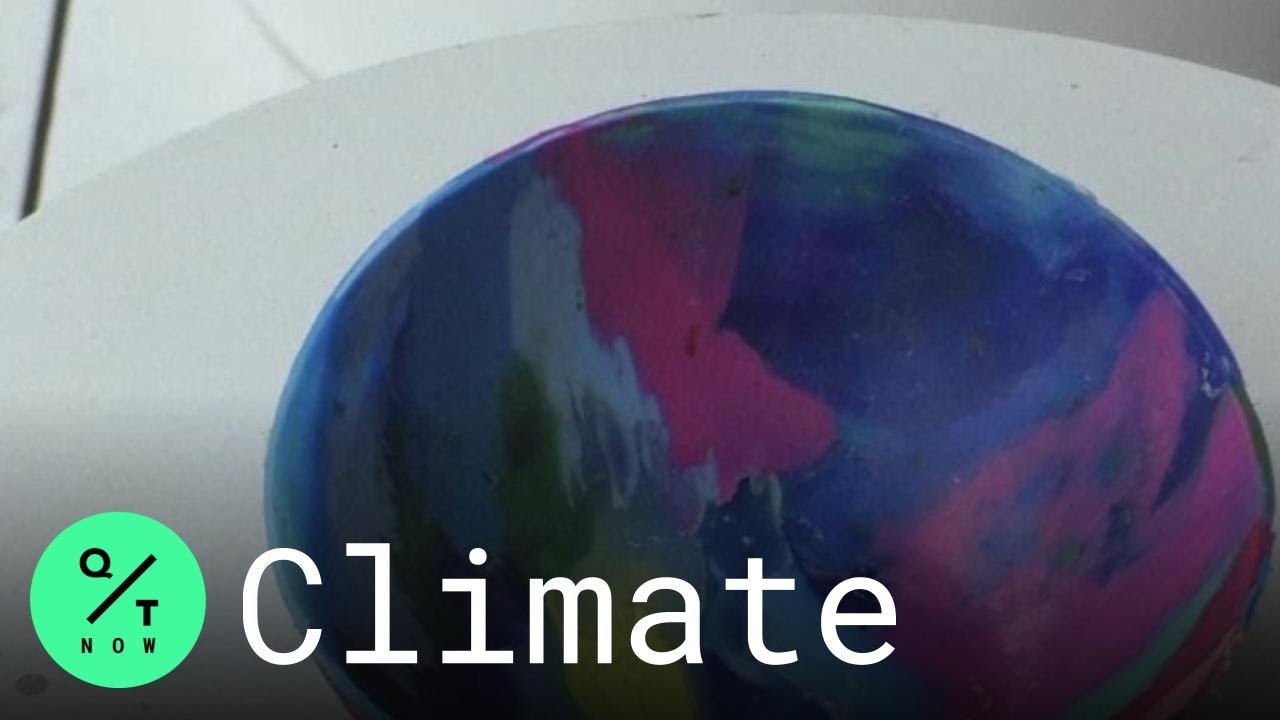
A bowl with splashes of vivid colours on show at the Plastic Factory in Brussels.
At first glance it looks like it could have been painted by a creative hand, but a closer inspection reveals something else.
All these items have been given a new lease of life: they've all come from a pile of discarded plastic bottle tops.
Containers, earrings, lamps, glass markers and even paintings at the showroom come from humble plastic rubbish.
Design school graduate Mathilde Rulens founded Plastic Factory two years ago with the help of her sculptor father.
Set up in their Brussels home, the enterprise is a family collective that gathers, recycles and reshapes plastic tops into new usable materials.
Beyond the colourful creations of the Plastic Factory collection lies an environmental message; to redefine the approach to plastic adopted by mankind since this polymer was created a century and a half ago.
Mathilde Rulens explains that it be recycled indefinitely and can take different shapes and forms over time.
"Plastic is a durable material; it lasts incredibly well over time, it's very sturdy. It's made out of petrol, we shouldn't forget."
"It's polluting, it's not made for being used once and then thrown out, no: it's made to be reused or recycled and I think people really need to understand this", Rulens says.
Her approach is in line with the European Union's efforts to combat the climate crisis and reach zero greenhouse emissions by 2050.
Last year the EU parliament passed a law banning single-use plastics such as straws, cotton sticks and plastic cutlery. This will come into force in 2021.
Over the past two years reshaping used plastics has become the young designer's full-time job.
After turning bottle tops into soap holders, fruit baskets and even cutting boards Rulens sells them at the family's showroom, as well as online, at events and in a few of Belgium's eco-shops.
Rulens' focus on recycling plastics began after she saw, first hand, how the waste was ruining nature and beaches when she travelled abroad.
It was a turning point which, back home, inspired her to take action.
"I've seen a lot of the damage that mankind and pollution have made around the world and particularly in Asia where I had the chance to travel for some months," explains the designer.
"It shocked me completely; I was so disgusted that I started to read about the ecology, recycling, about the zero-waste approach which I found very interesting," Rulens says.
Her choice of materials was decided by an earlier project she took part in, collecting bottle tops for a local organic shop.
They became an inspiration for her and for months the organic shop provided Rulens with sacks of used plastic tops.
Neighbours also started to pitch in and leave bags of used caps on her doorstep, she says.
Rulens has temporarily stopped collecting caps because she says she has enough to last for a while.
She recycles and transforms between 15 to 20 kilos of plastic tops (33-45 pounds) each week.
"Why bottle tops? Because they're small, they're easy to store, because they come in many colours, a countless choice of colours. They're super-creative, they're great," explains Rulens.
"At the same time they're made of food grade plastic so they're not toxic and for me it's easy to recycle them into daily life objects. Even if a child chews them or puts them in the mouth it's no big deal, it's food plastics", she adds.
In her quest to become more knowledgeable about plastics and the environment, Rulens came across Precious Plastic, a Dutch online collective that offers tutorials on collecting, recycling and turning plastic waste into new objects.
It was a starting point and it's under the website's guidance that Rulens began to devise and perfect her own technique to reshape used plastic.
Rulens first leaves the caps in a cleaning solution before rinsing them and leaving them to dry.
Subscribe to our YouTube channel
QUICKTAKE ON SOCIAL:
Follow QuickTake on Twitter: twitter.com/quicktake
Like QuickTake on Facebook: facebook.com/quicktake
Follow QuickTake on Instagram: instagram.com/quicktake
Subscribe to our newsletter
Email us at quicktakenews@gmail.com
QuickTake by Bloomberg is a global news network delivering up-to-the-minute analysis on the biggest news, trends and ideas for a new generation of leaders.
Sentinel Indexing in Progress
Metadata and chapters are available. Claim extraction for this episode is pending.
All video content is delivered via YouTube embedded players in accordance with the YouTube Terms of Service. Sentinel provides research tools that promote discovery and accountability across political media.