Bloomberg News
@Bloomberg-News·2.8M subscribers·40.1K videos
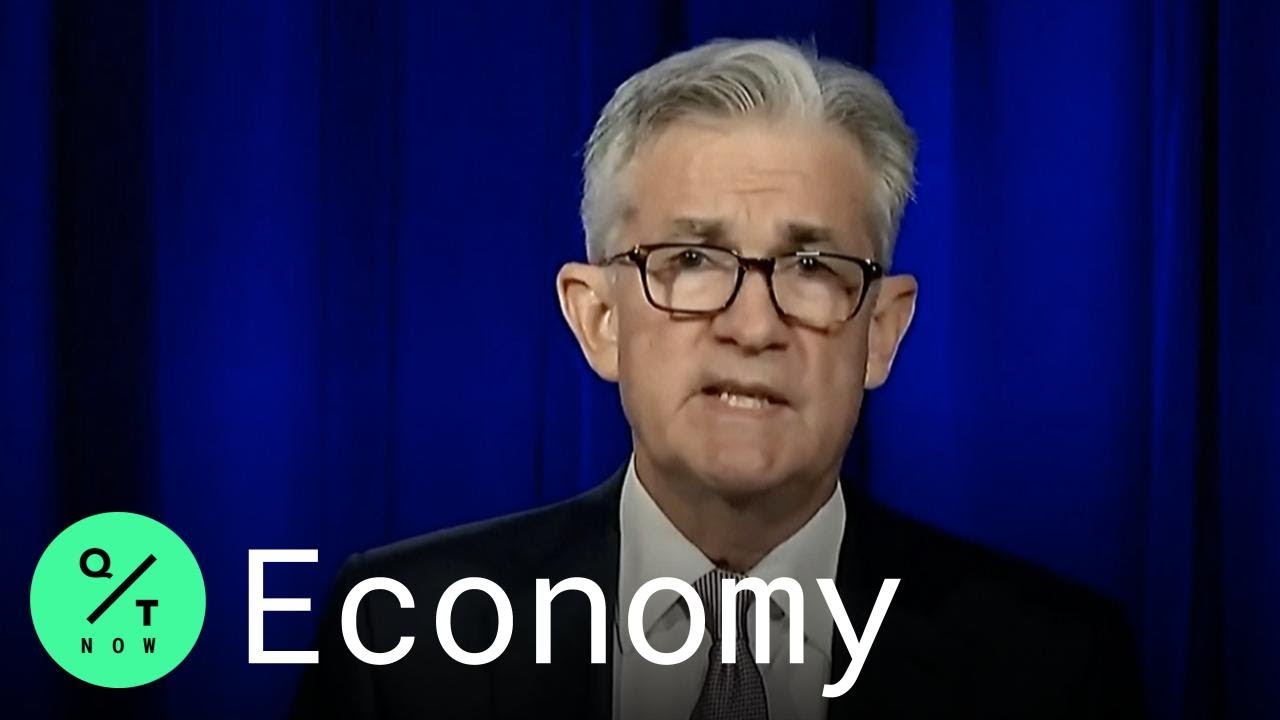
Powell Says Economic Recovery May Slow Without Virus Stimulus
Posted
October 6, 2020
Views
2,500
Likes
37
Comments
21
Engagement
October 6, 2020
2,500
37
21
2.32%
Every word spoken in this episode is indexed. Type any phrase to jump straight to the moment it was said.
Type any word or phrase that may have been spoken. Click a result to seek the player to that exact moment.
Try a name, a topic, or a quoted line
See what was published immediately before and after this episode.
 3:07Now Playing
Strong financial support from the government and the Federal Reserve have spurred a solid recovery from the pandemic recession, but the rebound may falter without further aid, Fed Chair Jerome Powell warned Tuesday.
Powell said that government support - including expanded unemployment insurance payments, direct payments to most U.S. households and financial support for small businesses - has so far prevented a recessionary "downward spiral" in which job losses would reduce spending, forcing businesses to cut even more jobs.
But the U.S. economy still faces threats, and without further support those downward trends could still emerge, the chairman said.
"The expansion is still far from complete," Powell said in a speech to the National Association for Business Economics, a group of corporate and academic economists. "Too little support would lead to a weak recovery, creating unnecessary hardship for households and businesses. Over time, household insolvencies and business bankruptcies would rise, harming the productive capacity of the economy, and holding back wage growth."
Powell noted that the economic recovery has slowed in recent months compared with its rapid improvement in May and June. Incomes fell in August. And job growth weakened in September, slowing to just 661,000, less than half the gains of 1.5 million in August and 1.8 million in September.
"A prolonged slowing in the pace of improvement over time could trigger typical recessionary dynamics, as weakness feeds on weakness," he said.
In recent months, in speeches and in testimony to Congress Powell has repeatedly urged lawmakers to enact an additional economic aid package. Though negotiations between House Speaker Nancy Pelosi and Treasury Secretary Steven Mnuchin are ongoing, prospects for a deal remain dim.
The $2 trillion financial rescue package that Congress approved in March, as well as previous aid measures, were "truly extraordinary," Powell said, enabling U.S. households to pay bills and maintain their spending even as unemployment soared to 14.7% in April.
Spending on autos and other long-lasting goods is actually higher now that before the pandemic, the Fed chair noted.
"Still, since it appears that many will undergo extended periods of unemployment, there is likely to be a need for further support," Powell said.
The chairman also discussed the Fed's new framework for its interest rate policy but provided no new details about how it will work in practice. Last month, the Fed said it was now seeking to let inflation run above 2% "for some time" before considering higher short-term interest rates. That is a substantial shift from its previous approach, which potentially involved rate hikes once unemployment fell too low or inflation hit 2%.
Subscribe to our YouTube channel
QUICKTAKE ON SOCIAL:
Follow QuickTake on Twitter: twitter.com/quicktake
Like QuickTake on Facebook: facebook.com/quicktake
Follow QuickTake on Instagram: instagram.com/quicktake
Subscribe to our newsletter
Email us at quicktakenews@gmail.com
QuickTake by Bloomberg is a global news network delivering up-to-the-minute analysis on the biggest news, trends and ideas for a new generation of leaders.
Sentinel Indexing in Progress
Metadata and chapters are available. Claim extraction for this episode is pending.
All video content is delivered via YouTube embedded players in accordance with the YouTube Terms of Service. Sentinel provides research tools that promote discovery and accountability across political media.