Bloomberg News
@Bloomberg-News·2.8M subscribers·40.1K videos
Biden Is Set to ‘Undo the Trump Years’ With Civil Rights Pivot
Posted
November 12, 2020
Views
1,724
Likes
36
Comments
22
Engagement
November 12, 2020
1,724
36
22
3.36%
Every word spoken in this episode is indexed. Type any phrase to jump straight to the moment it was said.
Type any word or phrase that may have been spoken. Click a result to seek the player to that exact moment.
Try a name, a topic, or a quoted line
See what was published immediately before and after this episode.
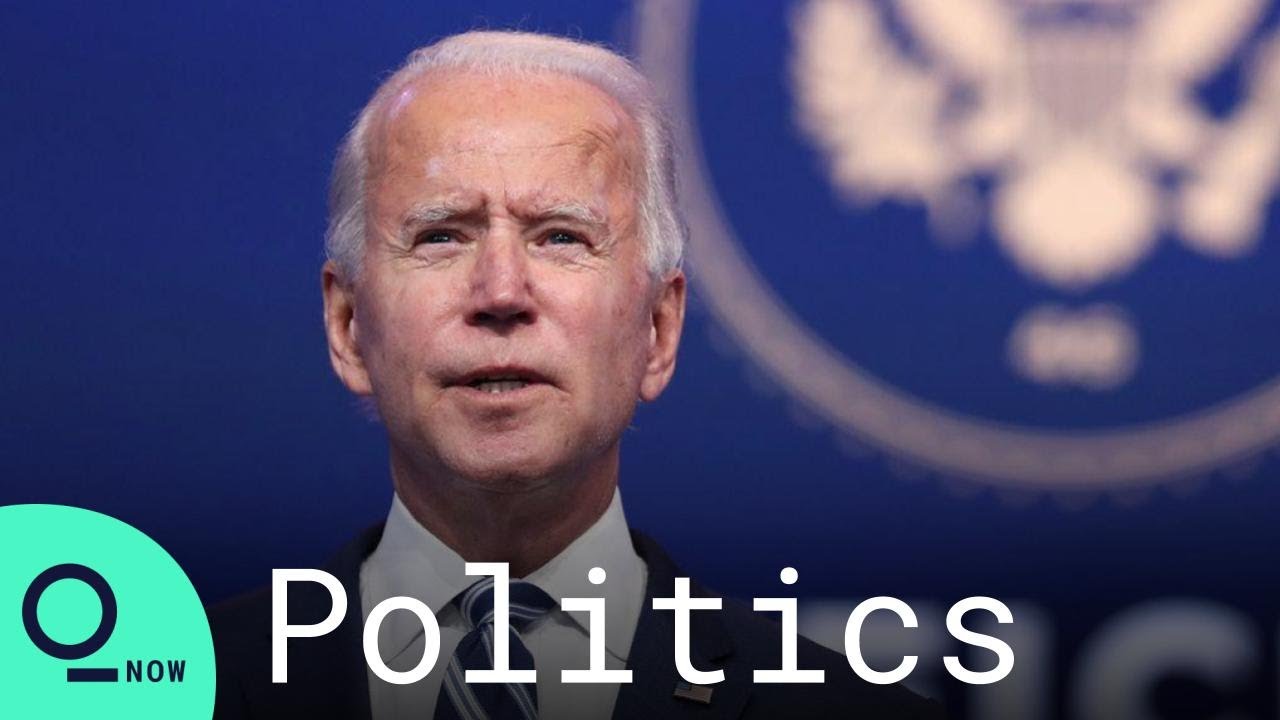 5:55Now Playing
The Civil Rights Division of the U.S. Justice Department is headed for a dramatic makeover under President-elect Joe Biden, who has pledged to make racial equality a centerpiece of his agenda.
Biden will seek to return the division to its original purpose, focusing on anti-discrimination laws that protect millions of people in minority groups that were mostly ignored in the Trump years, said Vanita Gupta, who led the division under Obama from 2014 to early 2017. That means more enforcement of protections in housing, education and the workplace, as well as pushing for better local policing following a tumultuous year of racial unrest, she said.
“This will be an even bigger pivot because of what the Trump administration represents,” said Gupta, who now runs the Leadership Conference on Civil and Human Rights. “It’s been a kind of systematic erosion of civil rights enforcement that is unlike anything we’ve seen in recent times or recent administrations.”
The division was created in 1957 by the Civil Rights Act to enforce laws barring discrimination on the basis of race, color, sex, disability, religion and national origin. Under Trump, it has sued to protect college admissions for White students, abandoned efforts to protect voting rights and offered support to the president’s political agenda by pushing to ask about citizenship in the census and scrutinizing Democratic governors’ handling of the coronavirus pandemic.
Civil-rights enforcement will look a lot different under Biden, who is certain to “undo the Trump years” the same way Trump tried to undo the Obama years -- “but with a vengeance,” said Linda Chavez, who served as the White House Director of Public Liaison for former President Ronald Reagan.
“Anything having to do with race, immigration, voting -- I think you’re going to see a really dramatic shift in the people appointed” and their priorities, said Chavez, now a conservative commentator and author.
Under Trump, one of the highest-profile actions taken by the Civil Rights Division was a lawsuit accusing Yale University of discriminating against White and Asian applicants by taking race into consideration to admit more Black and Hispanic students.
All applicants “should expect and know that they will be judged by their character, talents and achievements and not the color of their skin,” Eric Dreiband, the division’s current chief, said when he announced the case in October.
Samuel Bagenstos, who served in the division under Obama, said the Yale suit illustrates the Trump administration’s approach to civil rights. Affirmative-action policies at schools are intended to level the playing field after centuries of institutionalized racism, so the Civil Rights Division shouldn’t be used to challenge them, said Bagenstos, now a law professor at the University of Michigan.
Obama gave a shout out to the Civil Rights Division at a campaign speech Oct. 31 in Flint, Michigan, as he urged voters to consider what’s at stake in the election.
“A president by himself can’t eliminate all racial bias in our criminal justice system,” Obama said. “But if we elect district attorneys and state’s attorneys and sheriffs focused on equality and justice, and we once again have a Justice Department and a Civil Rights Division in the Justice Department that cares about these issues, we can make things better.”
Gupta said Trump’s actions over the past four years suggest an embrace of “white supremacy” -- the antithesis of the goals of the Civil Rights Division. She pointed to the president’s failure to unequivocally denounce white nationalists and neo-Nazis in Charlottesville, Virginia, his ban on visitors from predominantly Muslim countries, his disparaging remarks about African nation’s and cruel immigration polices that included separating family members.
Subscribe to our YouTube channel
Bloomberg Quicktake brings you live global news and original shows spanning business, technology, politics and culture. Make sense of the stories changing your business and your world.
To watch complete coverage on Bloomberg Quicktake 24/7, visit or watch on Apple TV, Roku, Samsung Smart TV, Fire TV and Android TV on the Bloomberg app.
Connect with us on…
Breaking News on YouTube
Sentinel Indexing in Progress
Metadata and chapters are available. Claim extraction for this episode is pending.
All video content is delivered via YouTube embedded players in accordance with the YouTube Terms of Service. Sentinel provides research tools that promote discovery and accountability across political media.