Bloomberg News
@Bloomberg-News·2.8M subscribers·40.1K videos
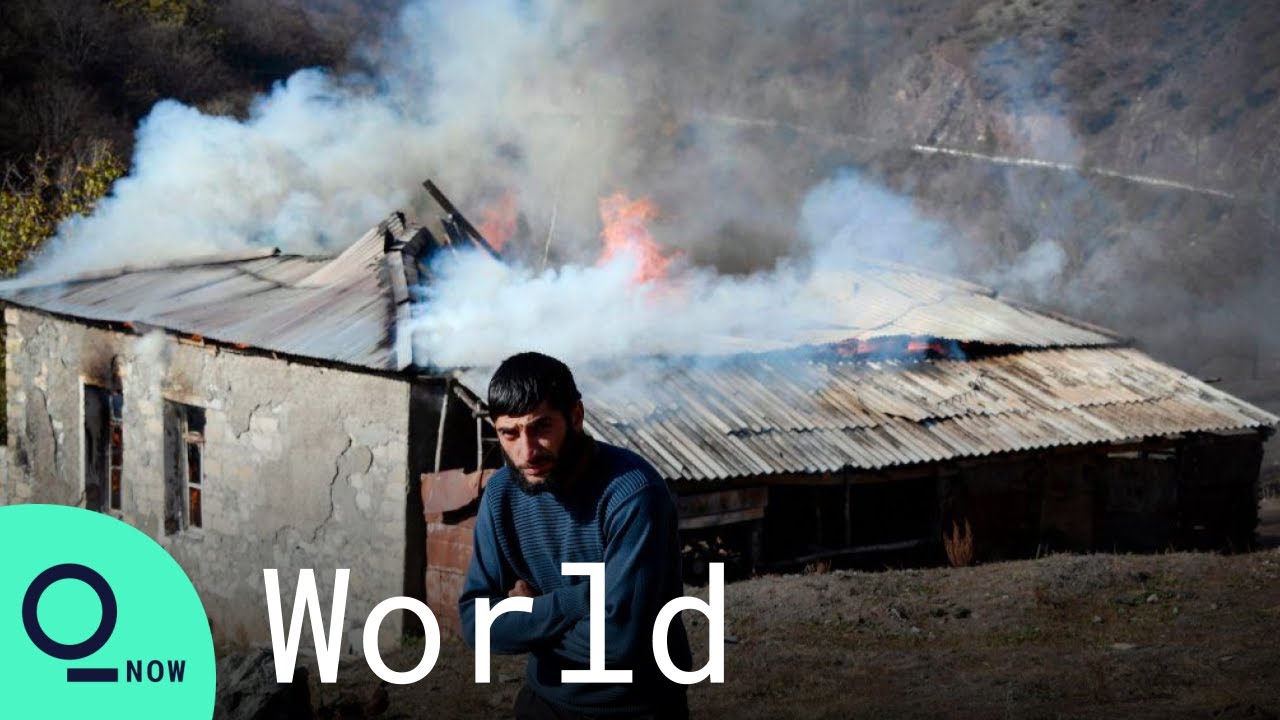
Armenia-Azerbaijan Cease-Fire: Houses Burn As Tensions Remain
Posted
November 17, 2020
Views
23,409
Likes
711
Comments
135
Engagement
November 17, 2020
23,409
711
135
3.61%
Every word spoken in this episode is indexed. Type any phrase to jump straight to the moment it was said.
Type any word or phrase that may have been spoken. Click a result to seek the player to that exact moment.
Try a name, a topic, or a quoted line
Episode Timeline
Every episode in order around the one you’re watching — click any card and the page flips straight to it.
 7:14Now Playing
President Recep Tayyip Erdogan has formally asked parliament to authorize deployment of peacekeeping troops to the contested Nagorno-Karabakh area following a cease-fire between Armenia and Azerbaijan.
Turkish troops will serve at a joint center to be established with Russia that will monitor last week’s truce agreement, Erdogan said in his request. The parliament was asked to approve a one-year dispatch, with an option to extend.
The deployment would be “to the benefit of peace and wealth of the region’s peoples while also conforming with our national interests,” Erdogan said. He will decide the size of the contingent and when it will be sent.
Russian President Vladimir Putin brokered a deal to end the 44-day war over Nagorno-Karabakh and surrounding territories after Armenians, facing defeat, agreed to withdraw their forces. The area is internationally recognized as part of Azerbaijan but was taken by Armenia in a war in the early 1990s.
Turkey has previously sent troops to Libya and it keeps up a military presence in Syria, Iraq, Qatar, Somalia and Afghanistan. It also maintains a peacekeeping force in the Balkans.
Fighting over Nagorno-Karabakh has broken out repeatedly since Armenians seized control of the territory and surrounding areas from Azerbaijan in a war that started soon after the 1991 collapse of the former Soviet Union. That conflict killed more than 30,000 people and displacing another 1 million. Despite decades of mediation by the U.S., Russia and France, a solution remained elusive. The latest bout of fighting, a 44-day battle that started Sept. 27, was the worst in decades, much broader and more geopolitically fraught than the previous skirmishes that had broken out since the end of the war in 1994. This time, Turkish President Recep Tayyip Erdogan gave unreserved backing to his country’s ally Azerbaijan, raising the stakes significantly and tipping the military balance. Russian President Vladimir Putin brokered a peace deal after Armenians, facing defeat at the hands of the Azerbaijani army, agreed to stop fighting and withdraw their forces.
What’s the root of the dispute? Today’s Armenia and Azerbaijan were for centuries situated in fluid borderlands between the Russian, Ottoman and Persian empires, with both suffering partition and brutality at the hands of much larger powers. The two communities began to fight each other as those empires collapsed toward the end of World War I and they sought to form independent states, with Russia backing Armenia and Ottoman Turkey supporting Azerbaijan in what amounted to a proxy war. Nagorno-Karabakh was a center of tension from the start, because the mountainous region hosted a mixed community of Armenians and Azeris and was seen by both nations as central to their national histories and identities.
Subscribe to our YouTube channel
Bloomberg Quicktake brings you live global news and original shows spanning business, technology, politics and culture. Make sense of the stories changing your business and your world.
To watch complete coverage on Bloomberg Quicktake 24/7, visit or watch on Apple TV, Roku, Samsung Smart TV, Fire TV and Android TV on the Bloomberg app.
Connect with us on…
Breaking News on YouTube
Sentinel Indexing in Progress
Metadata and chapters are available. Claim extraction for this episode is pending.
All video content is delivered via YouTube embedded players in accordance with the YouTube Terms of Service. Sentinel provides research tools that promote discovery and accountability across political media.