Bloomberg News
@Bloomberg-News·2.8M subscribers·40.1K videos
CDC Recommends First Covid Vaccines Go to Health Care Workers, Nursing Homes
Posted
December 2, 2020
Views
1,154
Likes
5
Comments
18
Engagement
December 2, 2020
1,154
5
18
1.99%
Every word spoken in this episode is indexed. Type any phrase to jump straight to the moment it was said.
Type any word or phrase that may have been spoken. Click a result to seek the player to that exact moment.
Try a name, a topic, or a quoted line
Episode Timeline
Every episode in order around the one you’re watching — click any card and the page flips straight to it.
 5:27Now Playing
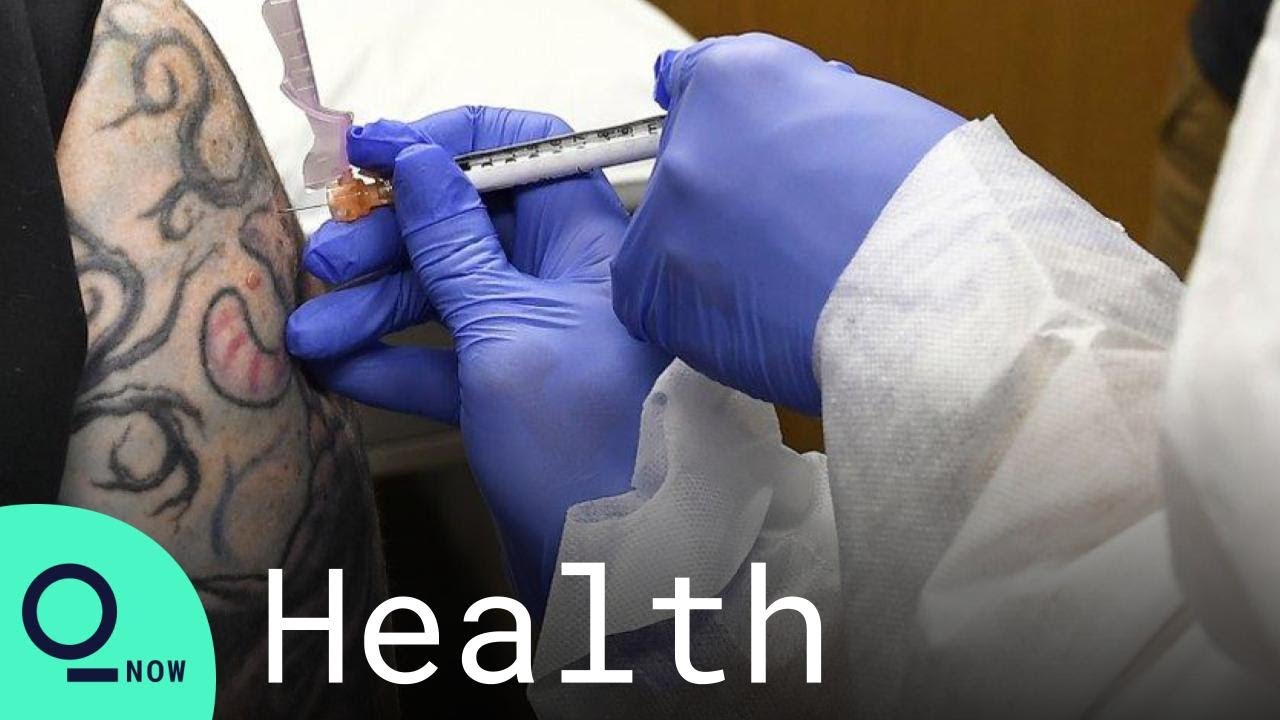
Health care workers and nursing home residents should be at the front of the line when the first coronavirus vaccine shots become available, an influential government advisory panel said Tuesday.
The panel voted 13-1 to recommend those groups get priority in the first days of any coming vaccination program, when doses are expected to be very limited. The two groups encompass about 24 million people out of a U.S. population of about 330 million.
Later this month, the Food and Drug Administration will consider authorizing emergency use of two vaccines made by Pfizer and Moderna. Current estimates project that no more than 20 million doses of each vaccine will be available by the end of 2020. And each product requires two doses. As a result, the shots will be rationed in the early stages.
The Advisory Committee on Immunization Practices will meet again at some point to decide who should be next in line. Among the possibilities: teachers, police, firefighters and workers in other essential fields such as food production and transportation; the elderly; and people with underlying medical conditions.
Tuesday’s action merely designated who should get shots first if a safe and effective vaccine becomes available. The panel did not endorse any particular vaccine. Panel members are waiting to hear FDA’s evaluation and to see more safety and efficacy data before endorsing any particular product.
Experts say the vaccine will probably not become widely available in the U.S. until the spring.
The panel of outside scientific experts, created in 1964, makes recommendations to the director of the Centers for Disease Control and Prevention, who almost always approves them. It normally has 15 voting members, but one seat is vacant.
The recommendations are not binding, but for decades they have been widely heeded by doctors, and they have determined the scope and funding of U.S. vaccination programs.
It will be up to state authorities whether to follow the guidance. It will also be left to them to make further, more detailed decisions if necessary — for example, whether to put emergency room doctors and nurses ahead of other health care workers if vaccine supplies are low.
The outbreak in the U.S. has killed nearly 270,000 people and caused more than 13.5 million confirmed infections, with deaths, hospitalizations and cases rocketing in recent weeks.
As the virtual meeting got underway, panel member Dr. Beth Bell of the University of Washington noted that on average, one person is dying of COVID-19 per minute in the U.S. right now, “so I guess we are acting none too soon.”
About 3 million people are living in nursing homes, long-term chronic care hospitals, and other U.S. long-term care facilities. Those patients and the staff members who care for them have accounted for 6% of the nation’s coronavirus cases and a staggering 39% of the deaths, CDC officials say.
Despite the heavy toll, some board members at Tuesday’s meeting said they hesitated to include such patients in the first group getting shots.
Dr. Helen Keipp Talbot, an infectious diseases researcher at Vanderbilt University who was the lone committee member to vote against the proposal, cited flu research that found vaccinating the staff of such facilities has a greatest impact on preventing its spread there.
Dr. Richard Zimmerman, a University of Pittsburgh flu vaccine researcher who watched the meeting online, echoed Talbot’s concerns.
“I think it was premature” to include nursing home residents as a priority group, said Zimmerman, a former ACIP member. “Their vote seems to assume that these people will respond well to the vaccine. ... I don’t think we know that.”
Committee members were unanimous in voicing support for vaccinating health care workers — about 21 million people, according to CDC officials.
Subscribe to our YouTube channel
Bloomberg Quicktake brings you live global news and original shows spanning business, technology, politics and culture. Make sense of the stories changing your business and your world.
To watch complete coverage on Bloomberg Quicktake 24/7, visit or watch on Apple TV, Roku, Samsung Smart TV, Fire TV and Android TV on the Bloomberg app.
Have a story to tell? Fill out this survey for a chance to have it featured on Bloomberg Quicktake
Connect with us on…
Breaking News on YouTube
Sentinel Indexing in Progress
Metadata and chapters are available. Claim extraction for this episode is pending.
All video content is delivered via YouTube embedded players in accordance with the YouTube Terms of Service. Sentinel provides research tools that promote discovery and accountability across political media.