Bloomberg News
@Bloomberg-News·2.8M subscribers·40.1K videos
CDC Shortens Quarantine Guidance to 10 Days for Those Exposed But Untested
Posted
December 4, 2020
Views
1,005
Likes
19
Comments
6
Engagement
December 4, 2020
1,005
19
6
2.49%
Every word spoken in this episode is indexed. Type any phrase to jump straight to the moment it was said.
Type any word or phrase that may have been spoken. Click a result to seek the player to that exact moment.
Try a name, a topic, or a quoted line
You’re on December 4, 2020. Earlier episodes are to the left, later ones to the right — the row keeps loading as you go. Click any card to open it.
 Dec 4, 20202:13Now Playing
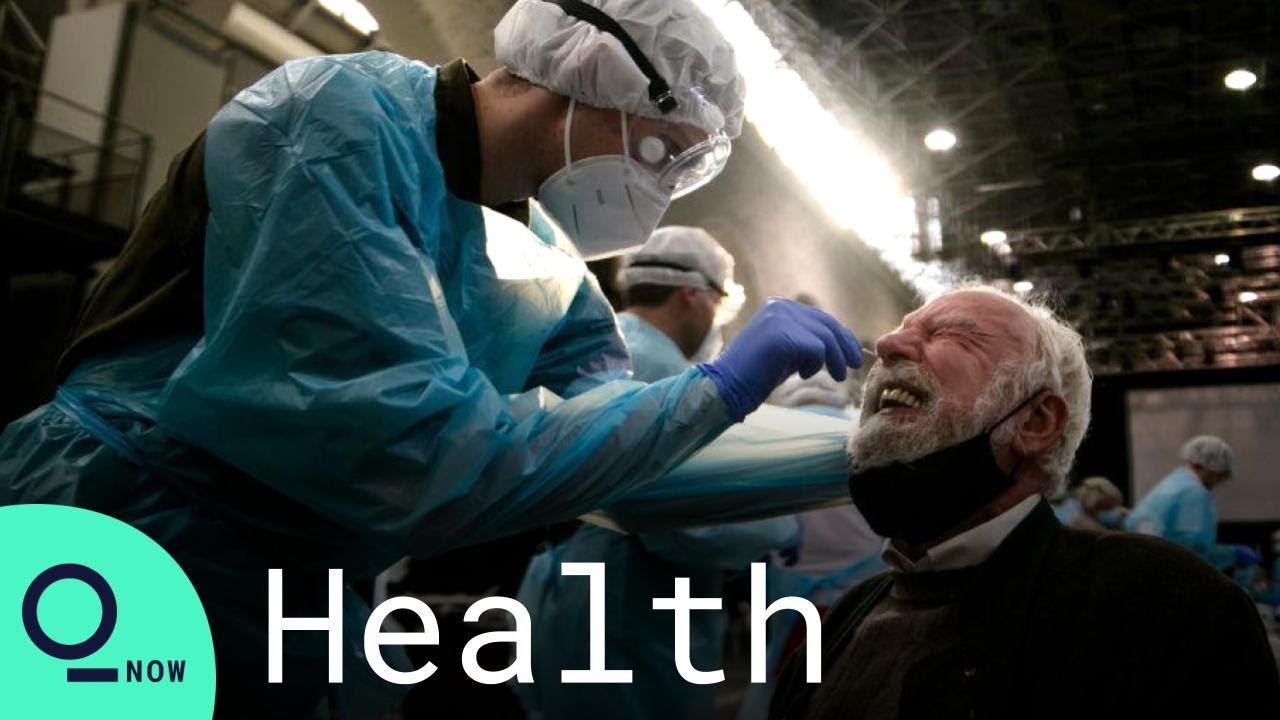
The U.S. Centers for Disease Control and Prevention issued recommendations for shorter quarantine periods, saying that those who lack symptoms can stop after 10 days or seven days with a negative Covid-19 test.
The idea is that quarantines shorter than 14 days carry low infection risks and will boost compliance, CDC officials said on a call with reporters. They also urged Americans to postpone holiday travel, citing the volume around Thanksgiving, and outlined new guidelines for reducing travel risks.
The changes come amid surging U.S. infections and hospitalizations, with CDC director Robert Redfield warning on Wednesday about the winter months ahead.
December to February is “going to be the most difficult time in the public health history of this nation,” Redfield said at a U.S. Chamber of Commerce event, citing the strains being placed on the country’s health-care system.
The agency still recommends previous guidance outlining a 14-day quarantine for people who may have been exposed to the novel coronavirus. But the officials said the new time limits were being suggested based on modeling by the agency, academic centers and public health departments.
“All of these point in the same direction, which is that we can safely reduce the length of quarantine, but accepting there is a small residual risk that a person who is leaving quarantine early could transmit to someone else if they became infectious,” said John Brooks, chief medical officer for the CDC’s Covid-19 response.
The new recommendations are being shared with local public health departments, which will make their own determinations.
Either a laboratory-based polymerase chain reaction test or a faster antigen test can be used as part of quarantine testing under the agency’s new guidance. The 10-day quarantine without a test was offered in light of testing capacity issues, officials said.
The agency also on Wednesday asked Americans to postpone holiday travel, citing virus risks and high travel volume during Thanksgiving last week, and put out new guidelines for how those who do travel can reduce the risk.
Travelers should consider getting tested one to three days beforehand as well as three to five days after. They should also avoid non-essential activities for a week after the trip, and 10 days if travelers don’t get tested, officials said.
“We know that it’s a hard decision and that people need to have time to prepare and have discussions with family and friends, and to make these decisions,” Cindy Friedman, chief of the CDC’s travelers’ health branch, said on Wednesday. “But our recommendations are trying to help give them the tools they need to make these tough choices.”
Subscribe to our YouTube channel
Bloomberg Quicktake brings you live global news and original shows spanning business, technology, politics and culture. Make sense of the stories changing your business and your world.
To watch complete coverage on Bloomberg Quicktake 24/7, visit or watch on Apple TV, Roku, Samsung Smart TV, Fire TV and Android TV on the Bloomberg app.
Have a story to tell? Fill out this survey for a chance to have it featured on Bloomberg Quicktake
Connect with us on…
Breaking News on YouTube
Sentinel Indexing in Progress
Metadata and chapters are available. Claim extraction for this episode is pending.
All video content is delivered via YouTube embedded players in accordance with the YouTube Terms of Service. Sentinel provides research tools that promote discovery and accountability across political media.