
Bloomberg News
@Bloomberg-News·2.8M subscribers·40.1K videos
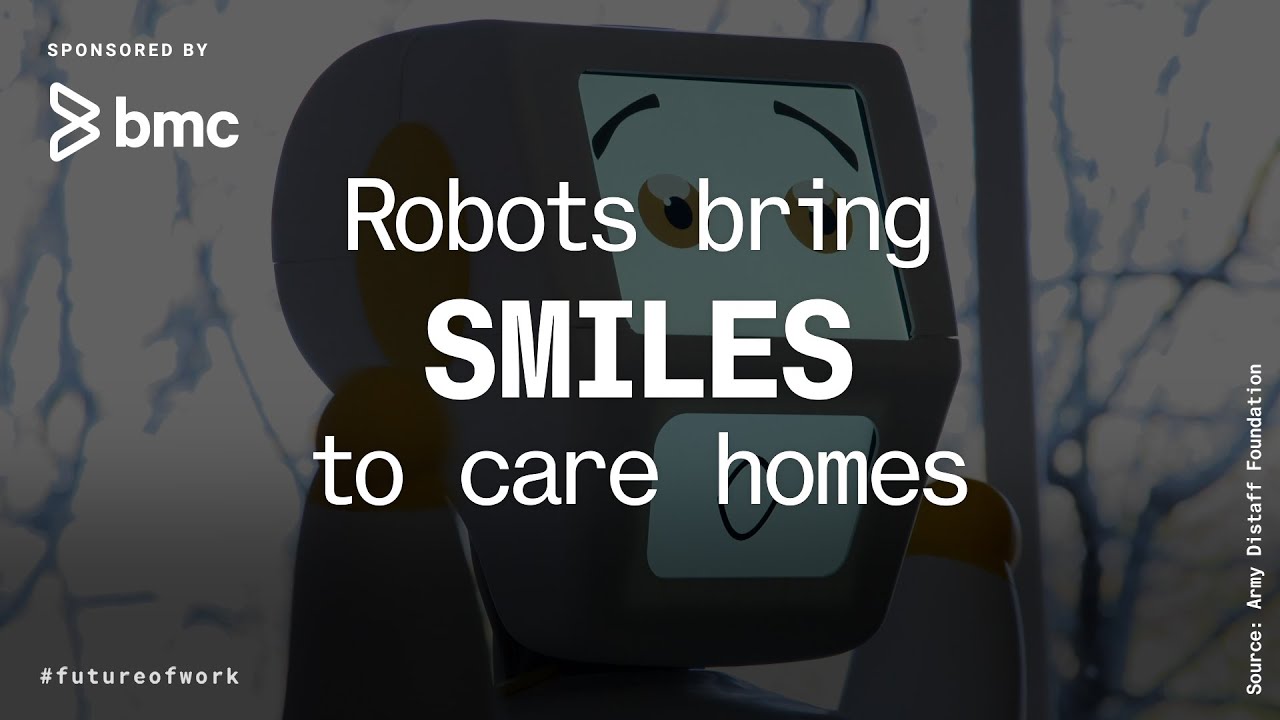
Coronavirus: Robots Bring Smiles to Care Homes
Posted
January 4, 2021
Views
302,754
Likes
15
Comments
6
Engagement
0.01%
January 4, 2021
302,754
15
6
0.01%
Every word spoken in this episode is indexed. Type any phrase to jump straight to the moment it was said.
Type any word or phrase that may have been spoken. Click a result to seek the player to that exact moment.
Try a name, a topic, or a quoted line
 4:52Now Playing
Robots are bringing smiles to the social care sector that’s been hit hard by the coronavirus pandemic.
“I think it's fair to say that Covid has shone a pretty harsh light on the social care sector, says Dr. Cian O’Donovan, a research associate from the Department of Science and Technology Studies at UCL.
“It's exposed deep vulnerabilities on people who need it most. What can robotics do about this?”
In care homes, robots do things like clean up, decontaminate and help people put on socks. Others, like Stevie, are bringing laughter to residents.
“One of the challenges in any kind of an elder-care setting, is to try to increase social interaction,” says Conor McGinn, the CEO of Akara Robotics. “What Stevie did when we brought it into those environments was that it kind of brought people together. Typically, when you get people together, they're excited. They're likely to interact.”
McGinn says people liked that Stevie was cute. “They liked how it could express certain types of emotions. And they often found it funny . It kind of humanized the technology in a way.”
In another care home, robots are being used to help residents who are feeling isolated and lonely during the pandemic. “We have had pets, live pets in our facilities for years and years,” says Jean Morgan, Memory Care Manager at Ohio Living. “When you have a live pet, they tend to roam the unit and they tend to connect with just one or two rooms or people. But with the robot, multiple residents can use them.”
She says one of the communities has a black and orange-striped tiger cub which has become a really big hit. “The benefits that we've seen have just been outstanding, the loneliness and the irritability, anxiety, agitation. And so you can imagine that soft fur and that motion of petting is so soothing and calming that it really can benefit the residents from that standpoint.”
Morgan gave an example of a resident with dementia. “There is a sign or symptom that comes along with dementia often, and it's from aberrant motor behavior and that's defined as repetitive motion, like hitting or tapping or shaking a foot or even pacing around,” she explains. Instead of the tapping, the resident was able to take that repetitive motion and use it into stroking the cat's fur. The stroking decreased the resident’s anxiety and before long, she was making eye contact with the cat. “She was talking about a cat that she had had in her past, which we had never heard about before,” says Morgan.
“Are robots here to stay in our homes?” asks McGinn. “Well, yes. They have a big part to play in providing resilience and robustness against Covid and against future issues.”
Subscribe to our YouTube channel
Bloomberg Quicktake brings you live global news and original shows spanning business, technology, politics and culture. Make sense of the stories changing your business and your world.
To watch complete coverage on Bloomberg Quicktake 24/7, visit or watch on Apple TV, Roku, Samsung Smart TV, Fire TV and Android TV on the Bloomberg app.
Have a story to tell? Fill out this survey for a chance to have it featured on Bloomberg Quicktake
Connect with us on…
Breaking News on YouTube
Sentinel Indexing in Progress
Metadata and chapters are available. Claim extraction for this episode is pending.
All video content is delivered via YouTube embedded players in accordance with the YouTube Terms of Service. Sentinel provides research tools that promote discovery and accountability across political media.