Bloomberg News
@Bloomberg-News·2.8M subscribers·40.1K videos
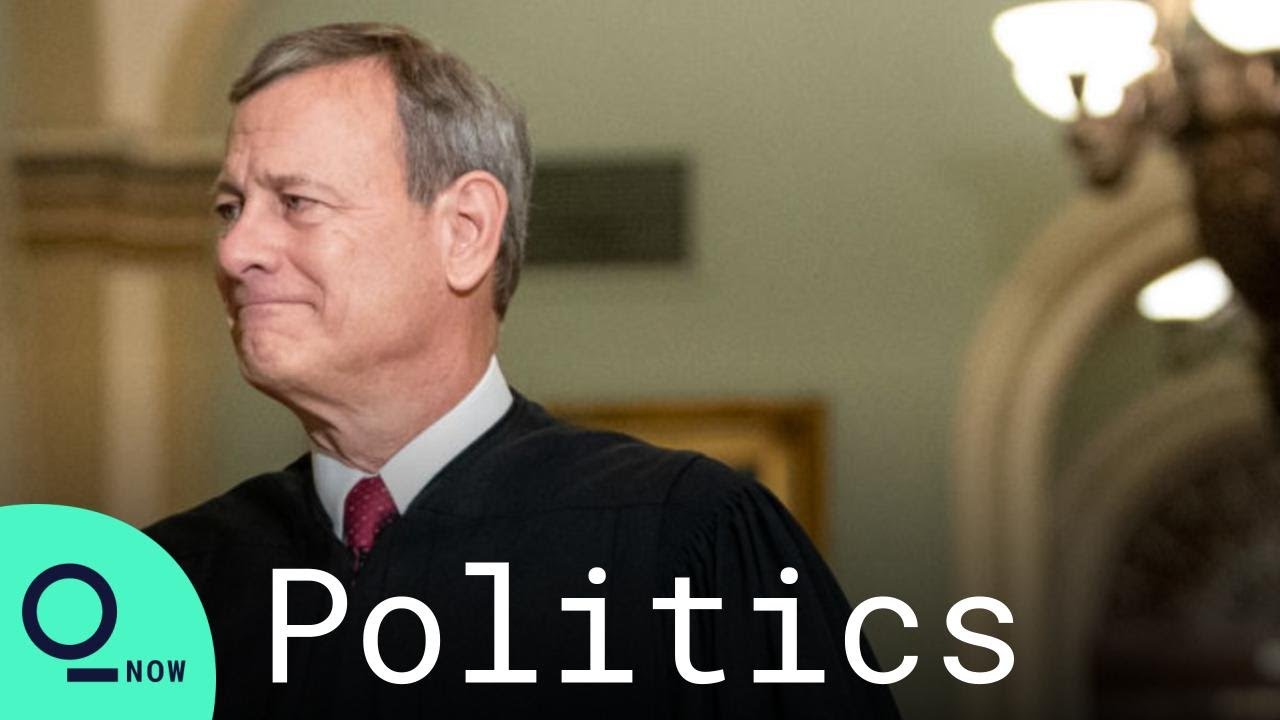
Chief Justice Roberts Refuses to Preside Over Trump's Second Impeachment Trial
Posted
January 27, 2021
Views
3,812
Likes
40
Comments
66
Engagement
January 27, 2021
3,812
40
66
2.78%
Every word spoken in this episode is indexed. Type any phrase to jump straight to the moment it was said.
Type any word or phrase that may have been spoken. Click a result to seek the player to that exact moment.
Try a name, a topic, or a quoted line
 0:57Now Playing
U.S. Chief Justice John Roberts’s refusal to preside over Donald Trump’s second impeachment trial is giving Republicans an opportunity to focus on the Senate’s process rather than the specifics of the insurrection charge against the former president.
The Constitution calls for the Supreme Court’s top jurist to preside over impeachment trials of sitting presidents but is silent on what should happen for one who is no longer in office.
Roberts’s decision to skip the current trial without any public explanation leaves a Democrat already on the record as favoring conviction, Senator Patrick Leahy of Vermont, overseeing the trial when it gets underway the week of Feb. 8. That opens it up to accusations of being a more partisan -- and less judicial -- process than in Trump’s 2020 impeachment.
Republicans are seizing on Roberts’s absence to question the trial’s legitimacy and deflect attention from the substantive charge that Trump incited the Jan. 6 insurrection at the U.S. Capitol. The increasingly partisan nature of the debate was on display Tuesday, when 45 of the Senate’s 50 Republicans supported an unsuccessful bid to declare the case unconstitutional because Trump is no longer in office.
“If a Democratic senator is presiding over the impeachment of a Republican president rather than a Republican-appointed Supreme Court justice, it makes the entire proceeding look much more partisan,” said Republican pollster Whit Ayres. “We’re not talking about what’s legal here. We’re talking about political perception.”
Roberts has refused to comment on the impeachment trial, even leaving it to lawmakers to convey that he had declined to take part. His silence has left others to speculate on his reasons and debate the significance of his decision.
Americans are used to seeing judges preside over trials generally -- and presidential impeachment trials specifically. A year ago, a robed and sometimes bleary-eyed Roberts manned the Senate dais for Trump’s first trial, just as then-Chief Justice William Rehnquist did for President Bill Clinton’s 1999 trial.
“Most adults in America have seen two impeachment trials in their lifetime,” said Michael Steel, former press secretary for then-House Speaker John Boehner and then-vice presidential nominee Paul Ryan. “They know what a regular impeachment trial looks like and that includes the chief justice presiding. Having a Democratic senator in the chair gives it less gravity.”
Constitutional scholars say Roberts is on solid -- or at least defensible -- ground in opting out. The Constitution says the chief justice must preside “when the president of the United States is tried,” but it doesn’t explicitly say whether that includes former presidents.
A key reason for involving the chief justice was to avoid the conflict of interest that would occur if the vice president presided over a trial that could result in him or her becoming president, according Brian Kalt, a professor at Michigan State University College of Law. That rationale is “off the table” in the case of a former president, he said.
“I think the better argument is the chief justice doesn’t preside,” said Kalt, who wrote a law review article about impeachment proceedings of former official.
Roberts’s actions hint that he agrees with that reasoning.
“If the chief justice decided not to preside over the impeachment trial, that suggests that he doesn’t believe the Constitution requires him to preside over the trial of a former president,” says Jeffrey Rosen, president of the National Constitution Center.
Another impeachment expert, University of Missouri law professor Frank Bowman, said the “constitutionally prudent course” would be for Roberts to preside. Bowman said that would avoid giving Senate Republicans a procedural excuse to acquit and eliminate a potential post-conviction argument that the trial was unconstitutional.
But Bowman, author of “High Crimes and Misdemeanors: A History of Impeachment for the Age of Trump,” said that doesn’t mean a court would overturn a Trump conviction on those grounds.
Subscribe to our YouTube channel
Bloomberg Quicktake brings you live global news and original shows spanning business, technology, politics and culture. Make sense of the stories changing your business and your world.
To watch complete coverage on Bloomberg Quicktake 24/7, visit or watch on Apple TV, Roku, Samsung Smart TV, Fire TV and Android TV on the Bloomberg app.
Have a story to tell? Fill out this survey for a chance to have it featured on Bloomberg Quicktake
Connect with us on…
Breaking News on YouTube
Sentinel Indexing in Progress
Metadata and chapters are available. Claim extraction for this episode is pending.
All video content is delivered via YouTube embedded players in accordance with the YouTube Terms of Service. Sentinel provides research tools that promote discovery and accountability across political media.