
Bloomberg News
@Bloomberg-News·2.8M subscribers·40.1K videos
3D Printing: The Answer to Affordable Housing Shortage?
Posted
May 7, 2021
Views
5,820
Likes
72
Comments
14
Engagement
1.48%
May 7, 2021
5,820
72
14
1.48%
Every word spoken in this episode is indexed. Type any phrase to jump straight to the moment it was said.
Type any word or phrase that may have been spoken. Click a result to seek the player to that exact moment.
Try a name, a topic, or a quoted line
 2:54Now Playing
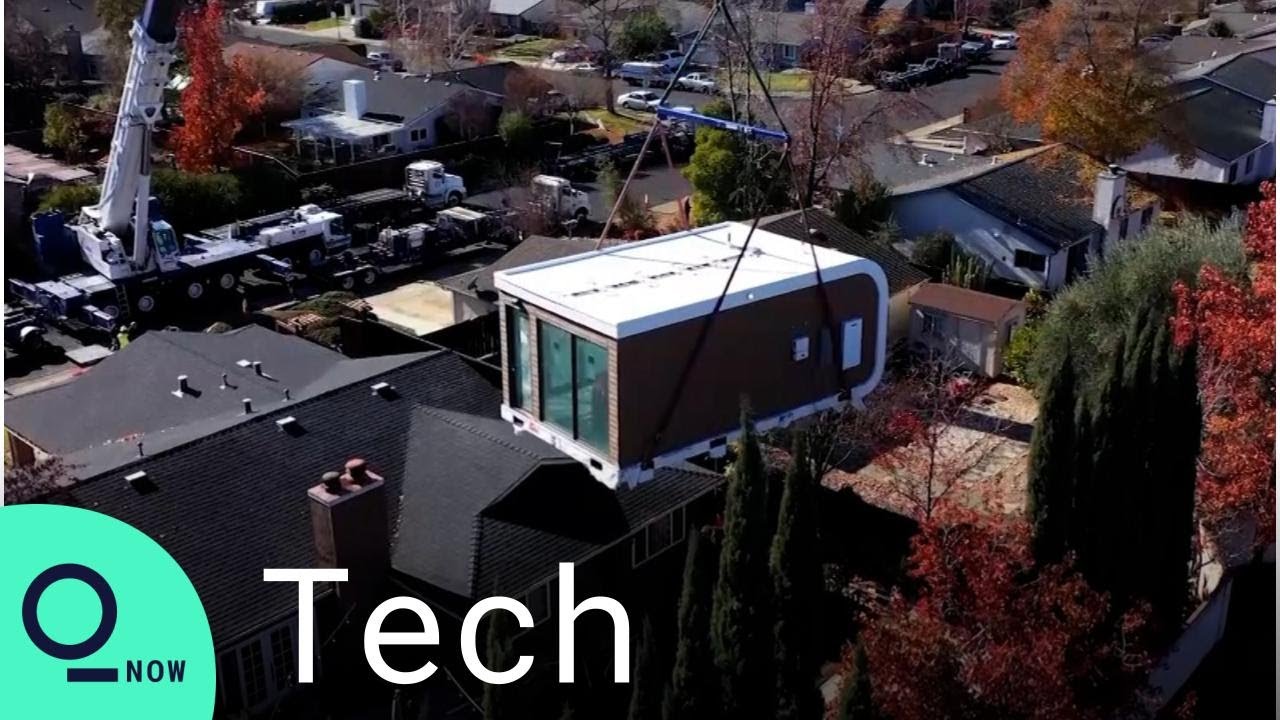
The future of housing looks faster, cheaper and more sustainable with 3D printing, say construction firms Mighty Buildings and ICON. A new generation of start ups wants to disrupt the construction industry - layer by layer - by automating production with industrial 3D printers.
These entrepreneurs say these smart machines - combined with software, robots and new building materials - can make homes faster, cheaper and more sustainable.
"So what we've done is with 3D printing, we're able to print exactly what we need. So it's effectively zero-waste construction," says Sam Ruben, the company's co-founder and chief sustainability officer at Mighty Buildings, a 3D printing construction firm in Oakland, Calif.
3D printing, also known as additive manufacturing, uses autonomous machines to create three-dimensional objects by depositing thin layers of material according to digital blueprints.
In recent years, 3D printers have been used to produce everything from toys and auto parts to artificial organs and prosthetic limbs. Now they're being deployed in the construction industry.
Backers say 3D printing reduces the need for human labor at a time when home builders are struggling to find enough skilled workers to meet housing demand.
These start ups want to use 3D printers, industrial robots and other technologies to help address severe housing shortages that have led to soaring home prices, overcrowding, evictions and homelessness around the world.
Austin, Texas-based ICON has used 3D printing technology to produce low-cost housing. It's printed for clusters of homes for the chronically homeless in Austin as well as poor families in Nacajuca, Mexico.
Instead of producing homes in factories, it brings its Vulcan printer to work on-site, building walls with tubular layers of excretable concrete, following blueprints designed with its software.
"The factory comes to you, imprints the house right where it intends to be. We chose that method to eliminate a lot of the shipping costs and then also to give ourselves a lot of design freedom," says Jason Ballard, ICON's CEO and co-founder.
Ballard said its 3D printing system can do the work of 10 to 20 workers in five or six different trades for up to 24 hours a day, saving time and money.
The company, which has raised more than 40 million US Dollars in venture funding, is working with Kansas City-based developer 3Strands to build a 3D printed neighborhood of two-story homes with two to four bedrooms in Austin.
"The benefits that automation and digitization had brought to so many other industries with regard to speed and affordability were completely missing from the construction industry," Ballard says.
"3D printing turned out to be like the most powerful automation of all the automations we could discover."
But according to experts, to move beyond a niche market 3D printed construction firms will need to significantly ramp up production and persuade home buyers, developers and regulators that they're safe, well-built and pleasing to the eye. They'll also need to train workers to operate the machines and install the homes.
"To the extent that 3D printing can offer a faster, cheaper way to build even single family housing units or small units, it can address a portion of the problem," says Michelle Boyd, who directs the Housing Lab at the University of California, Berkeley's Terner Center for Housing Innovation.
"We need all the help, all the solutions that we can get."
Experts say the sheer magnitude of the housing shortage demands many types of solutions, from loosening zoning restrictions to building more high-rise apartment buildings.
"We haven't changed the way that we build housing in 30, 40, 50 years," Boyd says.
"So we need innovation in the materials we use, the processes and really from soup to nuts, how we build housing."
Subscribe to our YouTube channel
Bloomberg Quicktake brings you live global news and original shows spanning business, technology, politics and culture. Make sense of the stories changing your business and your world.
To watch complete coverage on Bloomberg Quicktake 24/7, visit or watch on Apple TV, Roku, Samsung Smart TV, Fire TV and Android TV on the Bloomberg app.
Have a story to tell? Fill out this survey for a chance to have it featured on Bloomberg Quicktake
Connect with us on…
Breaking News on YouTube
Sentinel Indexing in Progress
Metadata and chapters are available. Claim extraction for this episode is pending.
All video content is delivered via YouTube embedded players in accordance with the YouTube Terms of Service. Sentinel provides research tools that promote discovery and accountability across political media.